
Community Development
Engaging with the communities surrounding Siniaka Minia is crucial to ensure its long-term sustainability. Part of this includes the interaction of transhumance sensitisation teams and sustainable access to resources for the current and future generations. In addition, support is provided to the neighbouring communities through educational programmes, and the development of income-generating activities. Finally, most of the staff working at Siniaka Minia are from villages in the park's peripheral zone. With the establishment of Siniaka Minia National Park new opportunities for local people are being created, building on existing socio-economic initiatives.
Community engagement
Overall, almost 40,000 people from the surrounding communities are working with the park through ongoing community meetings.
Transhumance sensitisation teams, known as PeriFerrick, interact and mediate with nomadic and transhumant communities. The goal of the PeriFerrick teams is to engage with pastoralist communities, offering information on safe passage and access to food, water and basic supplies. Additionally, they function reactively as unarmed negotiators in the event of illegal activities and support the mitigation of human-wildlife conflict (HWC). In 2024 over 200 awareness-raising sessions reached over 11,400 transhumant individuals. To improve reliable access to water for sedentary communities and their livestock outside the park, four new water points were established in 2024 at the Mouraye and Amkhidere ponds, as well as the Koubi and Moreh wells.
African Parks’ community facilitators (known as ‘animators’) are directly connected with both sedentary and nomad communities. They are involved in collaborating on different subjects, supporting communities through environmental educational programmes, developing income-generating activities, and collecting information on human-wildlife conflicts.
A draft of a Land Use Management Plan for the Greater Zakouma Ecosystem (GZE) is being created and is awaiting validation at different local, regional, and national levels. The primary goal of this plan is to ensure all local stakeholders align a practical, suitable, and integrated land management plan for the entire GZE, creating the baseline for a conservation-led economy in this part of Chad.
Education and Environmental Awareness
In ongoing educational activities, 13 teachers and ten schools are supported by the Teachers’ Association, in collaboration with park management, while three additional schools were built in 2024 on the park’s periphery. A total of 258 scholarships were awarded in 2024 to encourage education and literacy.
Sustainable Enterprise Development
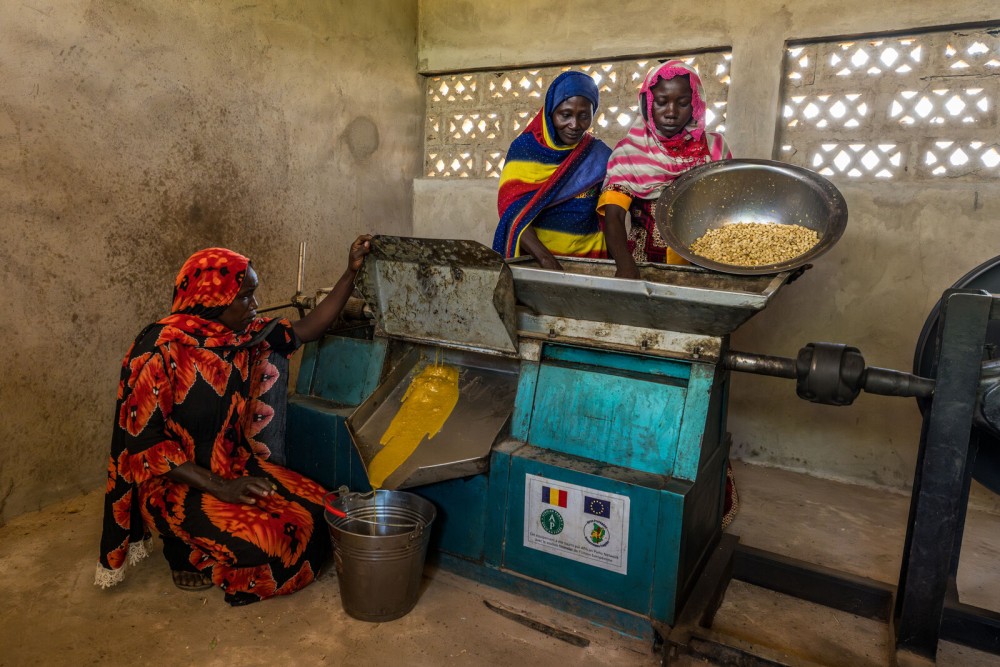
Aiming to boost local capacities, value chains, and livelihoods, over 1,000 local producers belonging to different associations, and local cooperatives are benefitting from training, equipment, infrastructure, machines and the improvement of trade chains at local and national levels. Harvesting and production of honey, balanites (desert date) oil, shea butter, poultry farming, horticulture and chebé (a hair beauty powder made of grains traditionally used in Chad) is helping to support hundreds of households. Currently over 20 cooperatives, consisting of more than 700 members are actively involved in supported Green Value Chains: honey, shea butter, Chebe, vegetables, poultry and balanitis oil.
Be the first to see impact in action
Join our community and stay connected on the latest news and stories.