The African Conservation Academy is a new training hub designed to build leadership and management capacity in protected areas across Africa. Established through a partnership between African Parks and the Rwanda Development Board, it will equip managers with the skills needed to answer today’s conservation needs.
Protected area management is highly complex, and becoming more so. Leaders of these systems operate within increasingly challenging geopolitical contexts, while constantly balancing ecological, socio-political, and financial priorities to ensure long-term sustainability. Navigating this nuanced balance is no easy task. Managers need to guide teams in remote areas, engage and collaborate with local communities, ensure the highest safeguarding standards, oversee finances, shape conservation-friendly commercial opportunities, respond to rapidly changing ecological realities, manage logistical networks, lead on infrastructure development – the list goes on.
Human capital is a defining driver of conservation success, yet scaled solutions to build the capacity of managers who appreciate that balance, and who have the necessary leadership and holistic management skills, remains one of the sector’s greatest constraints. Many existing programmes are too academic, too long or too expensive. As a result, managers are left with limited capacity development options that equip them for complex, real-world environments. As countries work to meet broader continental ambitions, including the global 30 x 30 target, building capacity for Africa’s rapidly scaling conservation needs has become urgent.

Recognising a critical gap, African Parks and the Rwanda Development Board (RDB) have partnered to establish the African Conservation Academy, a dedicated training hub for protected area managers, near Akagera National Park. With management oversight from the African Leadership University’s School of Wildlife Conservation, the intent with of this bespoke training solution is to build capacity on the key principles needed for good management, irrespective of what the model or what context that an individual is working within. This will include both the soft skills as well as the full set of technical management skills needed for sustainable protected area management.
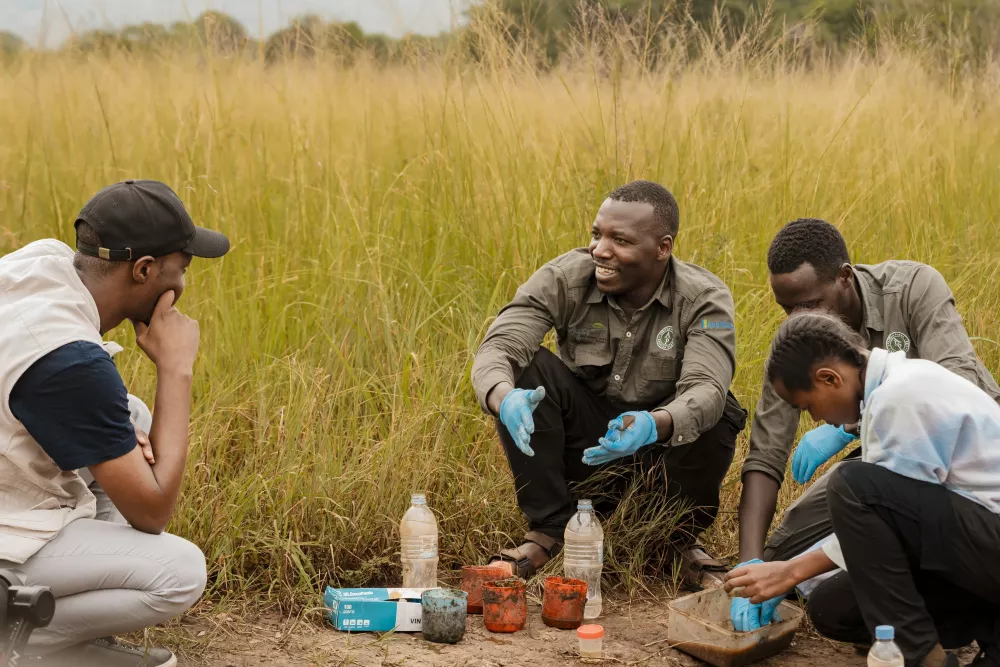
The Academy will be open to conservation practitioners from across the sector (state officials, community organisations or private sector), and will be grounded in practical, site-based learning shaped by real management scenarios and diverse contexts. With Akagera National Park as a ‘living classroom’, trainees will learn directly from a functioning yet evolving protected area, linking the theory to the practice.
The campus design is nearly complete, and course content is currently under development in collaboration with the School of Wildlife Conservation and the South African Wildlife College, along with input from a network of subject matter experts. While much work remains, the first official cohort is expected in 2027.
Investing in people is one of the most powerful levers for long-term conservation and socio-economic impact. By bringing together partners and experts from across the region, the Academy aims to set a new standard of protected area management training in Africa – ensuring that there is a pipeline of leaders that can carry Africa’s conservation priorities forward.