Nature is the foundation of our global economy, yet it remains largely undervalued in economic decision-making. This is particularly true in emerging countries where many of the world’s most critical ecosystems are found. Without viable alternatives to extractive industries, these nations face growing pressure to deplete their natural capital, with potentially irreversible impacts on biodiversity, climate, and livelihoods.
To change this trajectory, African Parks, together with The Landbanking Group, has developed the Verifiable Nature Unit (VNU): a scalable, outcomes-based mechanism to measure, report, and verify the ecological impact of funding, and position nature conservation as a viable and competitive form of land use.
FAQsThe Challenge: Nature under Threat
Across the globe, remaining intact ecosystems, which capture and hold carbon thereby preventing the escape of CO2 into the atmosphere that contribute to global warming, are under growing pressure from human activity. These “carbon sinks” play a critical role in absorbing and storing carbon, regulating the climate, supporting biodiversity, and thus sustaining the global economy.
Many of the world’s most intact natural areas are located in developing countries where economic growth is driven by extractive land use: agriculture, logging, mining, and urban expansion. As human populations grow, so does the pressure to convert natural resources into short-term economic gain. Without viable alternatives, these nations risk losing the very ecosystems on which their long-term prosperity depends. Additionally, land-use conversion is a significant contributor to greenhouse gas emissions in sub-Saharan Africa, accounting for approximately two-thirds of total emissions. An estimated 55% of global Gross Domestic Product (GDP) (equivalent to US$58 trillion) is directly dependent on nature. If we continue on our current path, we risk undermining the very systems our economies depend on.
Africa is one of the planet’s last three major carbon sinks. It holds the second-largest rainforest on Earth and 25% of global biodiversity. Yet it receives just 3% of global biodiversity funding.
A New Way to Measure and Finance Nature
The Verifiable Nature Unit (VNU) is a scalable, outcomes-based system developed by African Parks to measure, report on, and verify ecological integrity thereby quantifying a value for nature that can attract funding and reward conservation.
Each VNU represents one square kilometre of land that has had its ecological integrity maintained or improved over a specifically defined period. It provides a verified unit of nature-positive impact in which funders can invest, enabling outcomes-based transactions that reward land stewards for conservation and restoration efforts.
VNUs therefore serve as a standardised, independently verifiable measure of ecological outcomes, forming the foundation for various funding mechanisms such as nature bonds, pay-for-performance grants, biodiversity or nature credits, nature equity assets and national payments for ecosystem services.
How Ecological Integrity is Measured
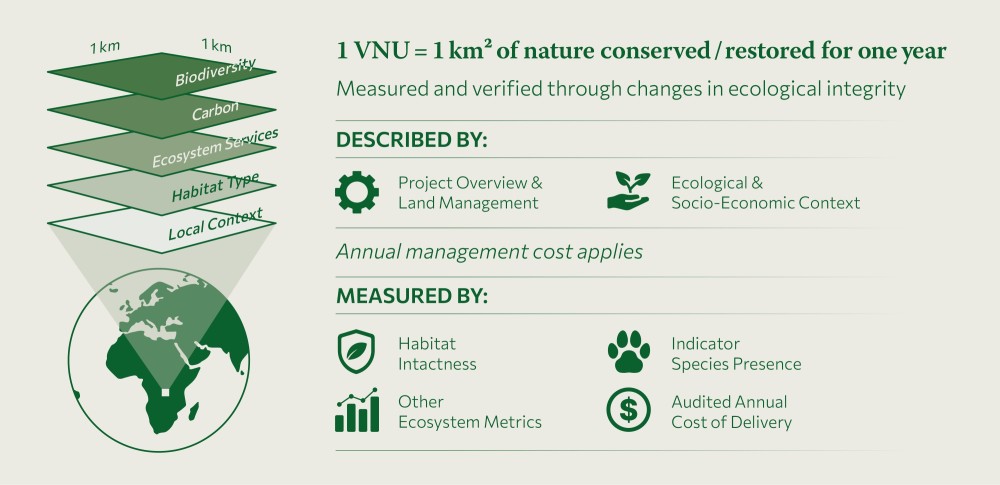
Each VNU is assessed annually using two key indicators:
- Habitat Intactness: Measures the extent of intact habitat, and how it changes over time due to pressures like settlement expansion, deforestation, and agricultural conversion.
- Indicator Species: Tracks the presence and abundance of key species over time as an indicator of broader ecosystem health.
This approach provides a clear, consistent, and replicable methodology for measuring nature outcomes at scale.
Verified by Science and Technology
- VNUs are backed by a robust Monitoring, Reporting, and Verification (MRV) system. This includes observation and machine learning to monitor changes in land cover and identify species; third-party verification to ensure transparency and credibility; and a digital issuance and reporting system to track performance and allocate units accurately.
- The approach is designed to be cost-effective, pragmatic and scalable across different land-use types. This enables wide and efficient deployment across diverse conservation landscapes, from protected areas to communal and private lands. Its simplicity makes it a powerful tool for both funders and land stewards seeking to fund or implement large-scale conservation and restoration.
Current and Future VNU Projects
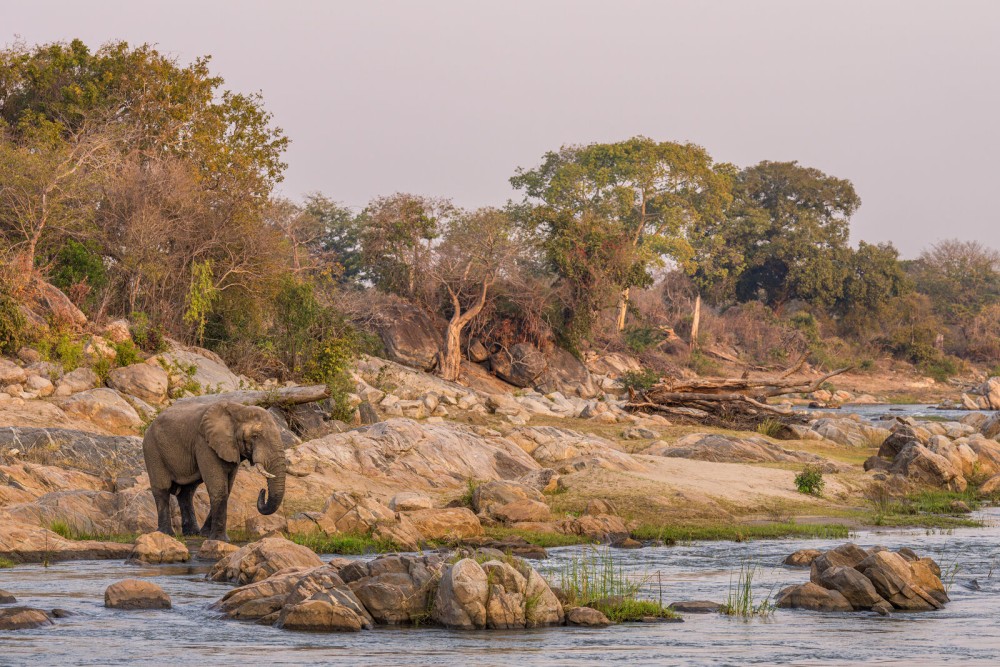
African Parks is piloting the Verifiable Nature Unit (VNU) in a growing number of landscapes to test its scalability, cost-effectiveness, and ecological accuracy. These pilot schemes are helping unlock private and philanthropic capital to support conservation across Africa.
The first Verifiable Nature Unit (VNU) pilot was launched in Majete Wildlife Reserve, Malawi, which, with over 20 years of effective conservation management, provided an ideal proof of concept for VNU. 711 VNUs were issued in 2024 and reissued in 2025. The initial transactions have been completed, with philanthropic partners purchasing VNUs to support conservation efforts and test the model’s effectiveness.
Building on this, three additional large-scale projects are underway in Odzala-Kokoua, Garamba, and Zakouma national parks – biodiversity-rich landscapes across the Congo Basin and Chad. VNUs for these parks, issued in 2025 and again in 2026, cover a combined area of 1.37 million hectares (13,700 km2).
The next phase will focus on scaling VNU implementation into surrounding community landscapes and expanding across Africa through partnerships, positioning nature as a viable and competitive economic resource.
Scaling with Communities
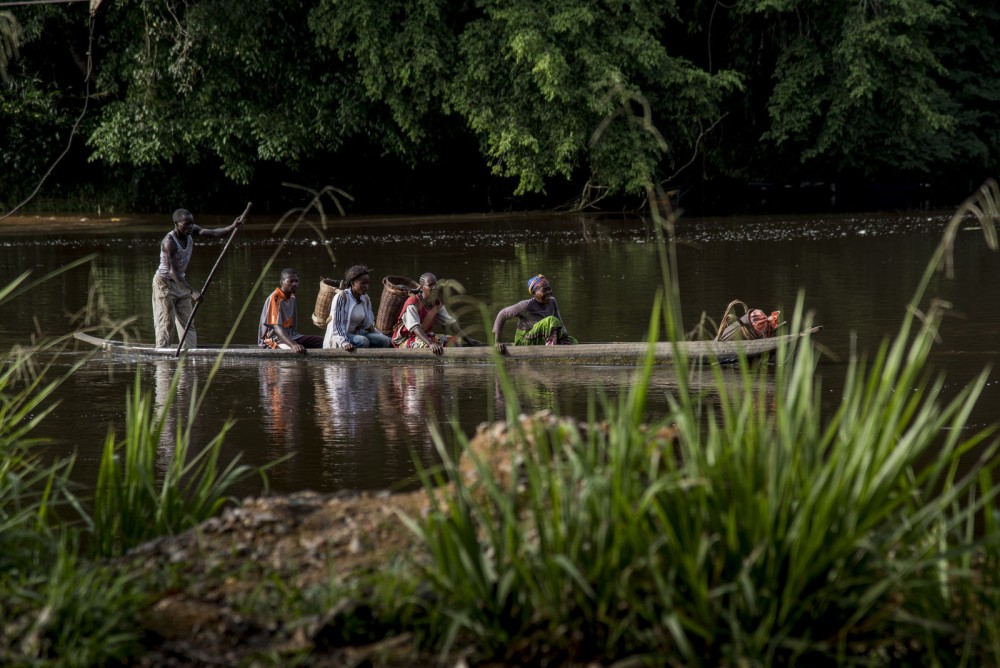
Nature conservation is often seen as a trade-off – especially in communities that rely on natural resources for their livelihoods. But this doesn’t have to be the case. The VNU is designed to help turn that trade-off into an opportunity by recognising and rewarding conservation as a viable economic activity.
Across Africa, as natural resources become scarcer, the cost of conserving them in terms of missed development opportunities is growing. By linking verified ecological outcomes to funding, the VNU aims to provide a mechanism for communities to benefit financially from conserving and restoring nature. This will help reduce pressure on protected areas, support community-led stewardship, and create new incentives for sustainable land use.
To test this, African Parks plans to expand the VNU into community-managed landscapes around pilot national parks. These projects will examine how VNU funding can support both conservation efforts and community development.
How You Can Contribute
Whether you're a philanthropist, corporate investor, development institution, or government agency, the VNU provides a flexible, outcomes-based mechanism to fund measurable conservation impact. By linking verified ecological outcomes to funding, the VNU unlocks new pathways to scale nature-positive investments .
Philanthropic & Public Funders
Contribute towards nature-positive impact:
- Off-take VNUs as pay-for-performance grants
- Fund pilot projects in partnership with local communities
- Act as an outcomes-payer in nature-linked or sustainability-linked bonds
- Support community-led VNU projects that incentivise conservation as a livelihood
Corporates
- Purchase VNUs via:
- Nature contributions
- Nature credits
- Nature equity assets
- Make verified progress towards biodiversity targets or ecosystem services provision
- Raise capital through sustainability-linked bonds, using the VNU supported by the MRV framework
Financial Institutions
- Use the VNU supported by the MRV framework for nature-linked bond issuances.
- Address nature-related risk exposure in specific regional portfolios
- Develop nature-themed funds and allocate a percentage of management fees based on verified nature impact
National Governments
- Apply the VNU for national natural capital accounting
- Integrate VNUs into payments for ecosystem services schemes or compliance markets
- Leverage VNU data in raising capital through nature-linked financial instruments
For more information on how you can contribute, email: [email protected]
