
Community Development
By engaging with communities on conservation, sustainable livelihoods, and human-wildlife conflict mitigation, Nyungwe is helping to secure healthy ecosystems that support both people and wildlife well into the future.
Community Engagement and Environmental Awareness

Community Liaison Officers are stationed at various sites within the communities surrounding the park, establishing a communication link between the park and local residents while also overseeing educational and economic development activities. Community environmental awareness meetings take place regularly with approximately 20,000 people attending meetings each year.
Education and vocational training remain a vital part of the long-term vision of Nyungwe. In 2024, US$2,265 funded five community scholarships in neighbouring technical schools, fostering employment opportunities. Over 1,500 children and local leaders visited the park in 2024, while 6,500 students are currently engaged in wildlife clubs.
Sustainable Enterprise Development
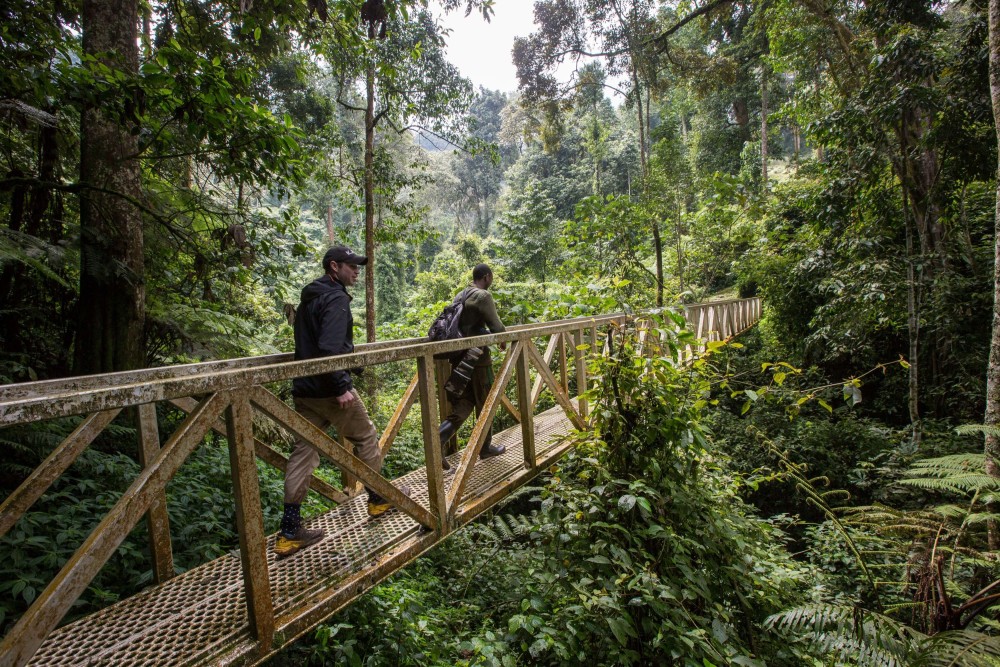
Creating alternative livelihoods through small-scale enterprises remains a major focus in Nyungwe National Park. By establishing community cooperatives, the park is nurturing sustainable resource use while supporting local communities in income-generating activities that stimulate the local economy.
Currently, 35 community cooperatives receive support, with 16 engaged in income-generating activities such as beekeeping, mushroom farming, pig rearing, and community-based tourism. Another nine provide employment opportunities through service-related activities, including freelance guiding, porter groups, and casual worker cooperatives. In tourism-related cooperatives, the Nyungwe Community Freelance Guides Cooperative comprises 27 community guides who have been trained in nature interpretation and guiding, helping to enhance visitor experiences while creating sustainable livelihoods.
To ensure the long-term success of these initiatives, 42 representatives from 14 cooperatives have undergone training in financial management, tax compliance, governance and cooperative management. Additionally, five cooperatives were formally registered with the Rwanda Cooperatives Agency (RCA) in 2024, strengthening their legal and operational standing. In total the cooperatives have over 1,600 members, benefitting an estimated 6,870 household members.
Be the first to see impact in action
Join our community and stay connected on the latest news and stories.