Nature is the foundation on which the global economy is built, yet its value is largely absent from economic calculations and decision-making. To help change this trajectory, African Parks, with support from The Landbanking Group, has developed the Verifiable Nature Unit (VNU), a scalable, outcomes-based mechanism that measures, reports, and quantifies ecological integrity. But the VNU is just one part of a broader solution that starts with understanding the challenge.
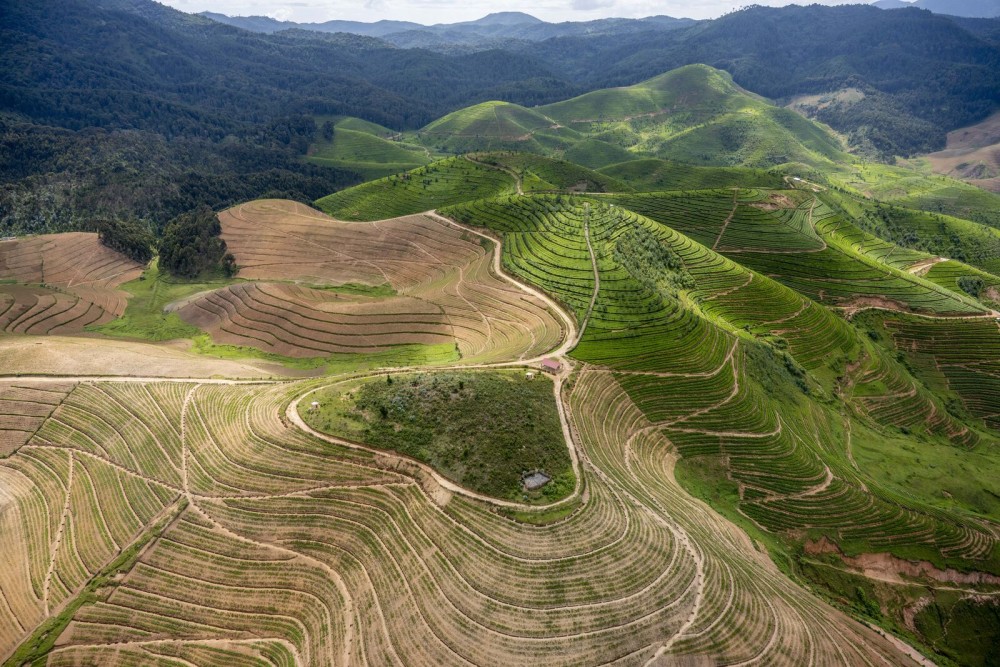
Across Africa, an estimated 65% of land is affected by degradation and drought, impacting over 400 million people and causing annual economic losses exceeding US$70 billion. While nearly 7,800 protected areas are officially registered as national parks, reserves, or game management areas, many are in fact "paper parks” – protected in name only. In reality, these areas are often degraded, overexploited, or have been converted to other land uses. Their ecological functions have collapsed, and the ecosystem services they once provided – clean water, carbon sequestration, biodiversity – have been lost. This degradation is further compounded by land-use conversion, which is also a major driver of greenhouse gas emissions in Africa, accounting for about two-thirds of total emissions in sub-Saharan Africa. Reversing this loss is both economically costly and socio-politically complex.
In many developing nations, land-use decisions are driven by short-term economic imperatives. Agriculture, logging, mining and urban expansion offer immediate returns, while nature conservation struggles to demonstrate its economic value. Without viable alternatives to traditional development models, nations are compelled to deplete their natural capital, leading to irreversible biodiversity damage and climate instability.
Yet, while these short-term decisions dominate, an estimated 55% of global GDP – equivalent to US$58 trillion – is directly dependent on nature. Africa is home to a quarter of this nature, including the second-largest rainforest on Earth. Despite this immense wealth, the continent receives only 3% of global biodiversity funding.
This mismatch highlights the urgent need for a new approach to development – one that views conserving nature not as a cost, but as a valuable and competitive component of the economy. This means shifting away from extractive growth models toward outcomes-based approaches that reward land stewards for conserving and restoring ecosystems. To do this, we need a system that can measure success, verify results, and connect nature outcomes to capital flows.
A New Solution: Integrating Nature into the Formal Economy

In 2024, African Parks took a bold step in this direction by launching the Verifiable Nature Unit (VNU). Conceptualised by African Parks, and further developed in partnership with The Landbanking Group, the VNU creates a standardised, independently verified measurement of nature outcomes. Each unit represents one square kilometre of land where ecological integrity has either been maintained or improved over a defined period.
The concept is based on solid science and practical application. VNUs are assessed annually using a standardised methodology that combines satellite imagery, machine learning, and field-based ecological indicators. Two key factors are measured: habitat intactness – which considers how pressures like settlement, agriculture, and deforestation change the extent of intact habitat – and the presence and abundance of indicator species as a measure of broader ecosystem health.
What makes the VNU so compelling is its potential to shift the conservation narrative from cost to value, while directly contributing towards nature-positive impact.
By providing a verified link between ecological outcomes and financial flows, the VNU enables nature to generate income, not just for protected area management, but potentially for surrounding communities. In doing so, it helps reframe conservation as a land-use choice that supports livelihoods, resilience, and long-term development. This is especially important in regions where communities face trade-offs between safeguarding ecosystems and meeting their immediate socio-economic needs. Conservation can only be sustainable when it offers tangible benefits to those who live closest to nature. African Parks is now working to extend the VNU model into community-managed landscapes, testing how local stewardship can be incentivised through outcomes-based funding.
The model is already being tested on the ground. A pilot project was launched in Majete Wildlife Reserve in Malawi, where 711 VNUs were issued in 2024 and reissued in 2025. The first transactions have been completed, with philanthropic partners purchasing VNUs to contribute towards testing the mechanism and accelerating market development efforts. Building on this success, African Parks has launched three more large-scale VNU projects in Odzala-Kokoua, Garamba, and Zakouma national parks. These landscapes, covering 2.14 million hectares (21,466km2) across the Congo Basin and Chad, are among the most biodiversity-rich and ecologically important in Africa.
To ensure transparency and trust, all VNU assessments undergo mandatory third-party verification. This monitoring, reporting, and verification (MRV) system forms the backbone of a credible and scalable model for outcomes-based nature finance. Funders can be confident that each VNU represents a verified nature-positive impact.
While the VNU is still in its early stages, the model is already laying the foundation for a new conservation economy built on transparency, accountability, and shared value. By formalising how we fund conservation and linking it to measurable results, the VNU helps unlock the capital needed to close the global biodiversity finance gap. This is about building a future where nature and people can thrive together and where conserving the planet’s life-support systems is no longer a sacrifice, but a viable economic activity.
To learn more about how the Verifiable Nature Unit works, and how you can contribute, click here.