Akagera National Park stands as an important example of how commitment and collaboration can restore ecosystems, rewild species, and build a thriving, sustainable future for people and wildlife.
For 90 years, Akagera National Park has stood as a testament to Rwanda’s commitment to conservation. Established in 1934, Akagera is one of Central Africa’s largest protected wetlands and Rwanda’s last remaining refuge for savannah-adapted species. In 1975, the park achieved one of its first major conservation milestones: the reintroduction of elephant. A herd of 150 elephant roaming outside the park faced increasing conflict with local communities, prompting a bold translocation effort for its time. With support from the World Wildlife Fund and the Rwandan and Belgian Governments, 26 young elephant were moved into Akagera, laying the foundation for a thriving population today and future wildlife reintroductions.
During the 1970s and 1980s, Akagera flourished, with strong populations of buffalo, zebra, and lion. Masai giraffe were introduced from Kenya in 1986, and their descendants still roam the park today. In 1997, the park was reduced by two-thirds to accommodate returning refugees after the 1994 genocide. In the years that followed, unchecked illegal hunting and human-wildlife conflict led to the local extinction of lion and rhino populations.
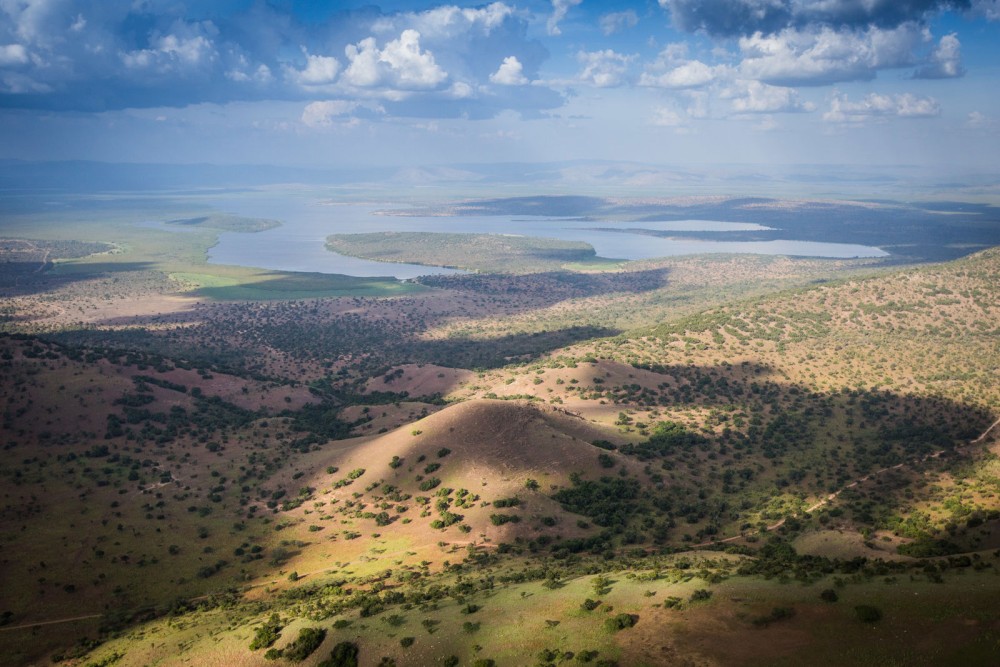
In 2009, the Rwandan Government invited African Parks to partner with the Rwanda Development Board in managing Akagera National Park to support its conservation efforts and aspiration to use tourism as a driver for improving the country’s economy. Since then, effective conservation management has led to a remarkable revival: lion were returned in 2015, eastern black rhino in 2017 and 2019, and in 2021, 30 southern white rhino were introduced from South Africa in one of the largest rhino relocations of its time.
With its diversity of thriving species populations today, Akagera’s tourism has become a major generator of revenue for the park, earning 97% of the park’s annual revenue in 2024, with 45% of visitors being Rwandan. Flowing directly back into the park, these funds stimulate a conservation-led economy through job creation and other sustainable development projects that support local people.
Another Historic Rhino Translocation
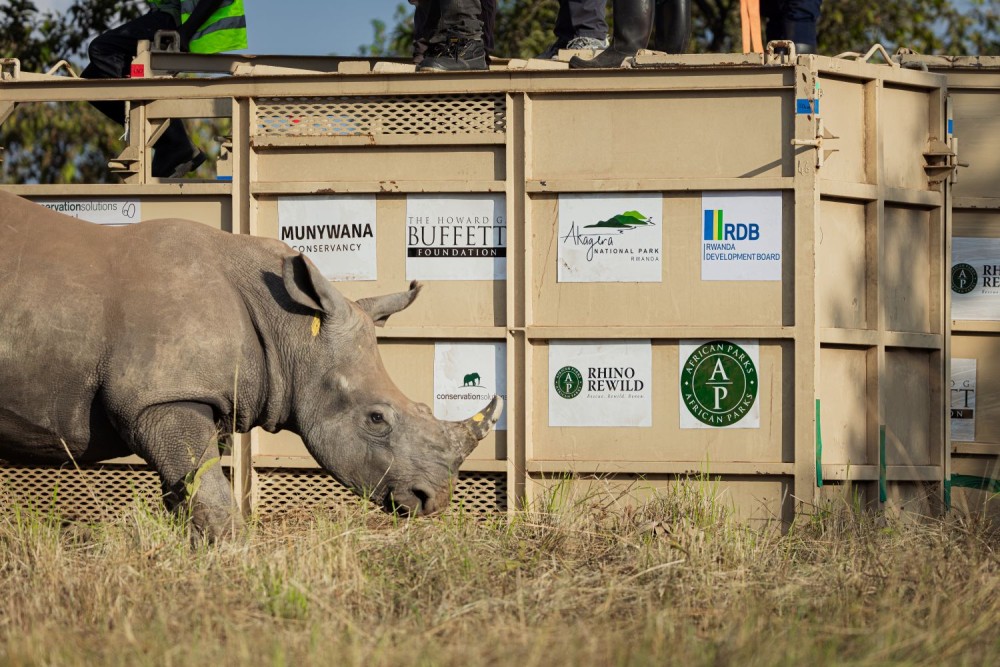
2025 marked another conservation milestone. Building on the positive trajectory and the success of the 2021 rhino introduction, which had since grown to 41 individuals, Akagera was well-positioned to receive an additional 70 southern white rhino from South Africa. This relocation, which was carried out in collaboration with the Rwanda Development Board and a number of supporting partners, marked the first cross-continental move for the Rhino Rewild Initiative, which aims to rewild 2,000 captive-bred rhino over ten years.
Completed in two phases, each comprising 35 rhino, the massive move followed months of extensive planning and collaboration with various experts. Initially, the rhino were moved within South Africa from the Rhino Rewild site to the Munywana Conservancy to ensure their adaptability to a new environment. Here, they were exposed to naturally occurring diseases such as Trypanosomiasis and climatic conditions similar to Akagera. From Munywana, they were transported by truck in individual steel crates and then loaded into a Boeing 747, which flew them from Durban to Kigali, before they were transported to Akagera by road. The entire journey from the Munywana Conservancy to the park took approximately 48 hours for each of the two groups of rhino, with continuous monitoring by veterinary teams.
For several weeks after being released into the park, their health and behaviour were closely monitored to manage stress and ensure each rhino adapted well to its new environment.
The addition of 70 rhino to Rwanda plays a vital role in establishing meta-populations across the continent. In turn, this enhances the species’ natural ecological function and contributes to overall biodiversity health, while opening the door for future range expansion into other safe, well-managed protected areas.
Rewilding to Restore Landscapes and Livelihoods
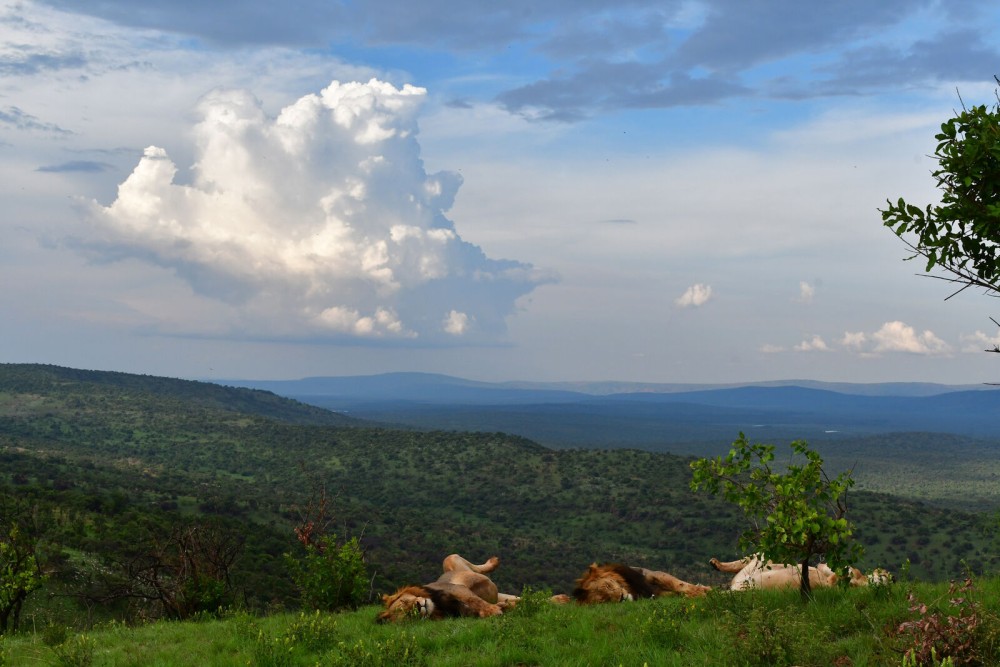
In Africa, activities such as agriculture, urbanisation, and deforestation have significantly altered natural landscapes, leading to habitat loss and species decline. Keystone species, such as rhino, play an important role in maintaining the structure and function of ecosystems by helping to shape the landscapes in which they live. By reintroducing keystone species where they have been historically extirpated, ecosystem functionality can begin to improve, allowing them to once again provide essential services including clean water, fertile soil, and pollination, all vital for human wellbeing.
At the same time, rewilding efforts also address the urgent need to mitigate the effects of climate change. Intact and fully functioning ecosystems, such as forests, grasslands and wetlands, act as carbon sinks, absorbing carbon dioxide from the atmosphere and helping to regulate the climate.
Importantly, reintroducing species once lost to an area helps to boost local economies through ecotourism, creating socio-economic opportunities for communities. National parks and wildlife reserves attract tourists, generating income and creating employment opportunities which enhance the livelihoods of local people.
Rewilding is a complex and multi-layered process. It begins with assessing the ecosystem’s current state, identifying species for reintroduction, and developing a detailed plan in consultation with communities and authorities, including habitat restoration and species selection aligned with international policy. Restoring habitats involves removing threats that led to species loss in the first place and creating conditions that support the reintroduction, often through landscape rehabilitation and community participation. Finally, keystone species like large herbivores and predators are reintroduced to revive ecological processes such as grazing and predation, which promote nutrient cycling and broader biodiversity recovery.
As more rewilding projects are implemented and important lessons are learned, this approach will play an increasingly significant role in global conservation efforts. It offers a hopeful vision for the future and one that Akagera is already helping to bring to life. At 90 years old, Akagera stands as an outstanding example, showing us that through commitment and strong partnerships, a once-threatened landscape can be restored to its full potential.