About The Author
A Collaborative Effort
Sea turtle are highly migratory, sometimes travelling thousands of kilometres between feeding grounds and nesting beaches, yet they usually return with remarkable precision to lay their eggs on the same stretches of coastline where they themselves once hatched.
Few places in the world support nesting by five different species of sea turtle. Bazaruto Archipelago National Park is one of them, and the only known site in the western Indian Ocean where leatherback (Dermochelys coriacea), loggerhead (Caretta caretta), green (Chelonia mydas), olive ridley(Lepidochelys olivacea) and hawksbill (Eretmochelys imbricata) turtle have all been recorded nesting.
This alone speaks to the ecological importance of this 1,430km² stretch of Mozambican seascape. Here, these turtle species share waters with a Critically Endangered population of dugongs (Dugong dugon) and around 500 species of fish. Coastal communities also depend on these marine resources for their food security and livelihoods, and sharing these waters and shorelines brings its own set of pressures.
Turtle caught in seine nets, which are dragged along the seafloor, are one of the most persistent forms of human-wildlife conflict in the park. A single net can entangle multiple turtles at once, with some weighing up to 150kg. This places strain on fishers and their gear, while putting the turtles under severe stress, including the risk of exhaustion or drowning.
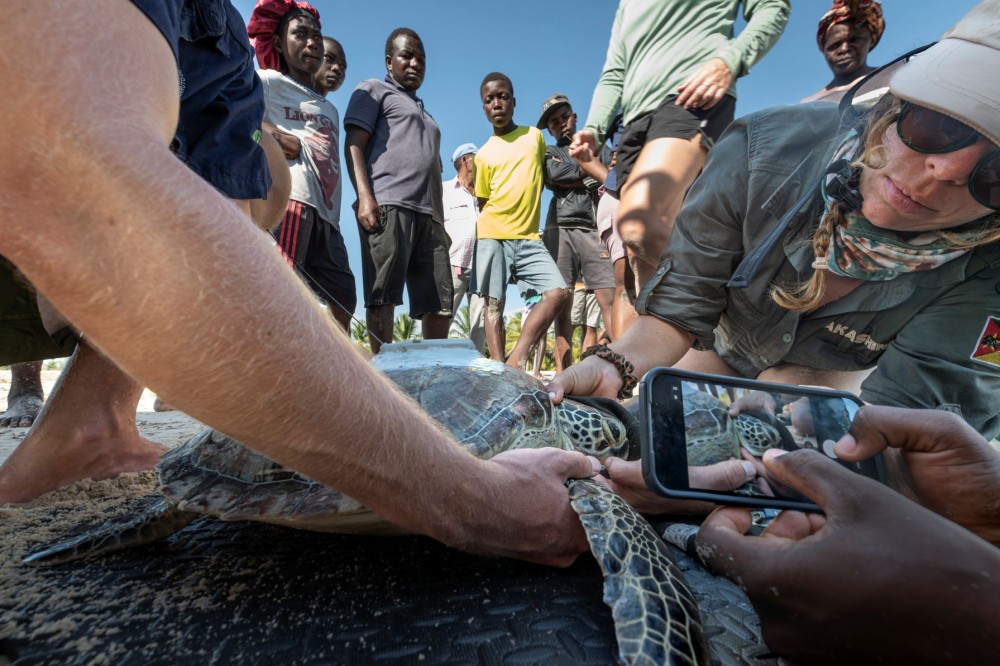
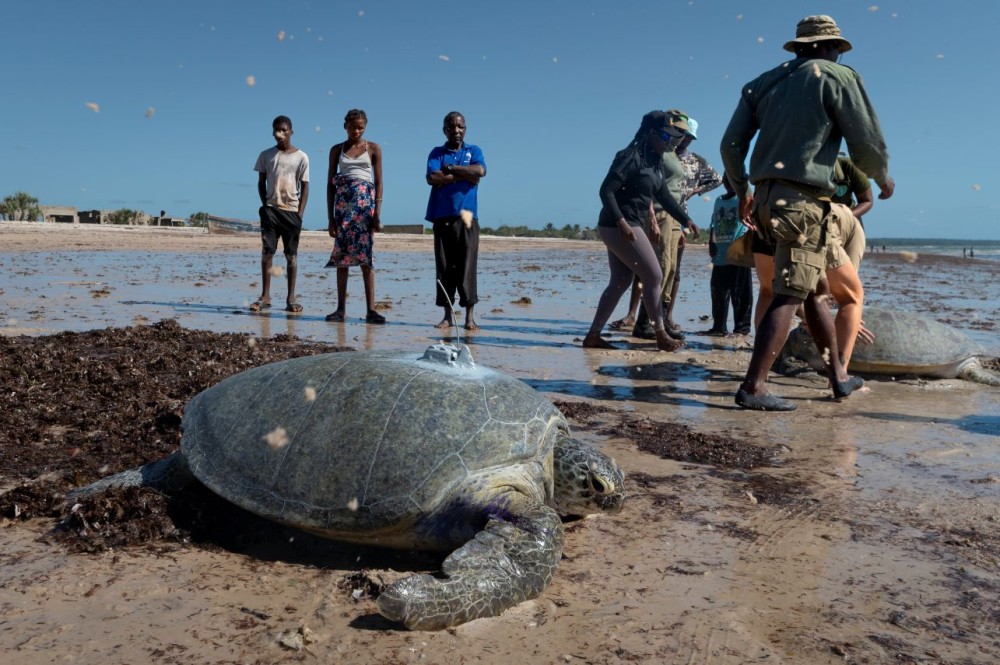
This year’s tagging mission in early May was built around this very conflict. Providing external expertise to the Bazaruto team, turtle specialist Dr. Jess Williams and marine biologist Dr. Stephanie Venables from Akashinga, together with Andy Coetzee, who has tagged more than 1,000 turtles around the world, worked alongside local fishers to tag turtles caught in the nets. During the mission, the team ran daily beach patrols, with captains and crew calling in whenever a turtle was found.
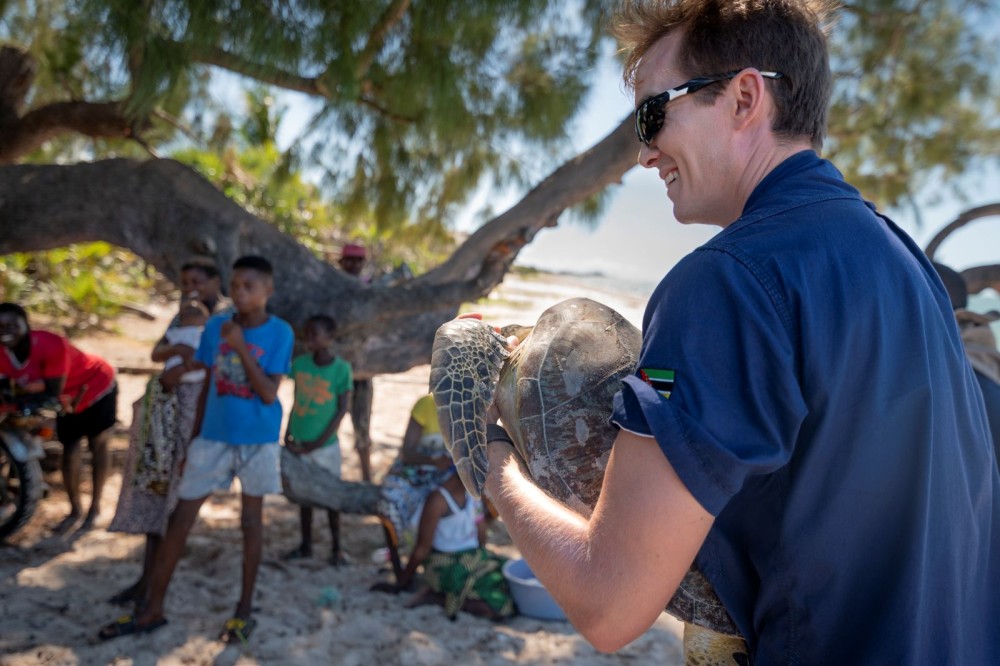
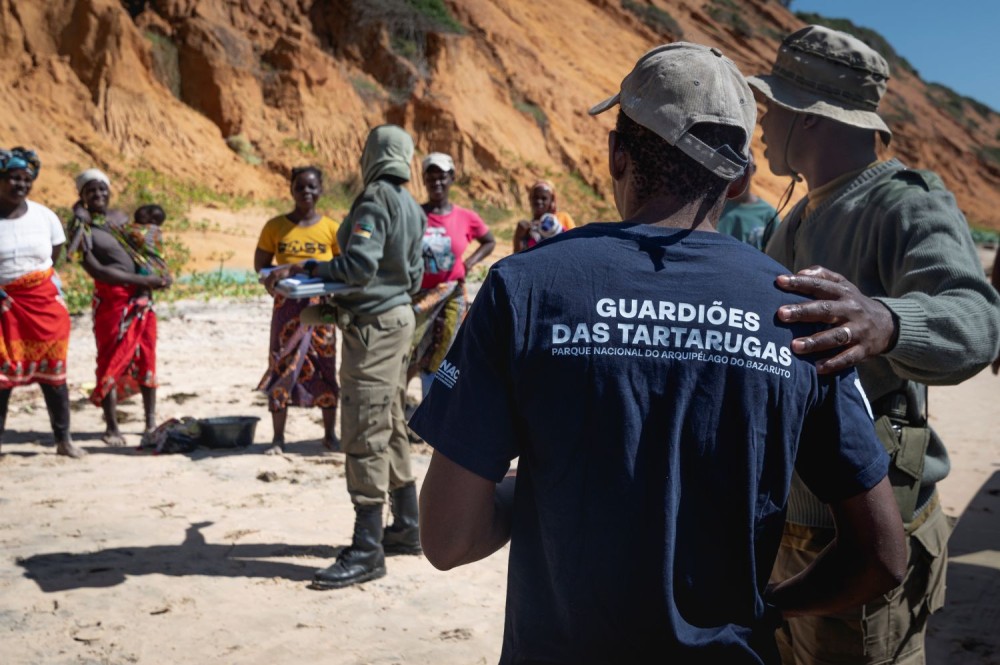
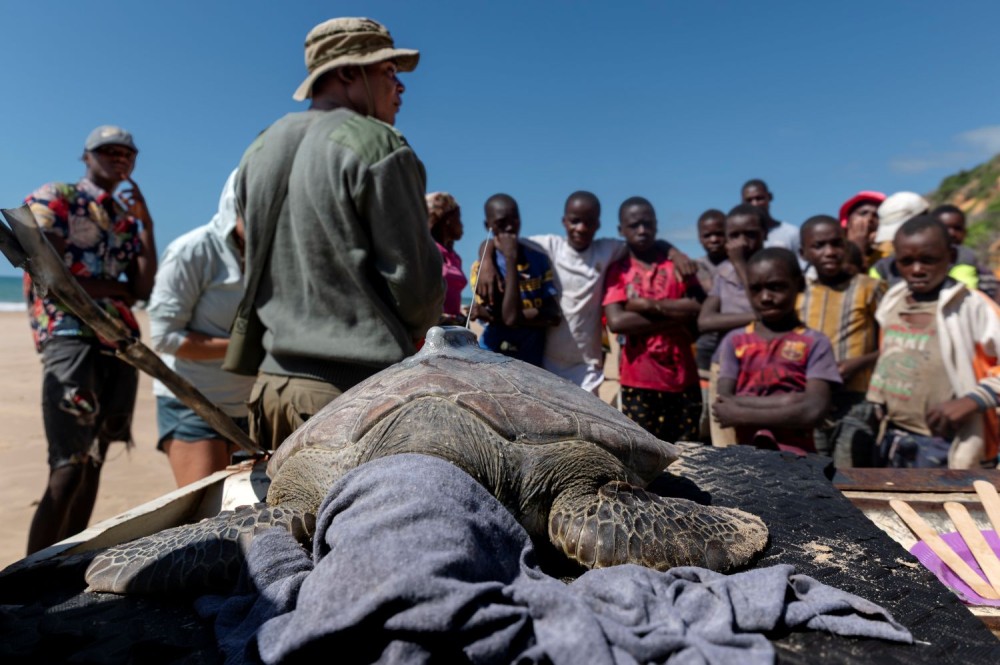
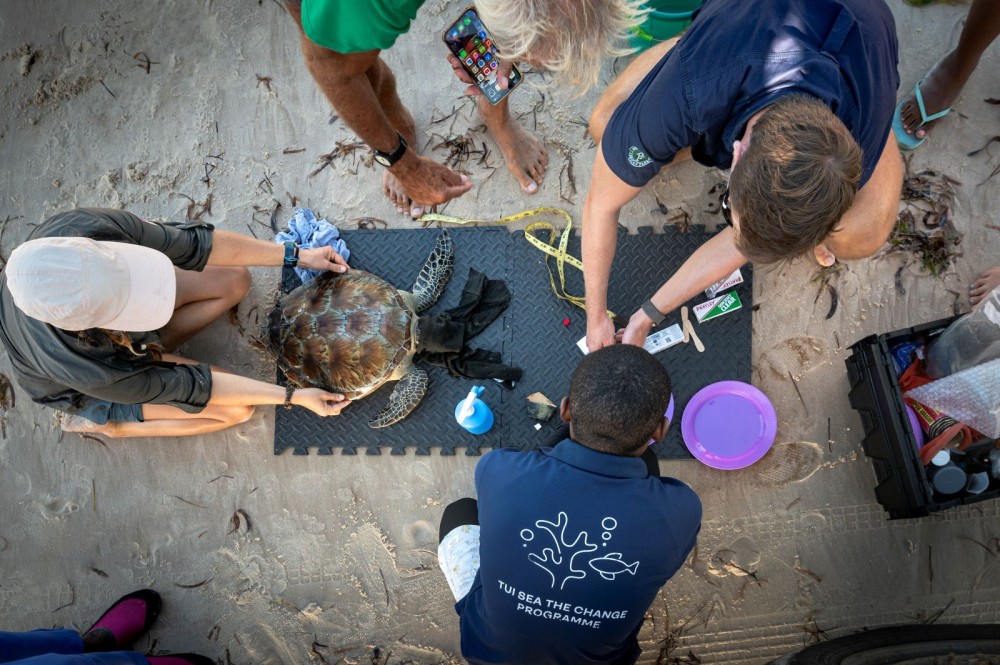
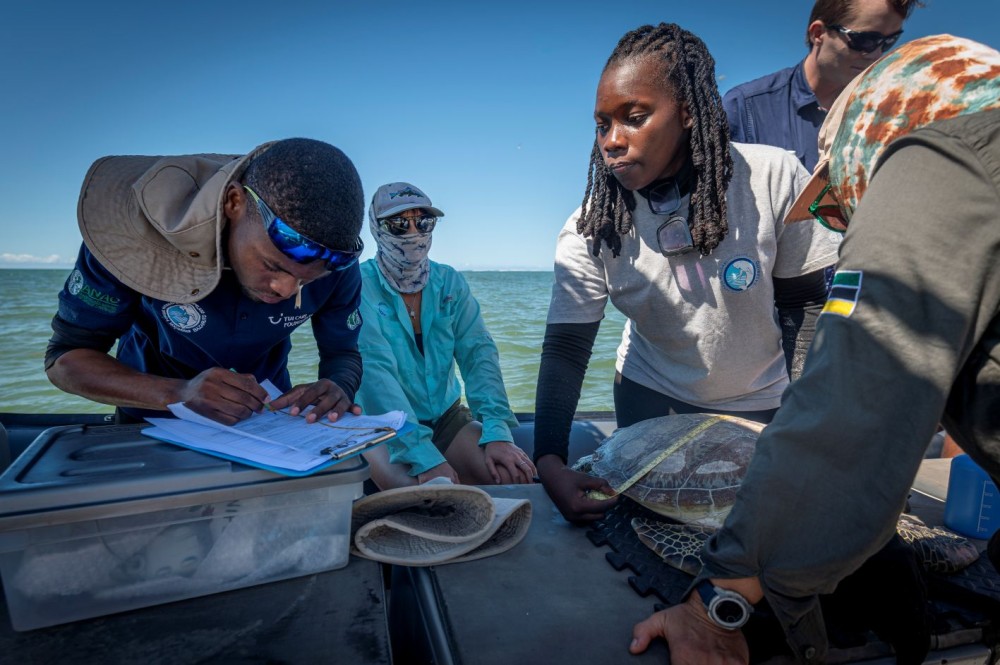
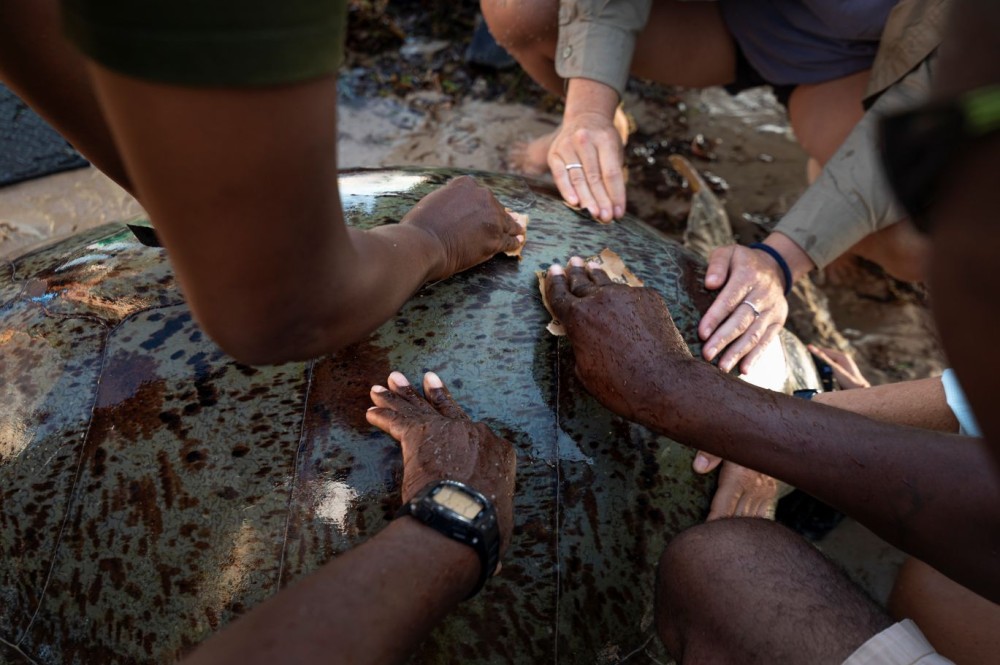
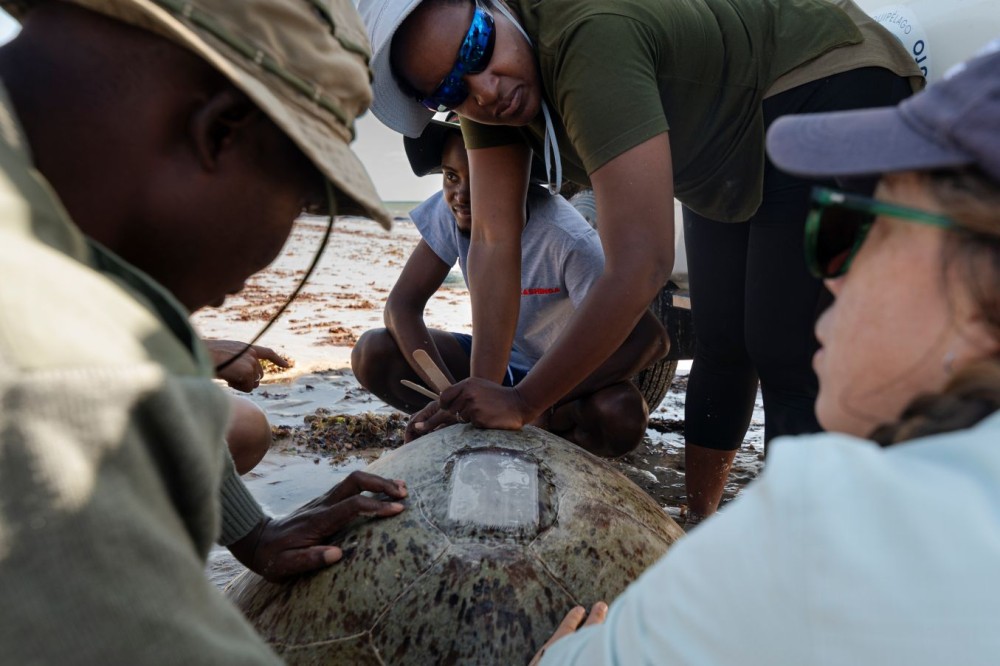
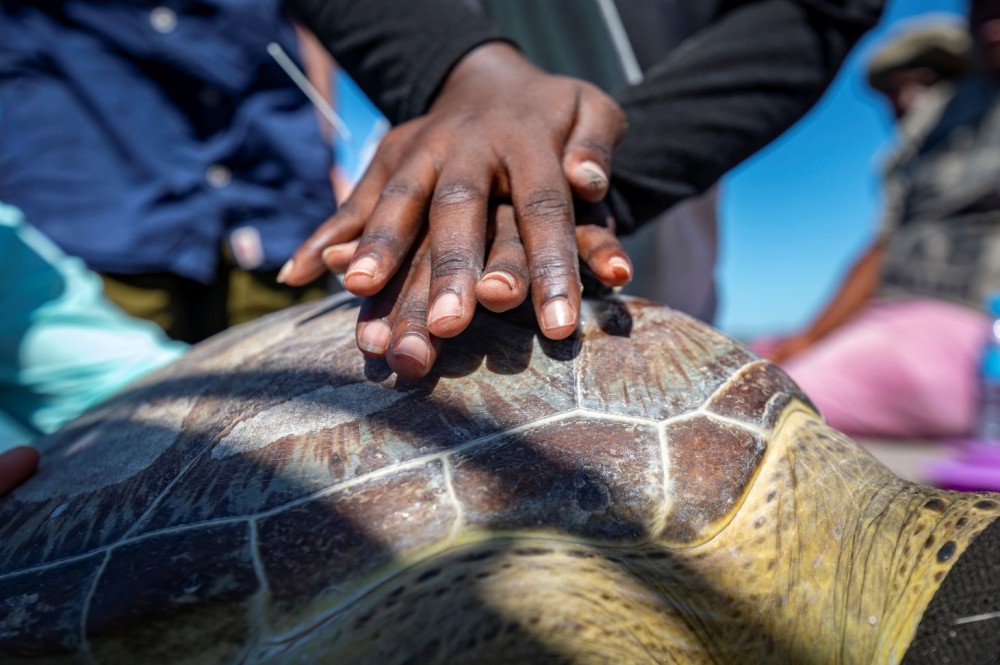
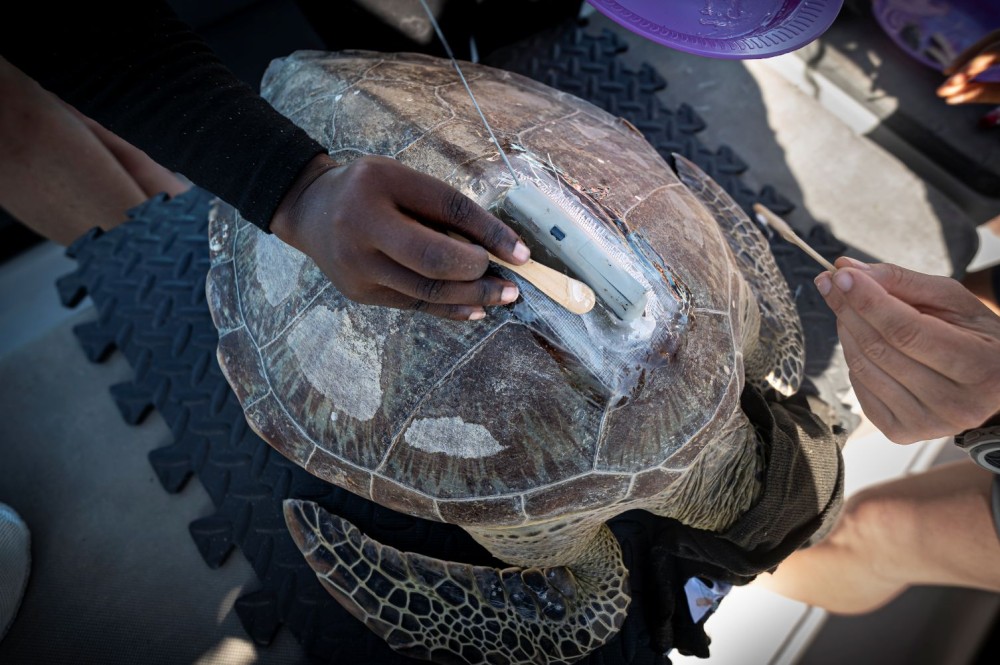
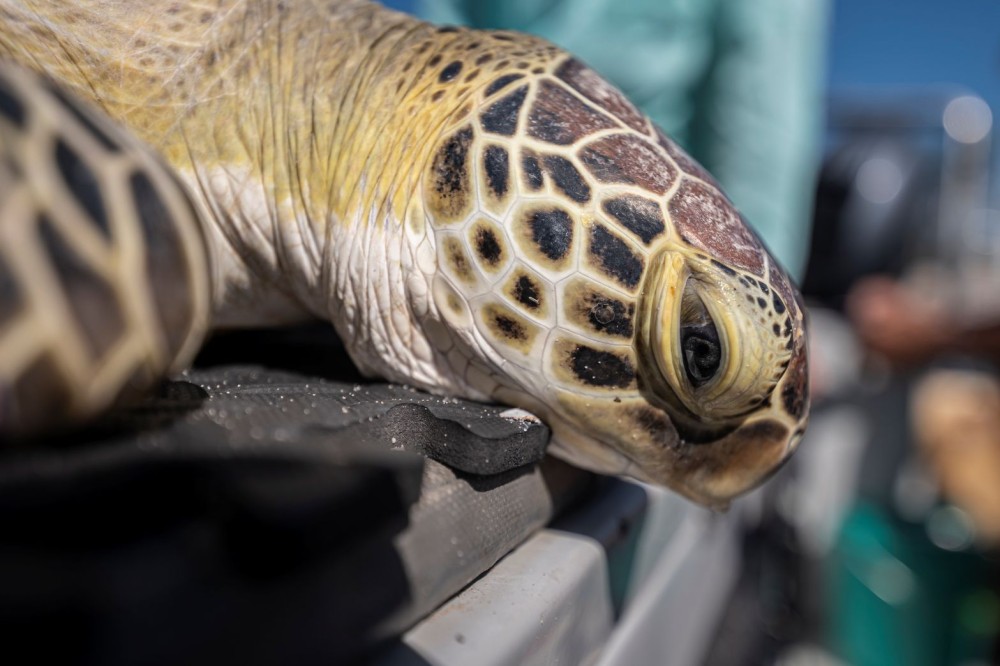
In Picture: Tagging Green Turtle
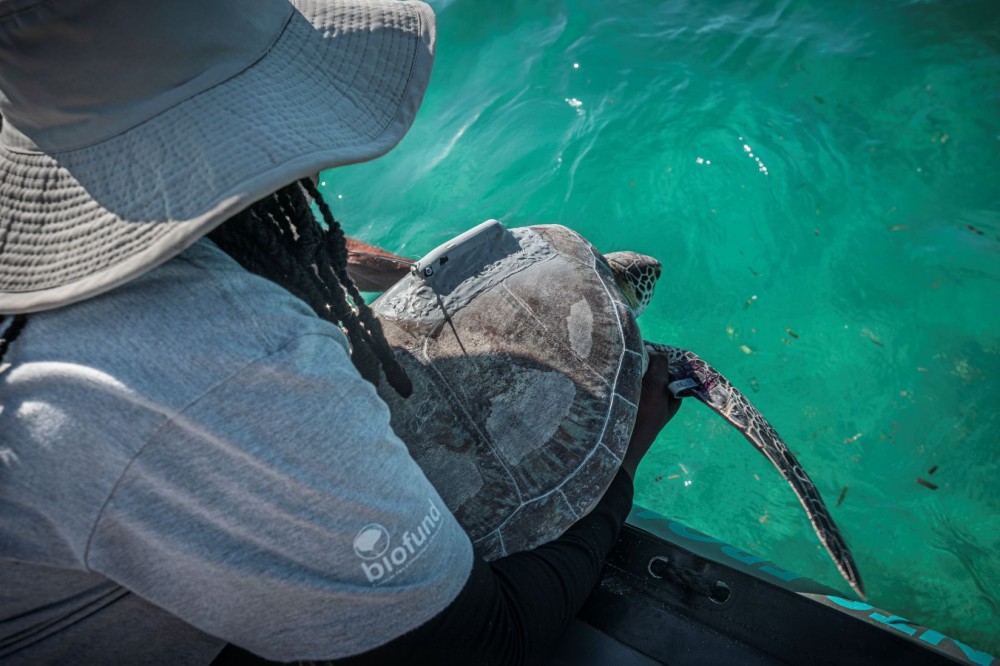
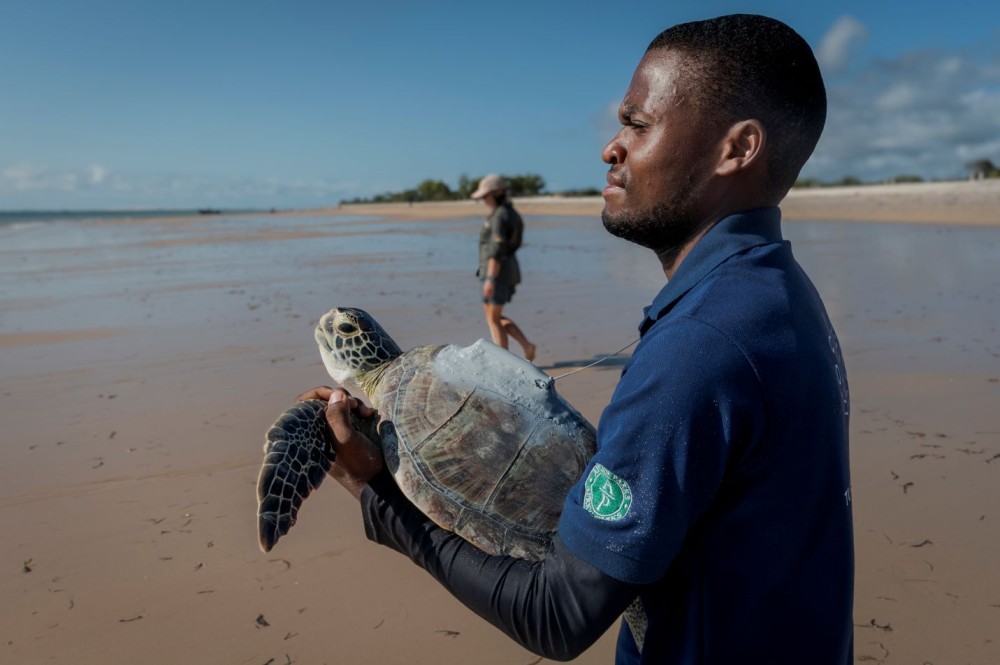
The images below showcase the events of tagging green turtles as the fishermen brought them in from their nets.
Understanding Turtle Movements
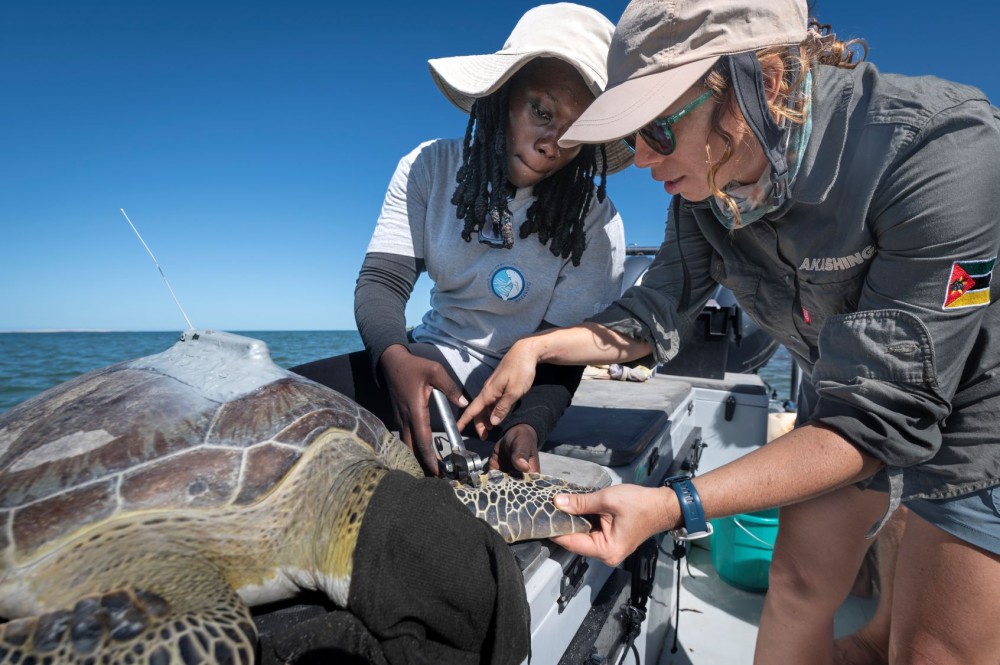
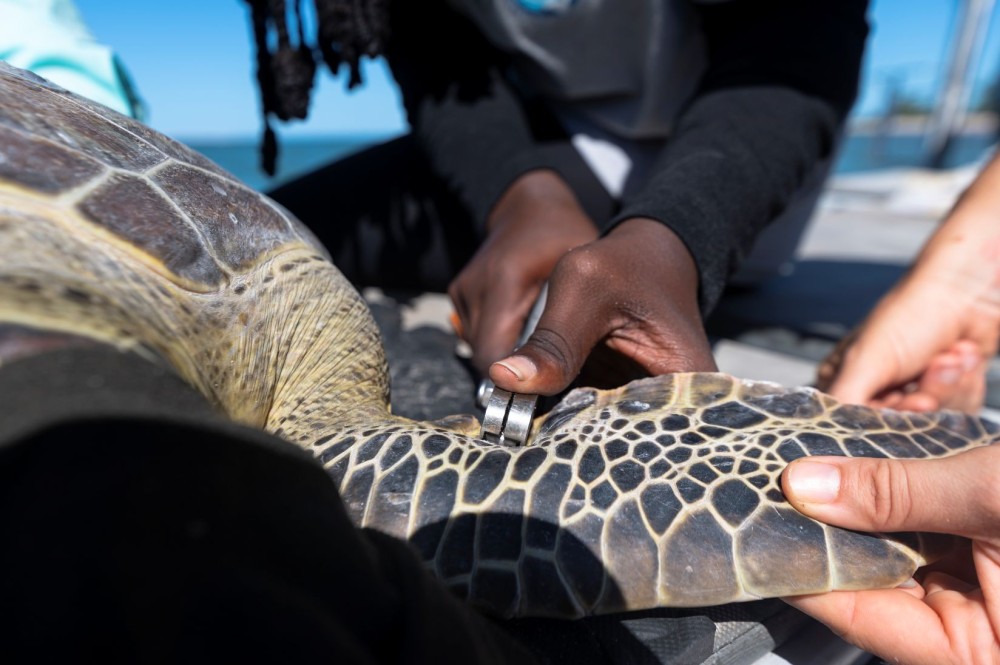
The satellite tags are adapted to suit turtle of different ages and body sizes, while the flipper tags are stainless steel markers with a unique code, designed to remain attached indefinitely.
Each serves a different purpose. Satellite tags transmit detailed location data over several months, helping the team understand short-term movements in near real time. Flipper tags feed into a central database, allowing individual turtles to be identified if they are recaptured years later or in different locations. Together, they help build a long-term picture of how turtle move through and beyond the park.
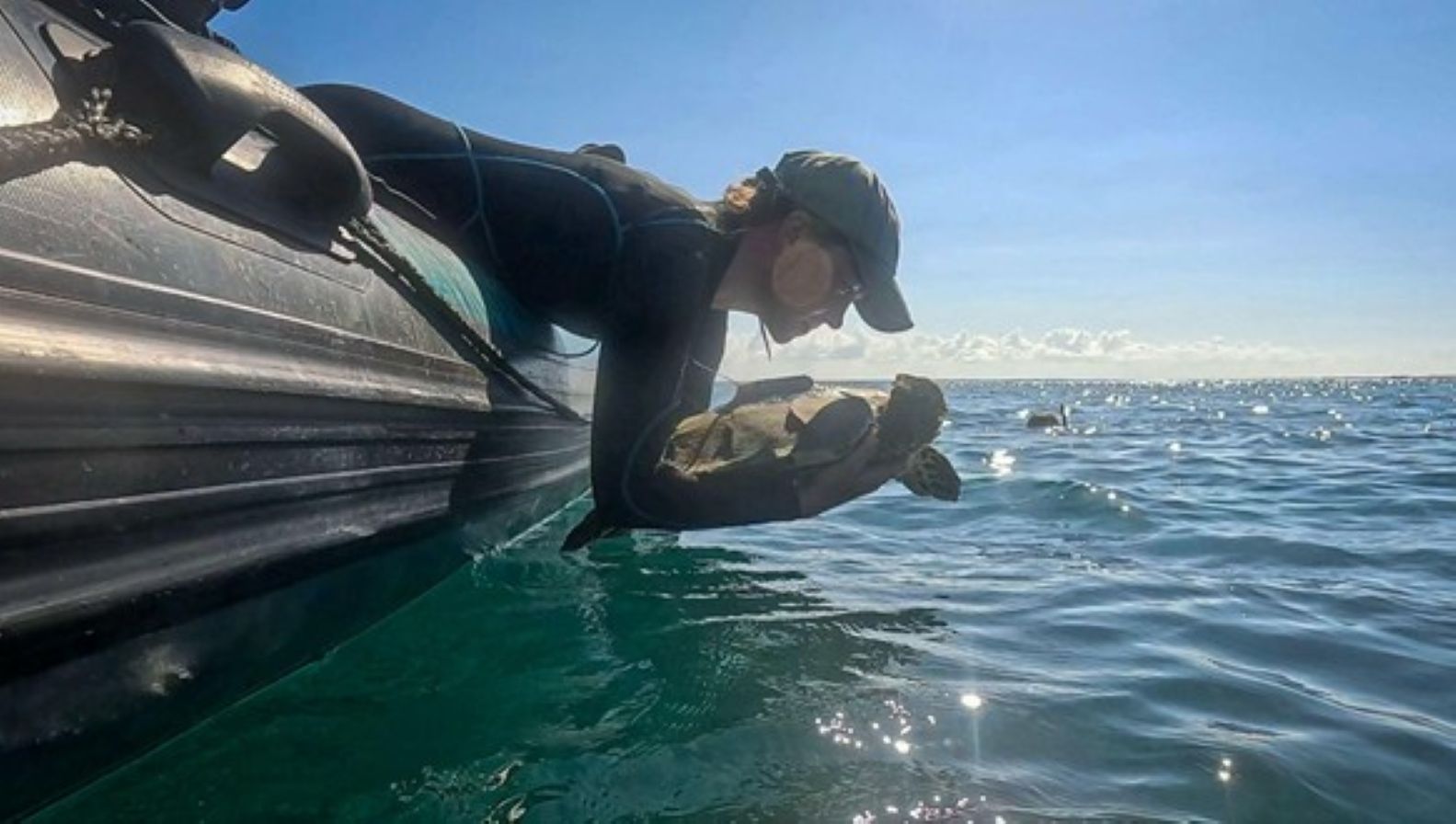
Tagging Hawksbill Turtle
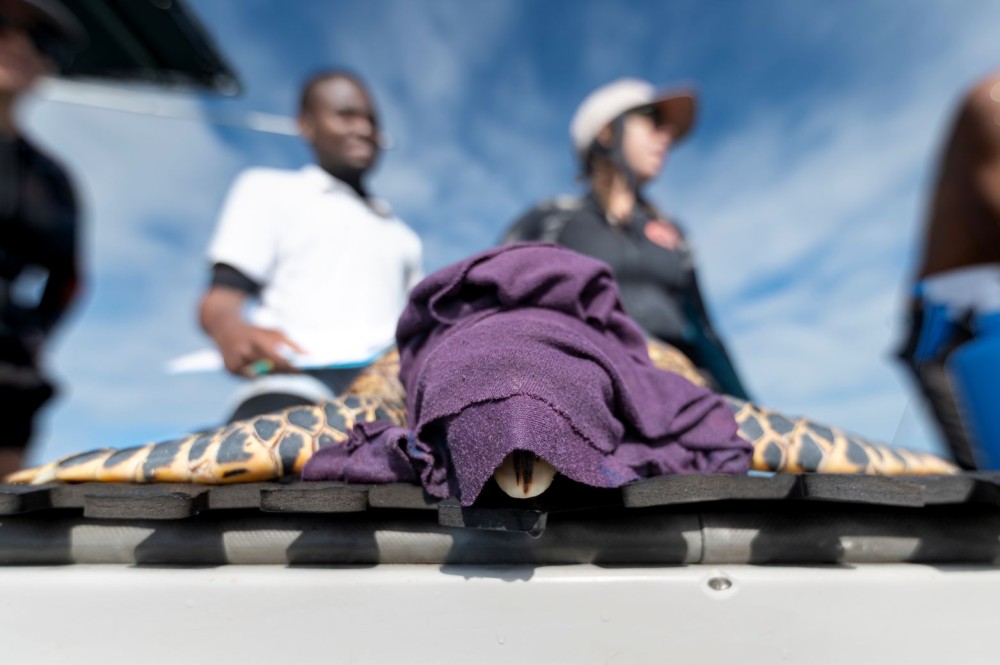
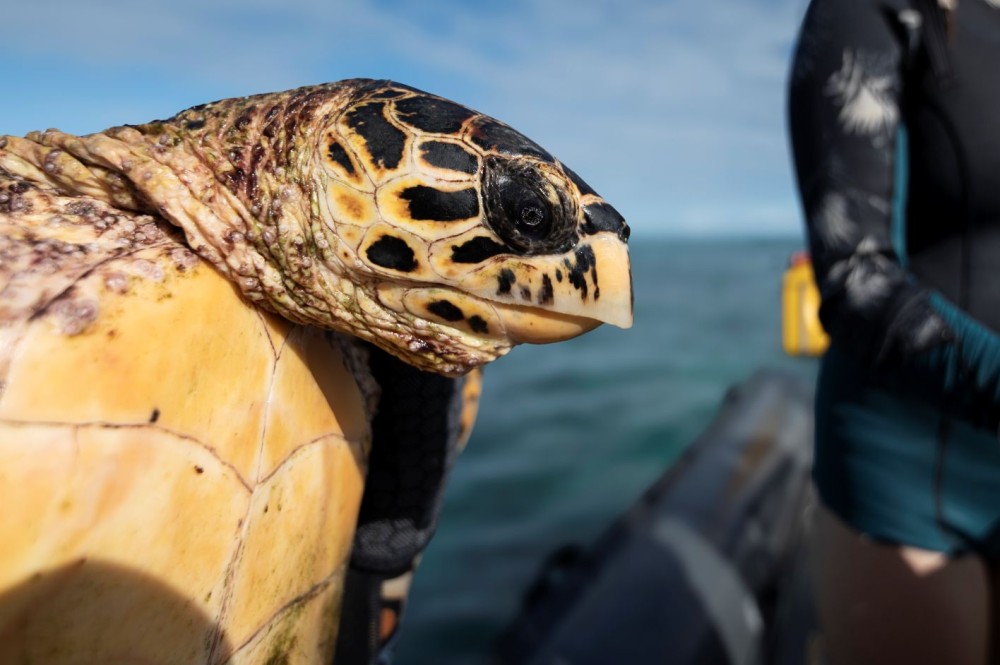
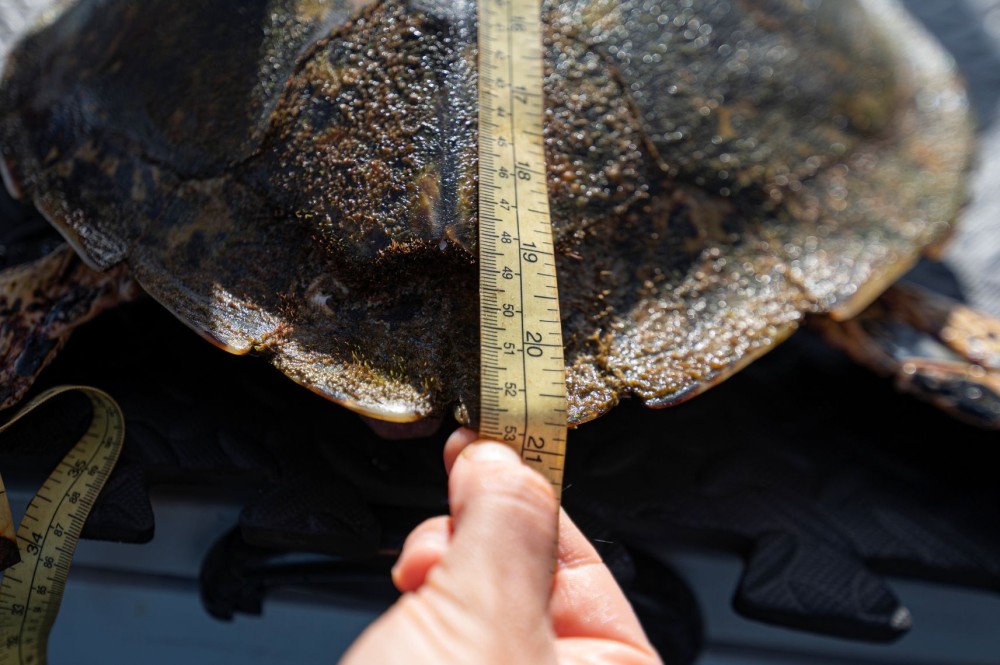
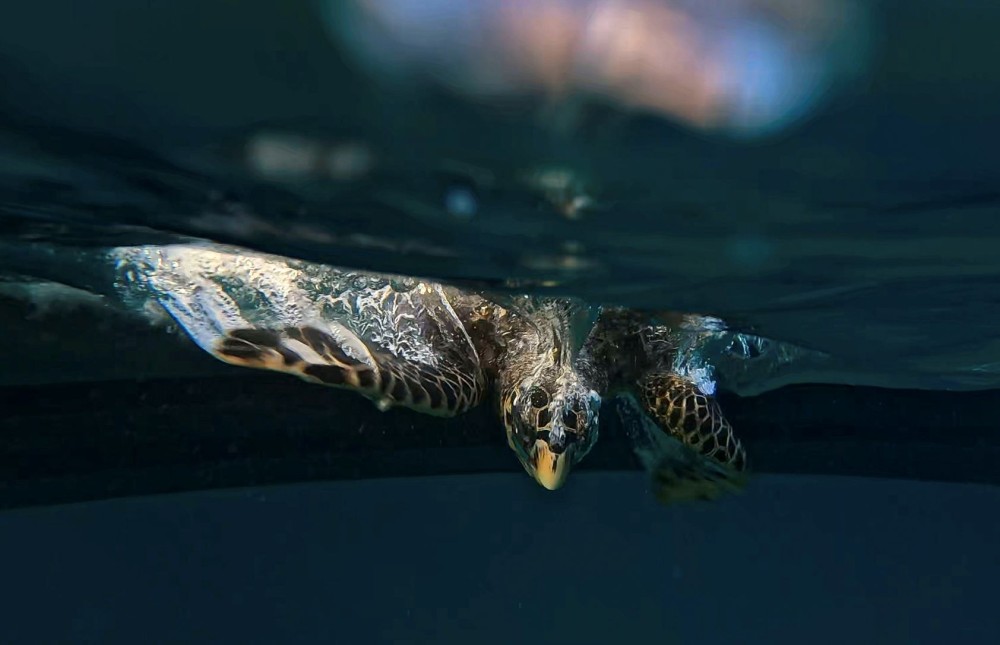
This year’s mission also extended beyond green turtle. Critically Endangered hawksbill turtle were encountered on protected reefs within the park, offering a rare opportunity to gather data on a species about which very little is currently understood in Bazaruto Archipelago National Park.
Satellite tags help the Bazaruto team understand how turtle navigate heavily fished waters, where they travel between nesting seasons, and which habitats are most important to their survival. In 2023 and 2024, 27 turtle were satellite tagged in the park. This year’s mission added 13 more individuals and significantly expanded the movement dataset for hawksbill turtle in Bazaruto, an important step towards building a clearer understanding of a species that has, until now, remained largely undocumented in this ecosystem.
This collaboration has become an important exchange of knowledge. Fishers were involved throughout the process, learning how and why turtles are tagged, what the movement data can reveal, and why sea turtles are so important to the health of marine ecosystems. At the same time, the conservation team drew on the experience and observations of those who know these waters best, reinforcing the important role local communities play in the long-term future of the park’s marine life.