Wildlife translocations between Liuwa Plain and Kafue national parks reflect the collaborative efforts underway to support ecological recovery, strengthen biodiversity and sustain landscapes that people and wildlife depend on.
Kafue National Park conserves more than 22,000km² of rivers, floodplains, woodlands and grasslands in western Zambia. Proclaimed in 1950, it forms part of the Kavango Zambezi Transfrontier Conservation Area, which stretches across five countries and represents one of the largest connected conservation landscapes in the world.
The park supports remarkable biodiversity and provides important natural resources for thousands of people living across the wider landscape. Like many protected areas, Kafue has experienced changing pressures and shifting wildlife populations over time, shaped by a complex mix of environmental, social and economic factors.
In July 2022, the Government of Zambia and African Parks entered into a long-term management partnership to support the continued restoration and management of Kafue National Park.
Carefully planned wildlife translocations are part of a broader effort to strengthen ecological processes, reconnect landscapes and support the long-term resilience of species and habitats.
Building on existing foundations
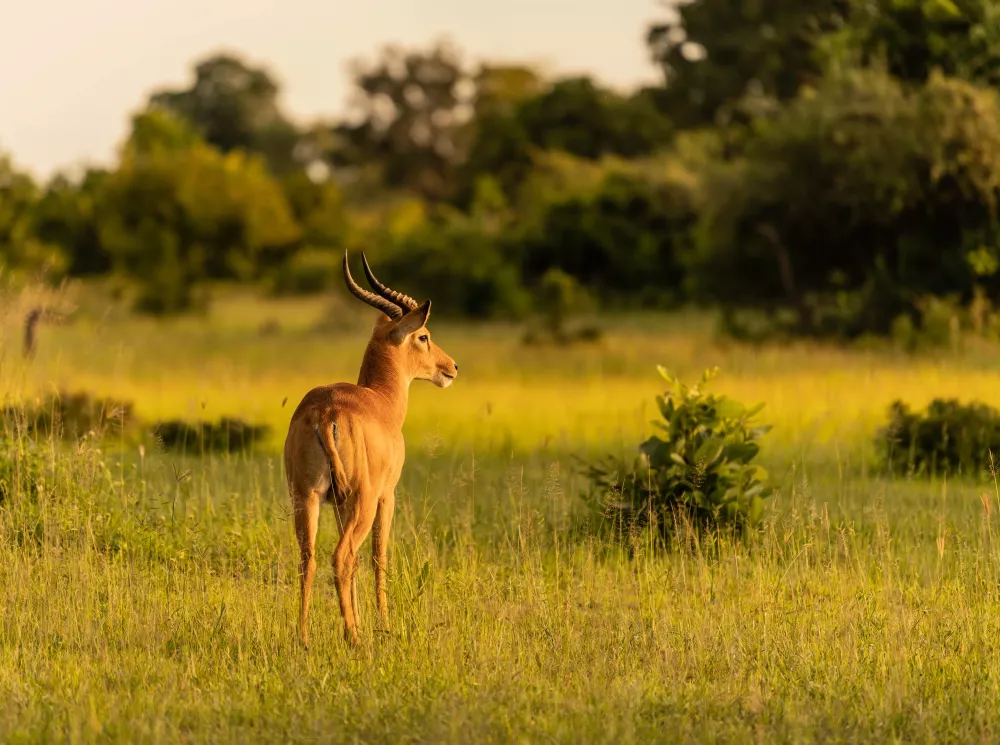
Over many years, significant work by Government and a collective of partners has gone into strengthening ecosystem management, improving ecological monitoring and supporting the conditions needed for species and habitats to recover within the wider Kafue landscape. Since 2022, this has been scaled up to ensure ecosystem wide restoration.
As part of those broader restoration efforts, grazing species are important contributors to ecosystem functioning. Grazers influence grassland structure, nutrient distribution and habitat availability for many other species, while also forming part of the prey base that supports large predators.
In 2024, 400 Kafue lechwe were reintroduced into the southern sector of the park. Early monitoring has shown encouraging signs, including successful breeding. Over time, species such as lechwe can help support the ecological dynamics of floodplain systems.
Working across connected landscapes
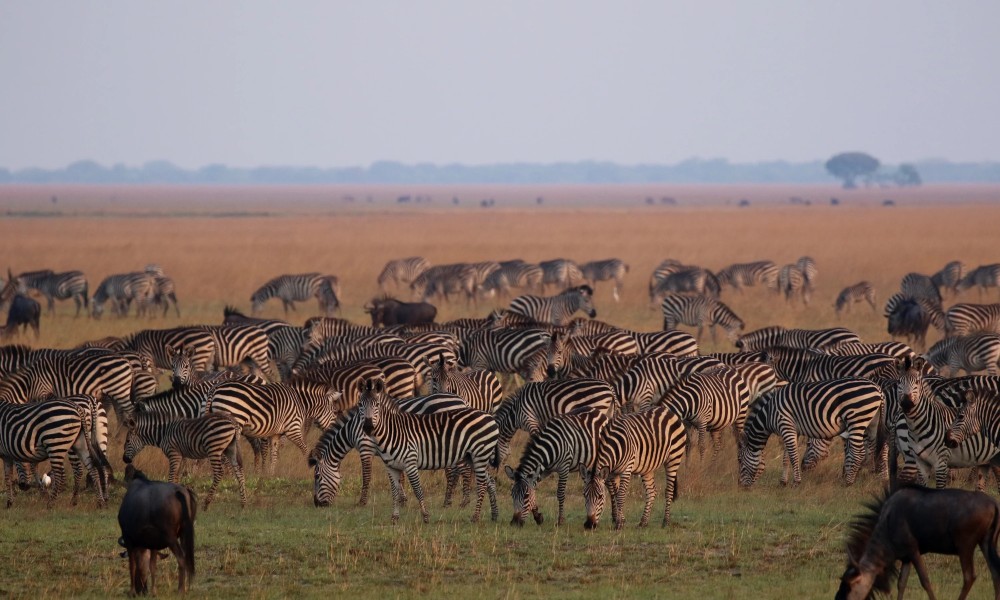
Elsewhere in Zambia, Liuwa Plain National Park has demonstrated how long-term investment in wildlife recovery can gradually strengthen populations of key grazing species. Today, the park supports more than 47,000 wildebeest and 2,300 zebra, creating an opportunity to support restoration efforts in other parts of the country through translocations.
Liuwa subsequently became the source population for one of Zambia’s largest wildlife translocation efforts to date. Specialist teams worked together to safely herd wildebeest and zebra into temporary holding bomas before transporting them more than 400 kilometres east to Kafue National Park.
In total, 1,567 wildebeest and 172 zebra were moved to Kafue, while additional animals were moved to Lusaka National Park and Sioma Ngwezi National Park as part of broader restoration efforts across Zambia. At the same time, Liechtenstein’s hartebeest were moved in the opposite direction, illustrating the connected and reciprocal nature of conservation across these landscapes.
These efforts involved close coordination between government authorities, conservation practitioners, veterinarians, ecologists, pilots, capture teams, local staff and many others working behind the scenes. Translocations of this scale require detailed planning and continual adaptation, with every operation contributing valuable lessons for future conservation work.
Supporting ecological processes
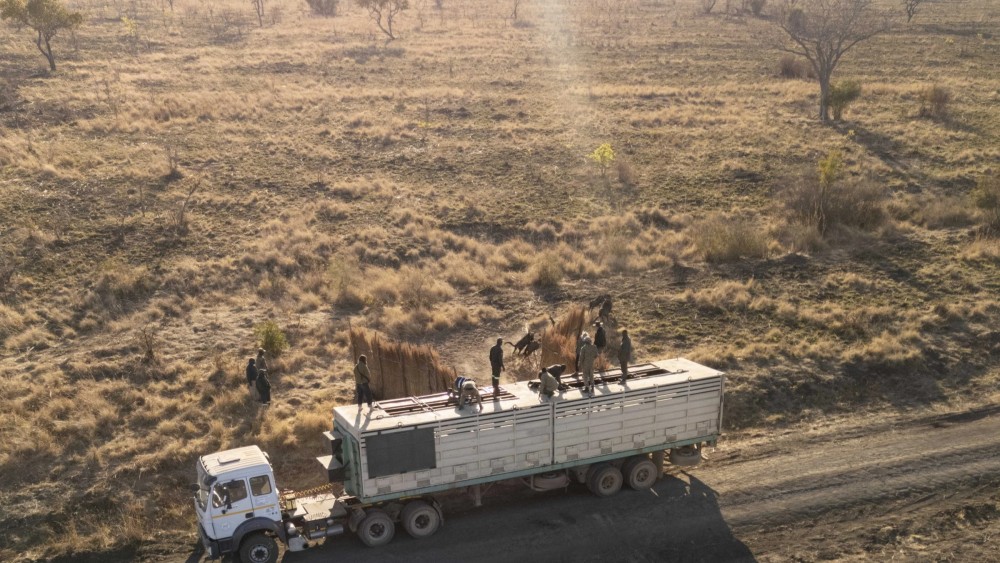
Within Kafue, five release locations were selected across different parts of the landscape, helping to distribute grazing pressure and support ecological recovery across multiple ecological zones.
Early monitoring has provided encouraging indications that many of the newly introduced herds are adapting well to their new surroundings. Most animals remained within 10 to 20 kilometres of their release sites, where they were observed feeding, joining resident groups and, in some cases, producing calves within weeks of their arrival. Their movements and adaptation will continue to be monitored over time, contributing to a growing understanding of how wildlife populations respond to translocations at this scale.
The ecological effects of grazing species often unfold gradually. Wildebeest and zebra influence grassland systems in ways that can shape habitat structure for other species, support nutrient cycling and contribute to the broader functioning of savanna ecosystems over time.
A long-term effort
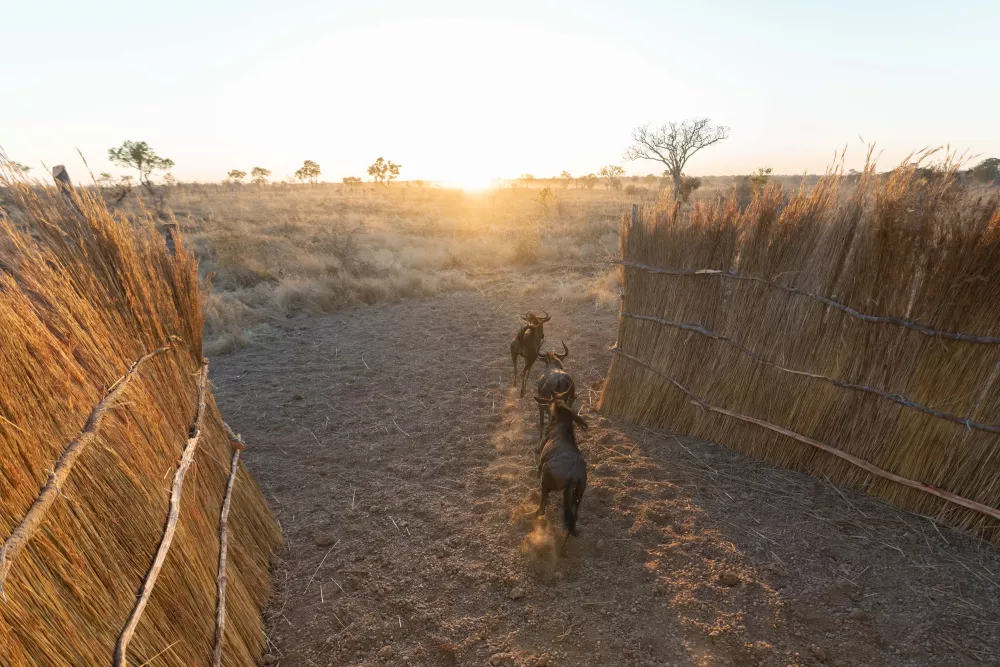
Wildlife translocations are only one part of a much larger and longer-term conservation endeavour. Ecological restoration does not happen quickly, nor does it follow a straight line. It depends on strong partnerships, sustained commitment, local knowledge and the ability to adapt and learn over time.
The translocation was made possible through the collective efforts of many partners. Alongside the Government of Zambia, organisations including The Nature Conservancy, Zambian Carnivore Programme, Musekese Conservation, Game Rangers Association of Zambia, Panthera and WWF Zambia contributed expertise and support throughout the planning and implementation of the operation.
The movement of wildlife between Liuwa and Kafue also reflects something broader about conservation in Zambia: that protected areas are not isolated islands, but part of connected ecological and human landscapes that can support one another.