22 July 2025
We had several comments on our recent social media post about tagging dugong in Mozambique’s Bazaruto Archipelago National Park, with people expressing concern about the risk of the long trailing tag becoming entangled. So, we wanted to share some more information and put your minds at rest about the wellbeing of the dugongs that have been tagged – which is, of course, always the priority in any wildlife tagging project.
The system that was used in Bazaruto was designed by leading dugong researchers from Australia. A team from James Cook University in Queensland travelled to Mozambique to oversee the deployment of the tags and the upskilling of Bazaruto Archipelago National Park team members.
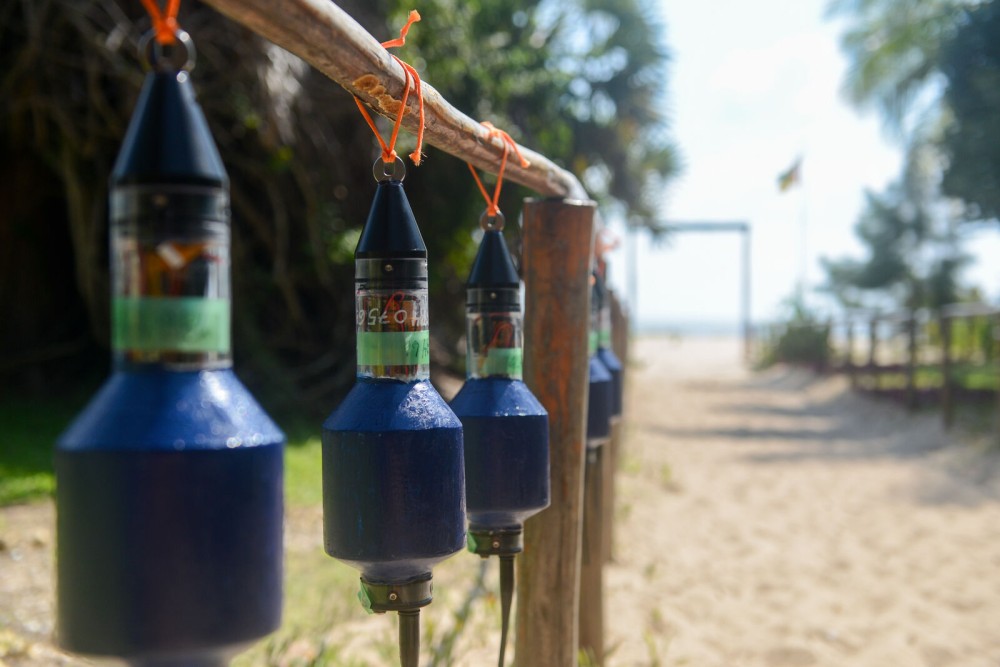
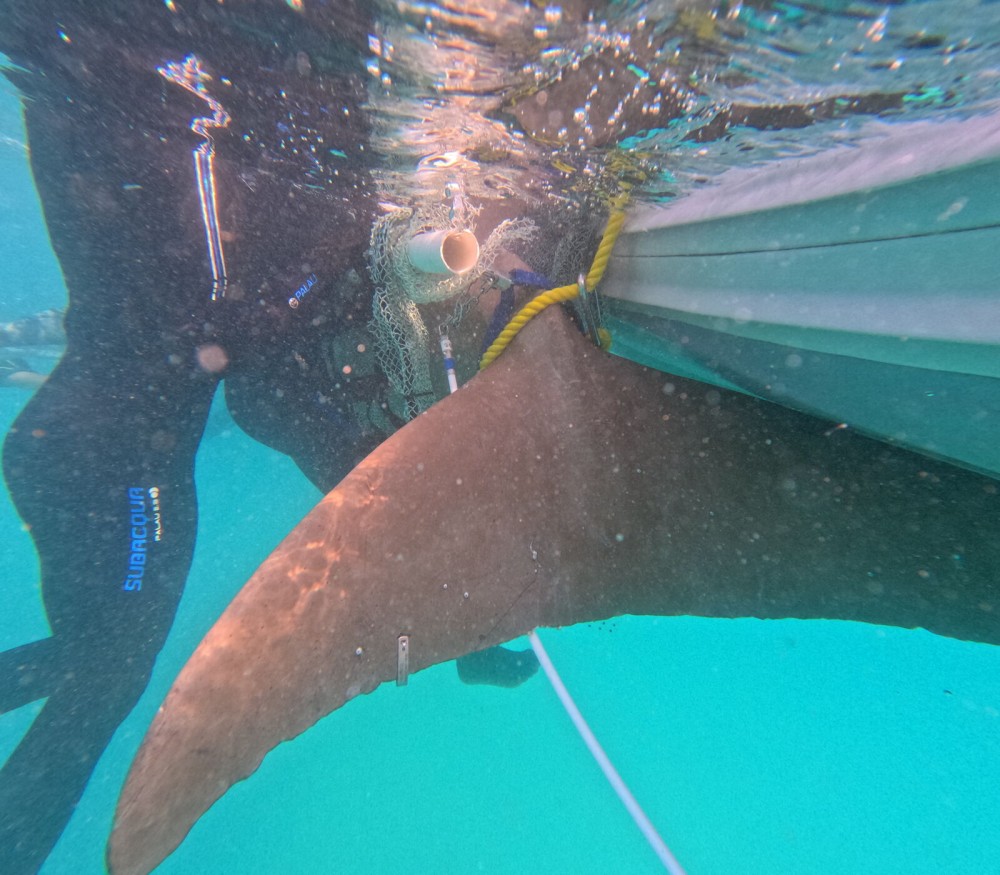
The tags that were used are specially designed for use with dugongs (and manatees), which, unlike dolphins, for example, lack a dorsal fin. This means that the only practical way to attach a satellite tracking tag is by using a belt and buckle arrangement around the dugong’s tail. The rest of the apparatus consists of a 1.5-metre tether and the transmitter itself, which is designed to float.
The length of the tether allows the transmitter to float at the surface when the dugong is feeding on seagrass in the shallow water where they spend much of their time. There is a weak link between the tether and the belt, which will easily break if the tether or transmitter becomes entangled in vegetation or on an obstacle. In addition, the belt contains a link that is designed to corrode through after around 8 – 10 months, at which point the entire apparatus will fall away from the dugong’s tail.
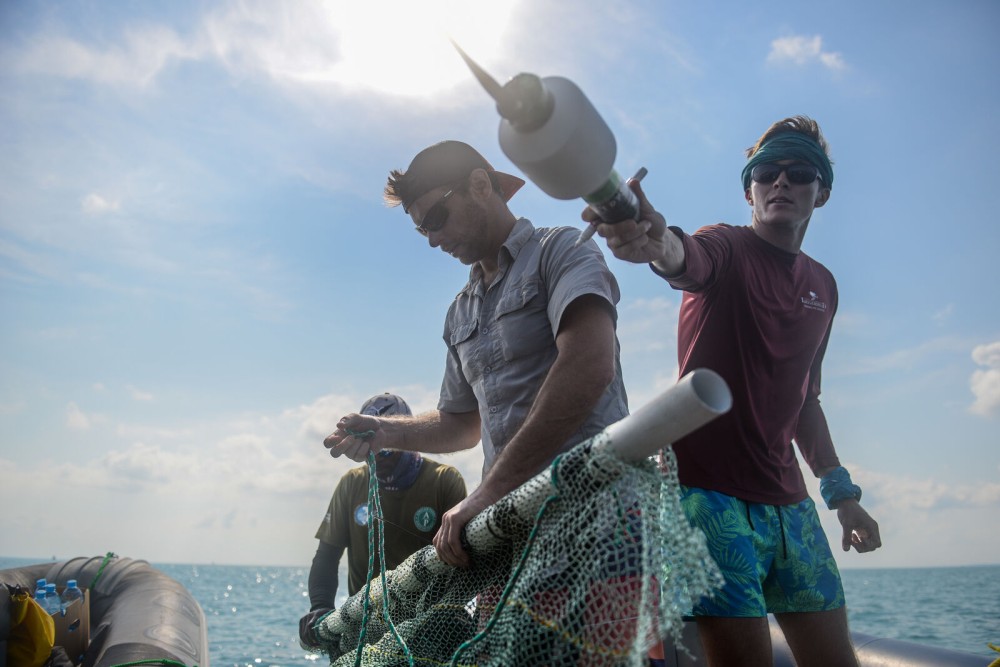
This model of tag offers the best of both worlds – near-live tracking of dugongs through the transmission of data to satellites, with negligible impact on the dugong’s mobility or wellbeing. To put this in context, the transmitter weighs 1.5kg while an adult dugong weighs around 500kg, so any additional drag is insignificant.
Once the tag detaches from the dugong, it will float to the surface and drift with the current. It will continue to transmit its live location so that the researchers can locate and recover it (usually from a local beach, where the transmitters often wash up). The different movements of attached and separated transmitters make it easy to tell which is which.
In all these ways, the wellbeing of each dugong and mitigating the risk of marine pollution are considered at every stage of the project. Vitally, the data collected from these tags is contributing to a greater understanding of the conservation challenges facing dugongs throughout their range (small populations can also be found in Madagascar, Seychelles and the Red Sea, among other locations).
One final note – to answer the question about the fish that can be seen swimming close to the dugong in the video – yes, those are remora. These are a type of fish that has evolved to use suction to attach themselves to larger sea creatures for the purposes of travel, feeding on scraps, and having seawater pushed through their gills so that they can breathe.