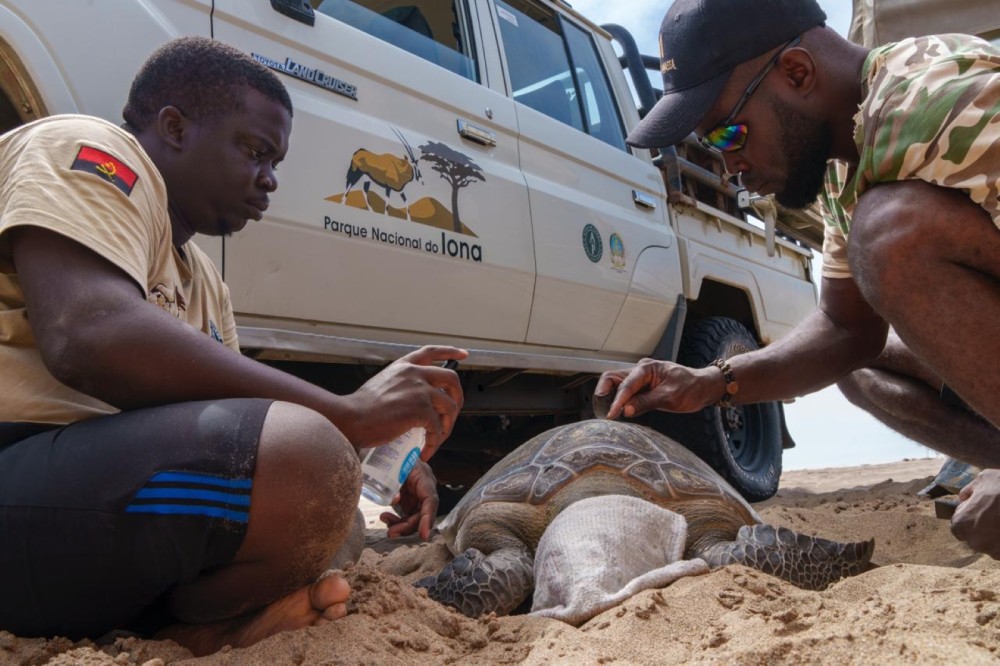
In March 2026, a team from Iona National Park in Angola worked with Projecto Kitabanga to tag green turtles at the park’s Kunene River Mouth. In total, eight sea turtles are now fitted with Argos tags which will help researchers understand their movements and habitat choices.
To celebrate World Turtle Day, we’re delighted to be able to tell this story, and share some of the initial insights gained from studying the tracking data.
Data on Green turtles in Iona’s Coast will help the Park to Better Understand and Protect its Coast
Green turtles are a slow-maturing species, juveniles tend to be relatively sedentary, often spending many years in the same foraging areas. Even adult green turtles tend to return to familiar areas after longer journeys to breeding and nesting sites.
In terms of their diet, green turtles are the most herbivorous of the world’s sea turtle species, with the adults mainly eating algae and seagrass. While juveniles may eat jellyfish and invertebrates, they are also largely dependent on algae and sea grass.
Due to their requirements green turtles often do not travel far from preferred foraging grounds, particularly before they reach sexual maturity. These habits mean that green turtles can be an important indicator of marine ecosystem health.
Understanding the Tracking Data
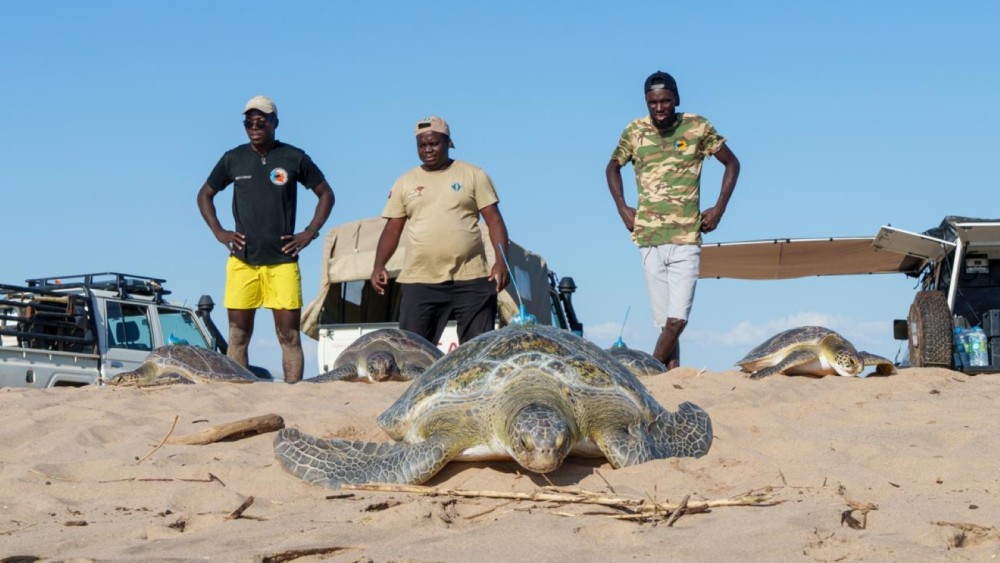
They also help to explain the initial data received from the tags, which shows that the turtles in this study have indeed largely remained close to the Kunene River Mouth, where they were tagged around two months ago.
Although this study is still in its early stages, it illustrates the need to monitor, understand, and protect marine and coastal ecosystems such as the Kunene River Mouth.