Community Development
Chinko, in partnership with the government, has the opportunity to foster stability in the region while working with the surrounding communities, to promote regional development based on a better understanding of the value of wildlife.
Community Engagement
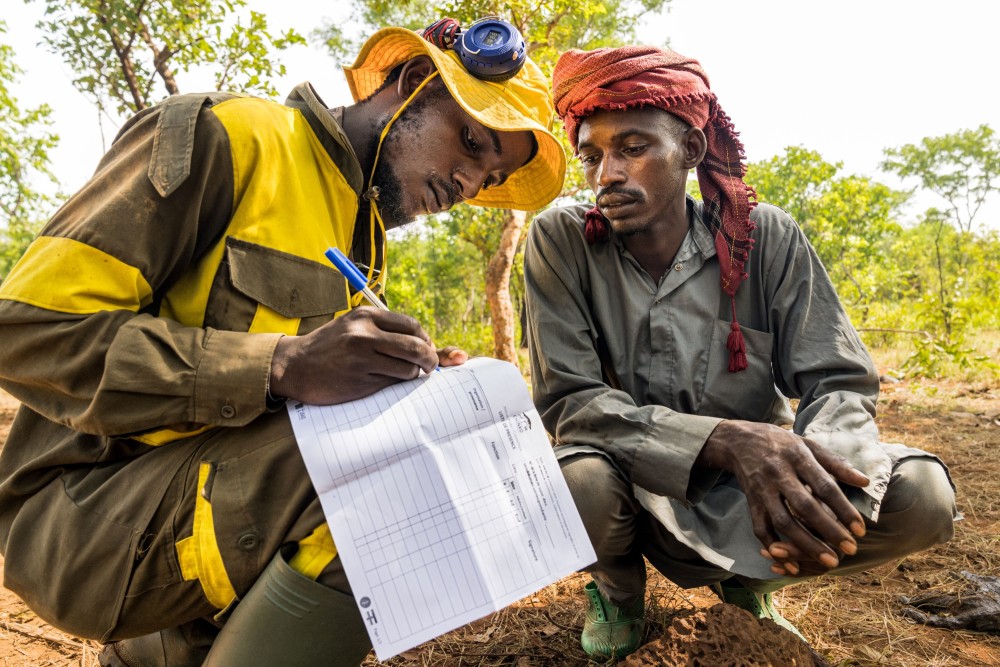
Community committee meetings are held annually, and regional meetings with herders, local authorities and communities are convened by the team in all major transhumance locations. Local Development Consultation Groups have been created; these are village-based structures that stimulate local development and serve as an anchor for land-use planning. A land-use plan has been completed with defined zones managed by community governance structures. As a result, four new community fishing reserves have been established.
Stakeholder meetings in Bangassou, Bria, and Birao gathered 250 community members in 2024 to discuss priorities and key achievements, while two major awareness campaigns reached 16,910 people in 27 villages during the same year.
Education and Environmental Awareness
One of African Parks’ key goals is to provide quality educational opportunities that support economic and social transformation while raising awareness of conservation and environmental issues. These campaigns have been well received, attracting the support of local authorities.
Environmental education is emphasised in local schools, with resources provided to pupils and teachers, and environmental education clubs being set up. The Community Development team’s environmental education guide, “Mon Chinko,” which advances conservation knowledge within communities, has been approved by the education authorities in Mbomou, and distributed to and used in some 30 primary schools.
Eight youth clubs are educating 180 young people on environmental awareness. In 2024, students performed 12 street theatre shows on biodiversity, fishing and hunting.
Sustainable Enterprise Development
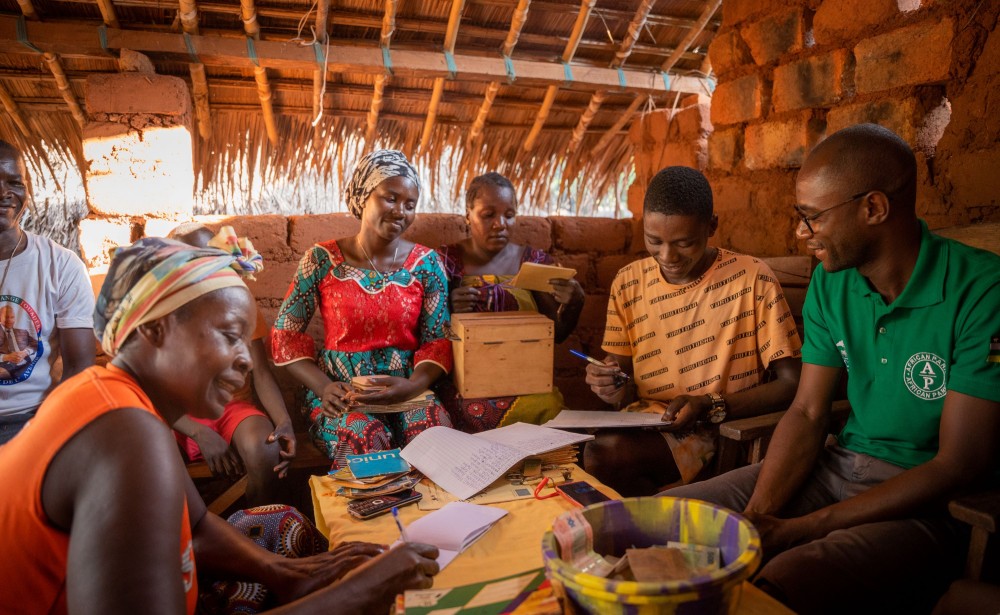
Economic development projects have begun to provide a sustainable form of income to improve the quality of life for Chinko’s surrounding communities.
Chinko supports sustainable agriculture in the surrounding communities to promote sustainable livelihoods. Farming groups receive regular training in sustainable practices for cassava, groundnut and maize farming, as well as market gardening techniques and sustainable fish farming, with Chinko providing financial support to cover the setting up and running costs. In 2024, over 50% of Chinko’s food — cassava, rice, coffee, peanut butter, and meat — was locally sourced, generating income for local communities. Farming support grew to 26 groups with 11 new ones trained in cassava, groundnut and maize cultivation. In addition, the Community Development team trained and supported 200 fishermen in sustainable acadja fishing across four groups in Bangassou, Rafaï, Ouango and Bema. This method creates fish habitats by planting thick bundles of wood and branches in shallow waters, which attract fish. Their efforts yielded 600 kg of fish in a year.
Since 2020, Chinko has supported 60 Village Saving and Loan Associations with training in financial management, micro-credit management and association management. These enable communities to save money which they can then re-invest in new projects, additional income-generating activities or education. Two new village savings and loans associations brought the total to 62 in 2024, and 2,942 people received income-generating training.
Be the first to see impact in action
Join our community and stay connected on the latest news and stories.