Effective monitoring and investment in innovative aquaculture is helping fishers in Matusadona National Park, Zimbabwe, to protect their livelihoods and conserve fish populations.
Confronted with the threat of competition from illegal fishers who do not feel bound by quotas, and exploitation by middlemen, fishing communities on the shores of Lake Kariba in Matusadona National Park, Zimbabwe, were feeling the squeeze on their livelihoods.
Thanks to conservation partnerships and new aquaculture enterprises, they are now building a better future for their families through increased incomes and reduced ecological impact.
The impact of illegal activities on the lake
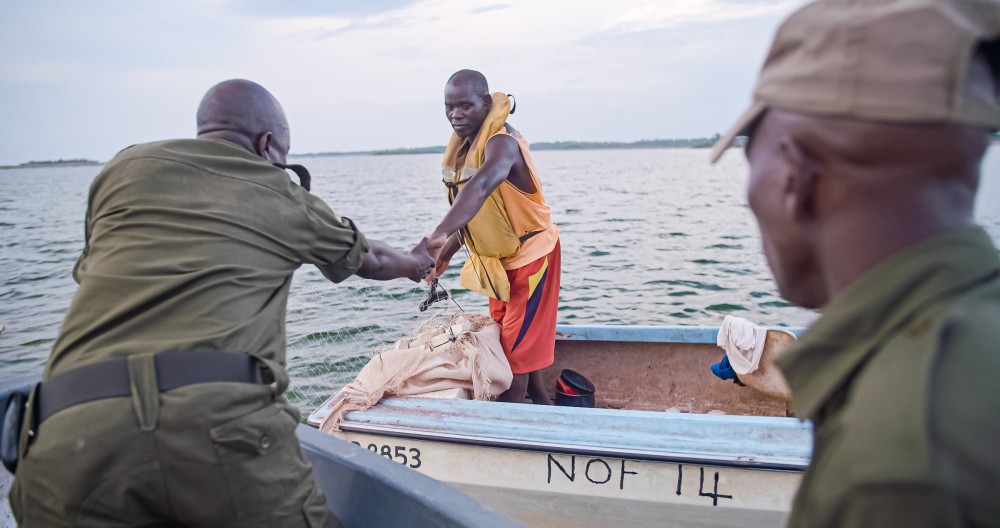
Through disregarding the regulations around fishing permits, mesh size, closed seasons, and target species, illegal fishing is having a detrimental impact on fish stocks in Lake Kariba, and therefore on the livelihoods of local communities.
Law enforcement patrols organised by Matusadona National Park have been expanded to cover over 30% of the lake’s area, or some 1,650km2. The figure of 30% is significant, as that’s the level of coverage at which scientists estimate that the long-term health of the ecosystem can be maintained.
The Fisheries Department of the Zimbabwe Parks and Wildlife Management Authority (ZPWMA) has been at the forefront of patrol activities across the lake’s southern sector. Their continued efforts have reduced illegal fishing incidents by over a third in just two years, thereby reaching a tipping point where the risks of detection for illegal fishers now outweigh the potential profits to be made.
The reduction in illegal fishing has made legal fishing more viable, and the data supports this. Legally landed catches are recorded by weight and value, allowing the activities of permitted fishers to be understood in the context of the health of the overall lake ecosystem.
Tipping the scales in favour of permitted fishers
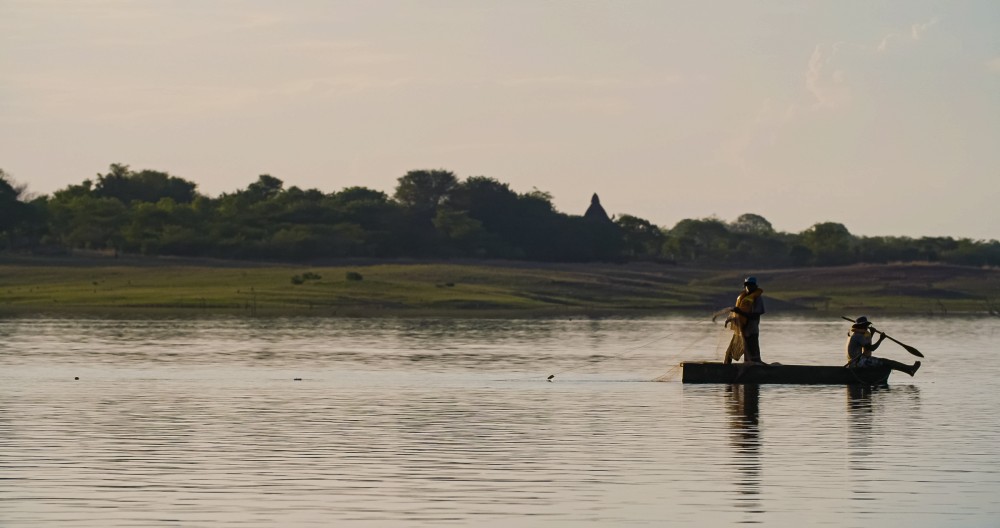
The permitted fishers are not of course the only link in the legal fishing value chain. Much of the catch that is landed has to be sold immediately, as in the absence of cold storage facilities, it would otherwise soon spoil. This gives middlemen a lever to use on the fishers, who often have to sell their catch at unfavourable rates.
While law enforcement programmes have helped make fishing in Lake Karib more ecologically sustainable, there was also a clear need to make permitted activities more economically viable, too. After all, the fishers were complying with regulations intended to protect fish populations but were not necessarily seeing the financial rewards of their stewardship.
Matching innovations to community needs
With two different fishing camps established along the southern shores of the lake, an opportunity existed to address the interlinked challenges of resource management and revenue generation through two different innovations.
At Msampa, the easternmost and largest fishing camp, an aquaculture enterprise was pioneered with a view to meeting the protein needs of the area’s growing human population, without endangering the lake ecosystem through increased catches.
The Msampa fishers traditionally placed nets in the Ume River where it flows into Lake Kariba. This location was also found to be ideal for fish farming operations. A floating cage was installed and stocked with Nile tilapia, a fast-growing species that could help the fishers meet their nutritional and economic needs.
With the new income stream from aquaculture, the fishing community of Msampa will be less dependent on wild fish. This will deliver a dual benefit – breathing room for the local ecosystem to recover, and more resilient livelihoods.
The fishers received intensive aquaculture training, and are now on the verge of seeing the first returns from their enterprise. The beauty of this model is that it is replicable and scalable, and indeed a second floating cage has already been installed.
A chilling effect on costs
40km west of Msampa, the fishers of Kings Camp were feeling the heat when it came to selling their catch. Without access to cold storage facilities, both revenue-earning opportunities and catching capacity were necessarily limited. Despite being located close to some of the richest waters in Lake Kariba, Kings Camp could only support a relatively limited number of fishers. Being able to keep fish fresh for longer would deliver multiple benefits: more permitted fishers could take advantage of the opportunities the lake provided; the catch could be kept for longer and sold when market conditions were more favourable, and logistical efficiencies and cost-savings could be achieved through consolidating loads for transport to urban markets.
Powered by solar energy, the cold storage facilities have already had a tangible, positive impact. There are now plans to replicate these facilities at Msampa Fishing Camp during 2026.
The stories of each of these two fishing camps in Matusadona show how different, contextually relevant approaches can conserve biodiversity (aquaculture at Msampa Fishing Camp) and enhance the sustainability of wild resource use (Kings Camp). In both cases, local livelihoods were made more resilient.
A virtuous circle
Law enforcement initiatives in Matusadona have set a positive chain reaction in motion, with both the ecosystem and communities benefitting. Active law enforcement reduces illegal fishing, leading to an increase in wild fish populations and the yields that legal fishers can achieve. This results in communities becoming invested – and participating – in monitoring and patrolling.
Law enforcement increases legal fishing income by reducing illegal competition; aquaculture protects wild fish stocks and generates revenue; cold storage and improved logistics enhance the economic returns on legal fishing activities.
These recent initiatives are making a vital contribution to meeting communities’ needs for reliable income and protein security.
They are an example of how rather than conservation being imposed on communities, it is evolving in partnership – a partnership that values fishers’ contributions and makes conservation a key pillar of community prosperity. The Lake Kariba communities are experiencing the positive impact of collaborative conservation and are giving it their backing.