About the Author
Emma Badger
It is 7:30 in the morning. The tide is low, one of the best times to snorkel the crystal-clear waters of Two Mile Reef, where the Indian Ocean meets one of Africa's most thriving coral systems on the eastern flank of the Bazaruto archipelago. A group of women fan out across the beach with empty hessian sacks. By the time the first snorkelers are back on the boat, those sacks will be full: plastic, glass, fabric, fishing rope. Each bag will be weighed, sorted by material, and stored at one of ten eco points scattered across the islands, until the boat comes at the end of the month to take it all to the mainland.
A Global Challenge on Local Shores
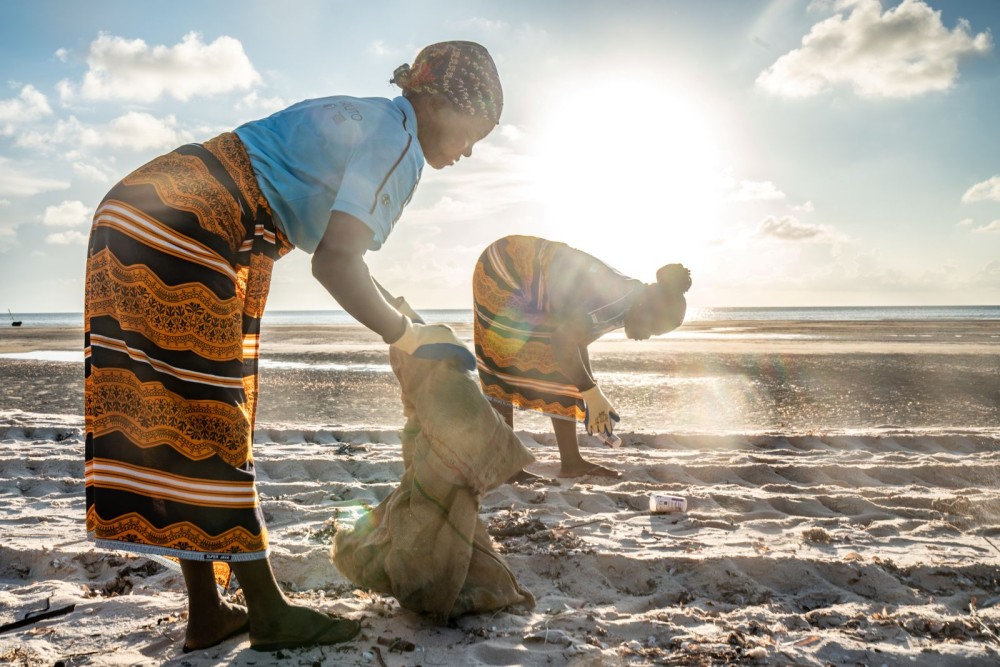
Bazaruto Archipelago National Park, five islands spanning 1,430 km² off Mozambique's Inhambane coast, is home to over 2,000 marine species, including the last viable population of dugongs in the Western Indian Ocean. It is one of the most ecologically significant marine protected areas on the East African coastline. And like every coastline on earth, it is fighting a quiet war against plastic.
What struck me most, standing inside one of Basisa's meticulously organised eco points, was that the month was barely halfway through, and hessian sacks were already packed floor to ceiling, each material kept scrupulously separate. The waste is collected by boat at the end of every month.
I found myself trying to picture what it would look like if you emptied every one of those sacks onto the beach just outside. A rather alarming thought. Perhaps even more striking was what the women told me about some of the packaging they collect. Labels from countries they have never visited, from brands they have never heard of, washed up on their doorstep from an ocean away. Plastic debris can travel thousands of kilometres, carried by nothing more than currents, wind and tides.
Making a Living From the Tide
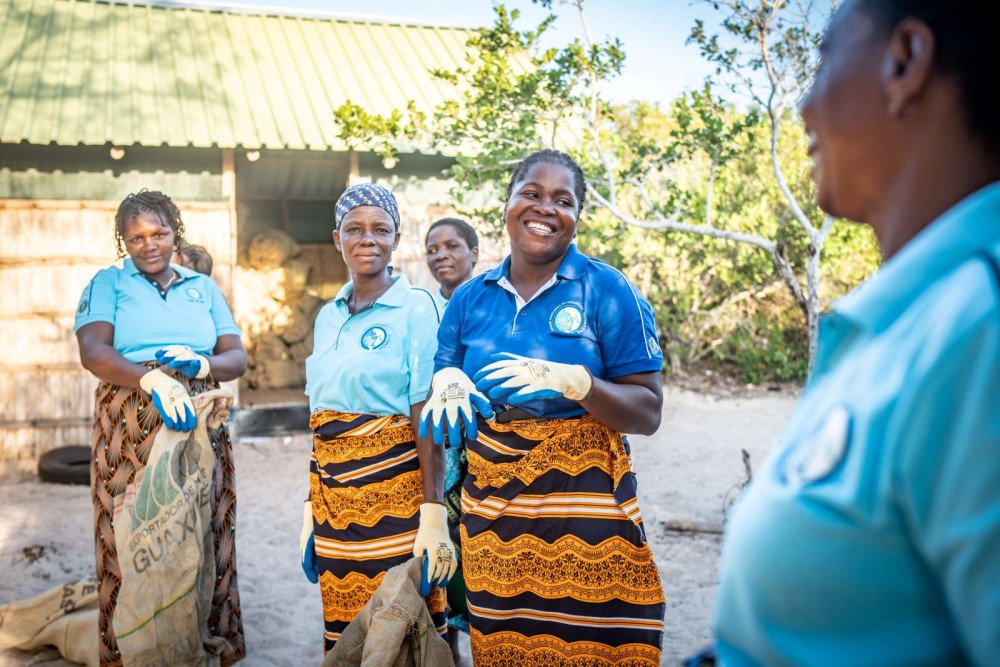
Basisa, which means "cleaning" in the local language Xitsua, was launched in 2020, partly in response to the economic disruption of COVID-19. Bazaruto designed it to address two challenges at once: reducing ocean waste pollution and creating livelihoods for the communities living inside the park.
Today, 62 people are employed through the programme, 50 of them native islanders. Of those, 48 are women, seven of whom have received training as supervisors. In five years, Basisa has injected approximately USD 400,000 into the local economy, reached over 8,500 community members through awareness campaigns, and kept every beach across the archipelago clean for five consecutive years.
Judite Simbine
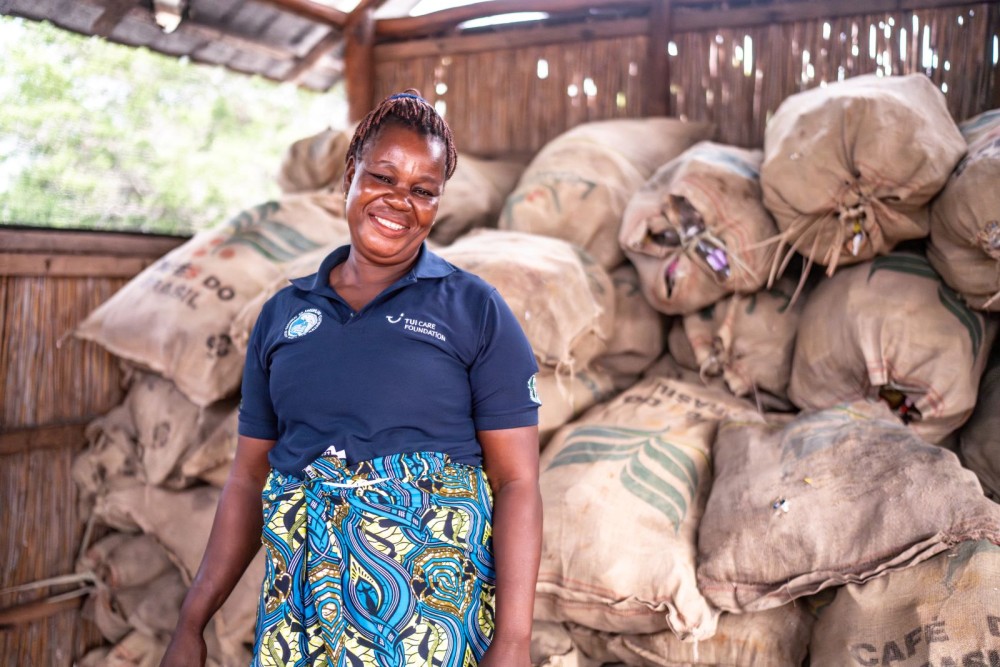
Judite is a Bazaruto employee. She says this with a quiet pride that says more than any job title could. Before Basisa, she had nothing. Now she has a stable income and a home she built herself. But what Judite describes goes well beyond personal transformation. The beaches are visibly cleaner. The large variety of coastal birds, hermit crabs, horned crabs and nesting turtles are healthier for it. And since Basisa started, malaria on the island has dropped significantly. A reminder that in this case, conservation and public health work hand in hand.
"I started working with nothing. Now I can support my family and build my house. The beaches are clean, the animals are healthier and there is much less malaria on our island since we started." - Judite Simbine, Basisa Bazaruto waste collector, Benguerra Island.
Nilza da Fáusia Amélia Maquina
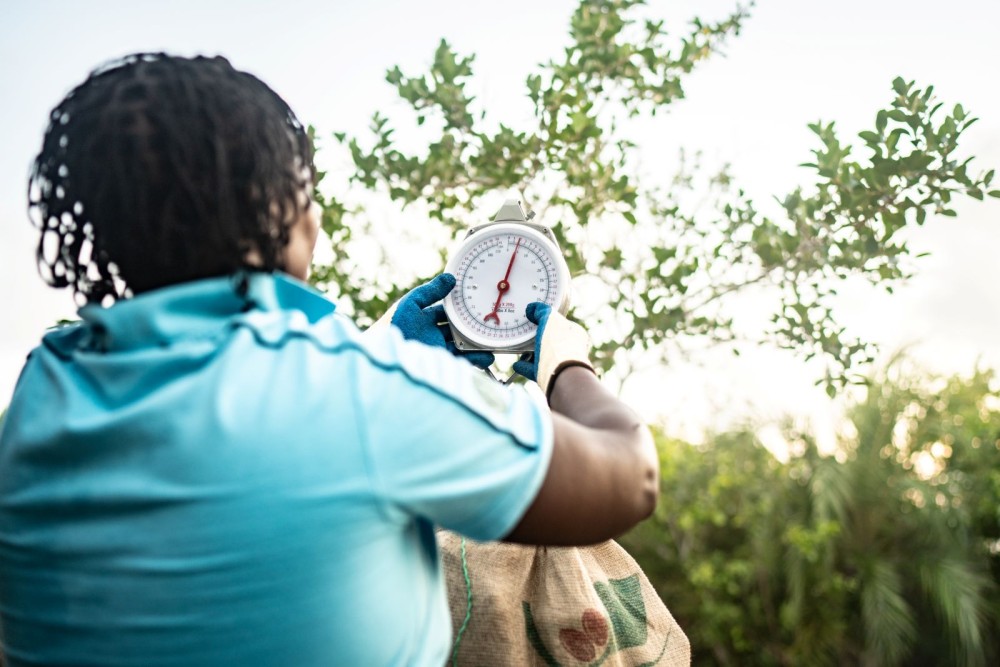
Nilza is one of ten eco point supervisors across the archipelago. Each supervisor oversees a designated stretch of beach, so that between them, every inch of coastline is eventually covered. She describes the daily rhythm with the efficiency of someone who has done it a thousand times: leave at 7:30, collect, return, separate, weigh. Every bag is recorded in a notebook, sectioned by weight and type of waste, so that at the end of the month, when the boat comes to collect it all, an accurate account of exactly what has been gathered, and how much, goes with it. Nothing is guesswork here.
The Full Circle – Built From the Beach
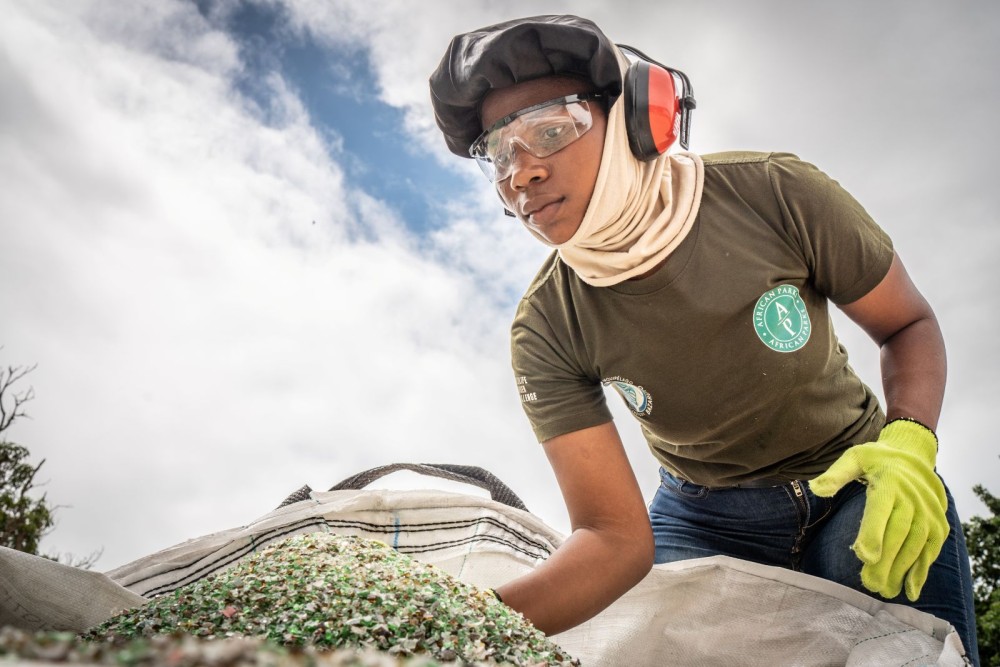
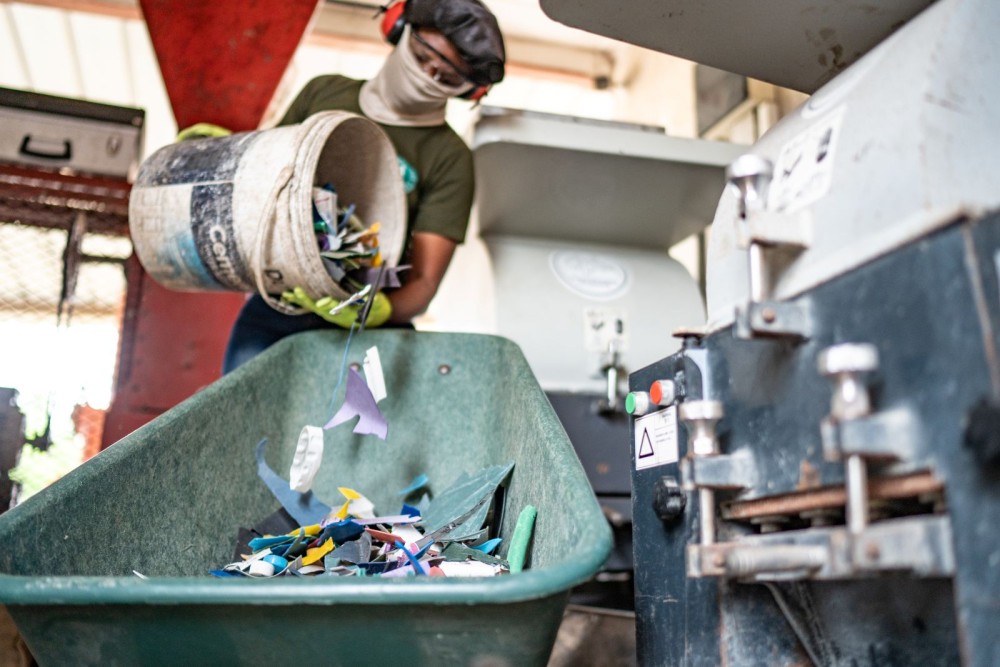
Follow the waste far enough and you end up somewhere rather unexpected. Visit Bazaruto’s new state of the art offices in Vilanculos and look down at your feet. The paving stones shimmer with flecks of blue and green, glinting in the sun. That is Basisa, set permanently into the ground beneath you. The waste is transported by boat to Vilanculos on the mainland, where the Bazaruto team operates its own processing facility.
Flávio Rinde, who works at the Basisa waste shredding and brick making plant, explains the process simply: glass and plastic are processed separately, then mixed with sand and cement to produce paving bricks, the final product of the recycled material. Each brick is made up of roughly 40% recycled waste collected and sorted by the Basisa team. The waste from the beach, set permanently into the infrastructure of the park that protects it. Since the programme began, 223,748 bricks have been produced this way.
What It Actually Takes
What sustains a place like Bazaruto, what keeps its reefs intact, its dugongs alive, its beaches walkable, is not only the conservation work, but also this. A woman on the beach at 7:30 in the morning, filling a hessian sack with waste. Then doing it again the next day. The programme is currently funded entirely by African Parks, and its future depends on sustained investment. The bricks are beautiful. The beaches are clean. The ocean, for now, is holding.