About the Author
Charlotte Keast
In Zambia’s Bangweulu Wetlands, a pioneering conservation programme is developing new methods to incubate and rear shoebills, while building the local skills needed to protect the species into the future.
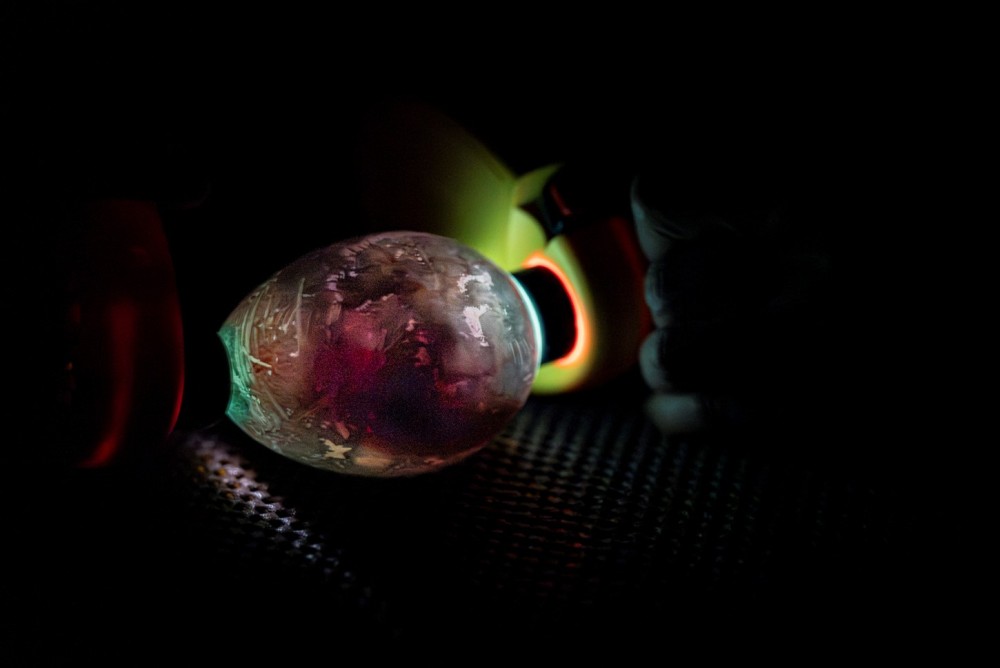
At the shoebill facility in Bangweulu Wetlands, Facility Technician Mupanga Mwewa helps monitor a shoebill before it has even hatched. The egg is carefully lifted from the incubator and held up to a bright light in a process known as candling, allowing the team to check on the developing chick inside the shell. It is then weighed to monitor how much mass it has lost through moisture loss — a vital measure of healthy development.
Over the course of incubation, a shoebill egg should lose around 13 - 15% of its original weight, and the team carefully tracks whether this is happening at the expected rate. Every other day, the egg is also misted with warm water before being returned to the incubator, replicating a behaviour of shoebill parents in the wild.
"They pour water on the eggs on the nest. Wild parents do this, so we need to replicate this natural behaviour," says Maggie Hirschauer, Shoebill Programme Manager at Bangweulu.
If the egg is losing moisture too quickly or too slowly, the team adjusts the humidity in the incubator and continues monitoring its progress. Every weight, observation and adjustment is recorded, adding to a growing body of knowledge about a species for which remarkably little has been documented.
For Mupanga, this record-keeping has become part of his daily work. “Today we were candling the egg and spraying water on it,” he says. “When we are doing that, we keep a record. I was recording everything we were doing.”
A First for the Species
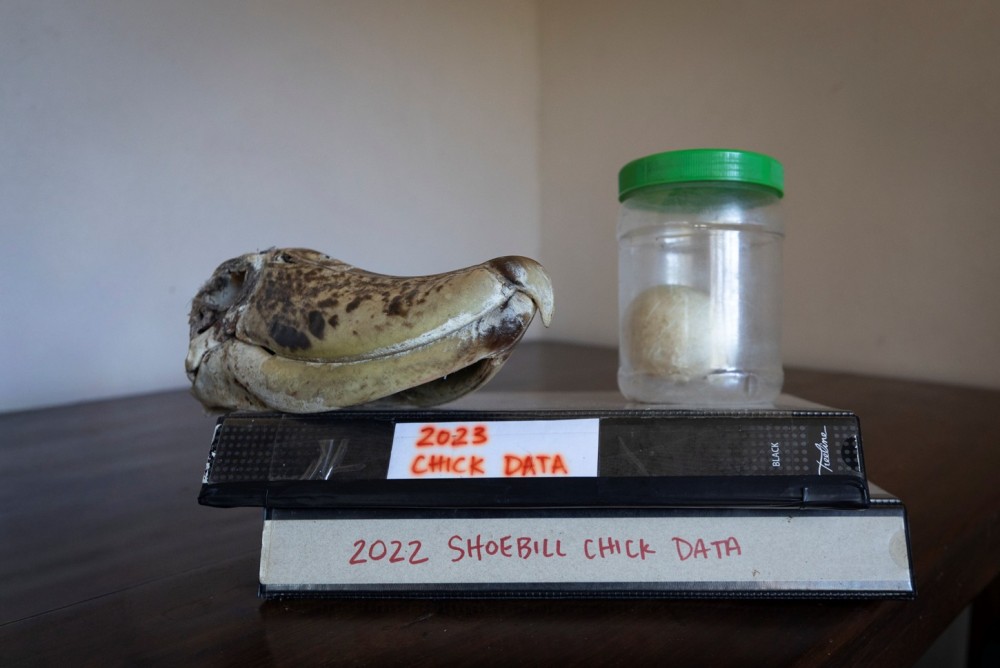
Bangweulu Wetlands is one of the most important landscapes for shoebills in southern Africa. The species is listed as Vulnerable on the IUCN Red List and faces pressure across its range from habitat loss, fire, nest disturbance and illegal wildlife trade. In Bangweulu, the Shoebill Programme combines research, nest protection, captive rearing and rehabilitation to increase understanding of the species and improve the chances of young birds surviving to adulthood.
The approach being developed at the facility is unusual because there was no established model to follow. Artificial incubation and captive rearing have been used for other threatened bird species, but shoebills had not been managed in this way before. When the programme began, there were no tested incubation parameters, veterinary protocols or husbandry guidelines specific to shoebills. Experience from other species provided a foundation, but the methods being used in Bangweulu have had to be developed through observation, adaptation and careful trial.
“I think every year we’re learning something,” says Maggie. “Some through trial and error. Some through mistakes. Some through failures. But it’s important to have the lens of, ‘it’s not a failure if you learn from it’. Nobody has ever done this with this species before. We are pioneering this work for the species.”
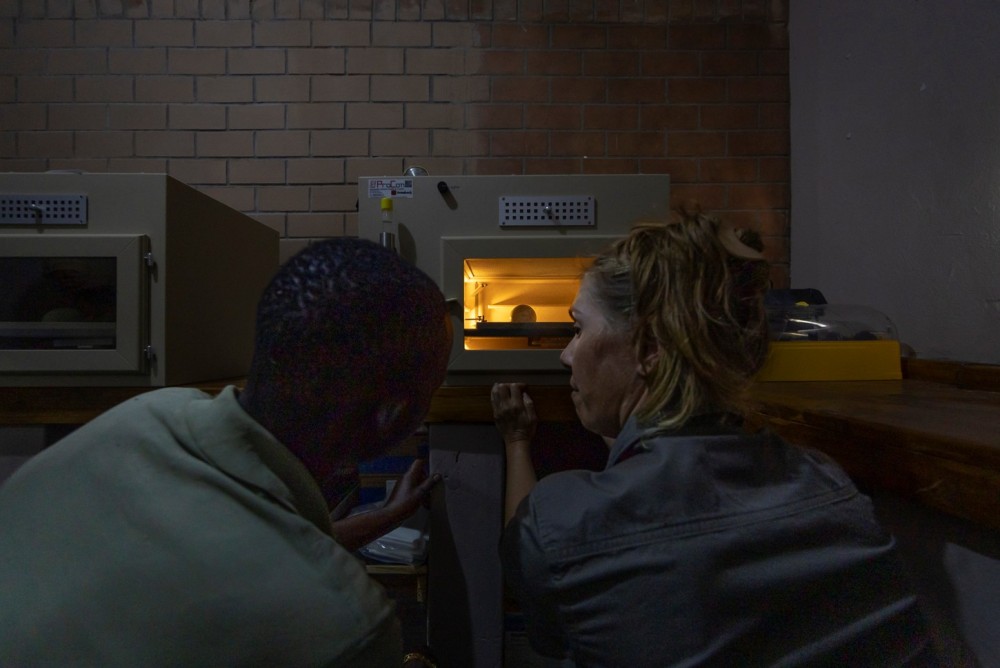
Those lessons have been practical as well as scientific. The team has refined how eggs are incubated, how chicks are transported, how birds respond to treatment and how older birds differ from younger ones in their stress responses. Methods that work for vultures, pelicans or other large birds cannot simply be transferred to shoebills. The species has to be understood on its own terms.
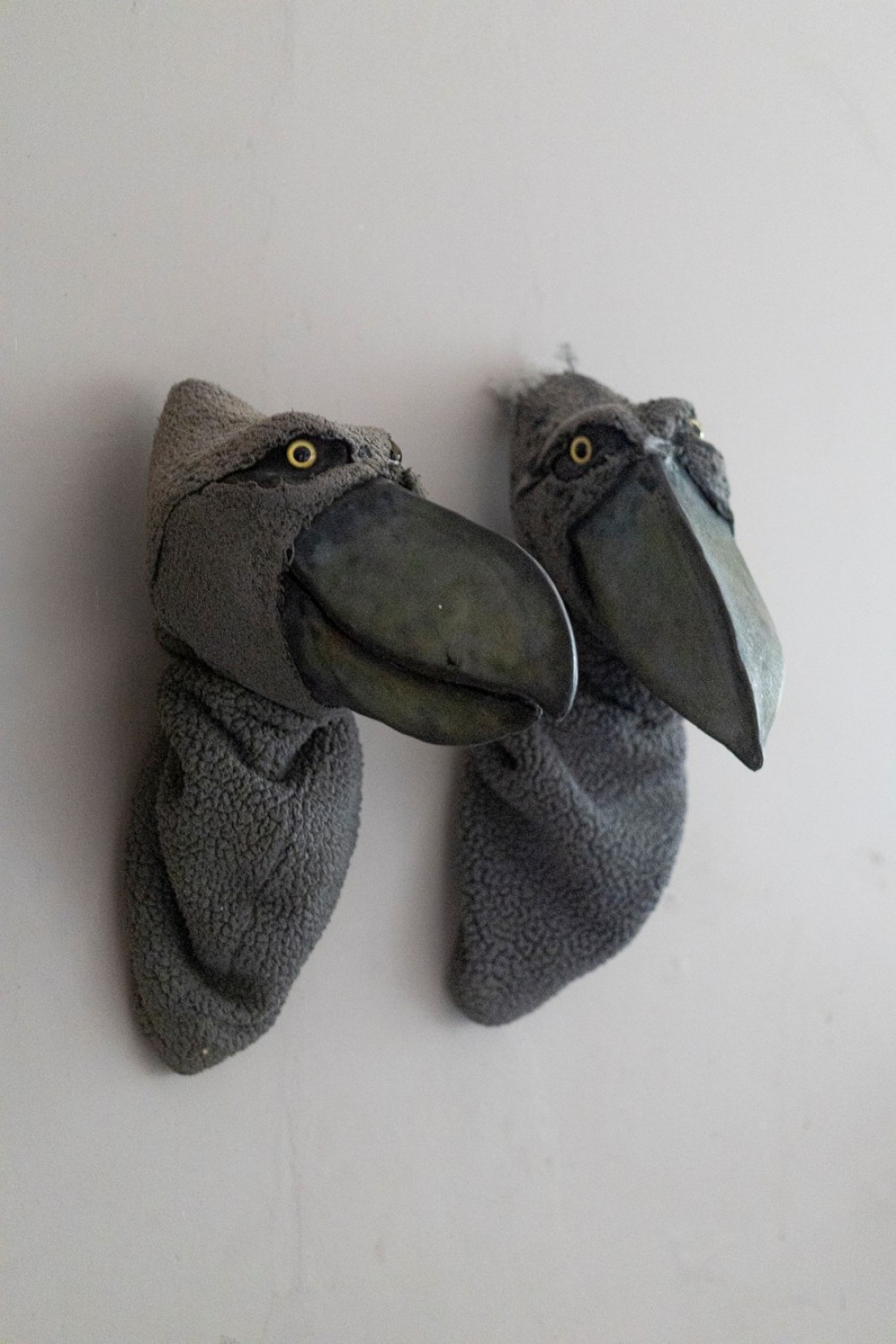
That experience is now becoming valuable beyond Bangweulu. Facilities keeping shoebills elsewhere have begun contacting the team for advice on incubation and care, while veterinarians ask for guidance when birds become sick or injured. Questions that previously had no clear answers are increasingly being directed to Zambia, where the information is being built through daily work with eggs, chicks and released birds.
Learned in the Wetlands
The programme’s knowledge does not come only from the facility. It is closely linked to the Nest Protection Programme, which works with fishermen and communities across the wetlands to locate and monitor shoebill nests. Their knowledge of the landscape helps guide where teams work, which nests are protected and when eggs or chicks may need intervention. Without these relationships, much of the information needed to support the captive-rearing programme would not be available.
Mupanga’s own path into the programme began in the wetlands. He grew up in Muwele, a fishing village in Bangweulu, and first met Maggie in 2022 after stopping to greet her beside a vehicle parked on the plain. He asked her about work and was told to come to the facility that Wednesday. He started as a casual labourer, cutting reeds and helping build enclosures, before becoming a watchman and later a technician.
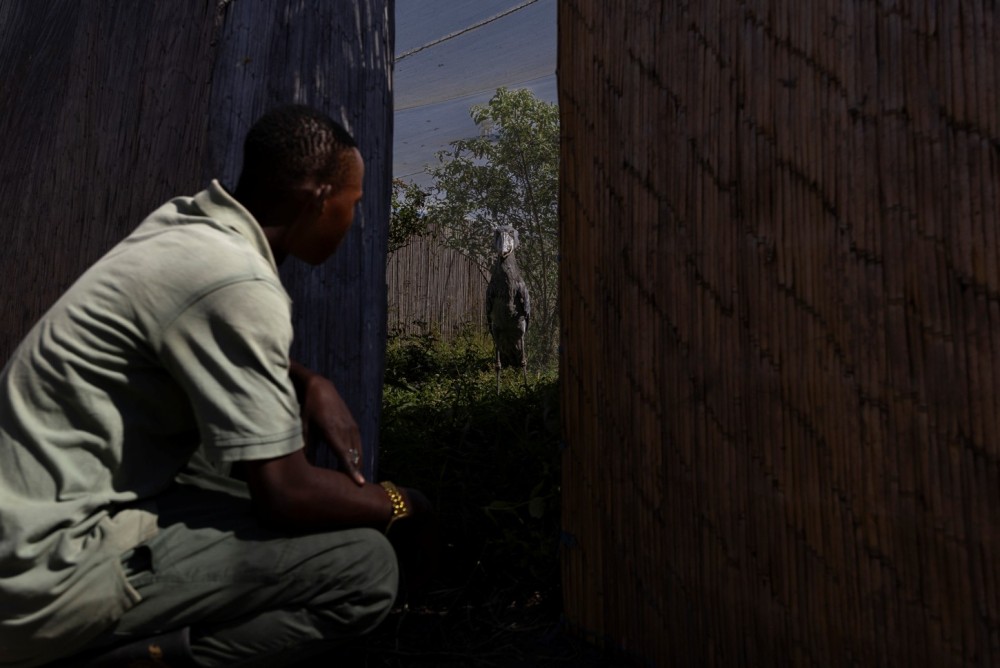
Today, he helps care for the birds, feeds chicks and adults, maintains enclosures, assists with egg monitoring and supports the team during releases. Some of his favourite moments are the simplest: seeing young chicks feed successfully, or watching a rehabilitated shoebill catch fish for itself in the wetland. The work has also changed what he wants from his future. Through helping care for sick and injured birds, he has developed an interest in wildlife medicine and hopes to become a wildlife doctor.
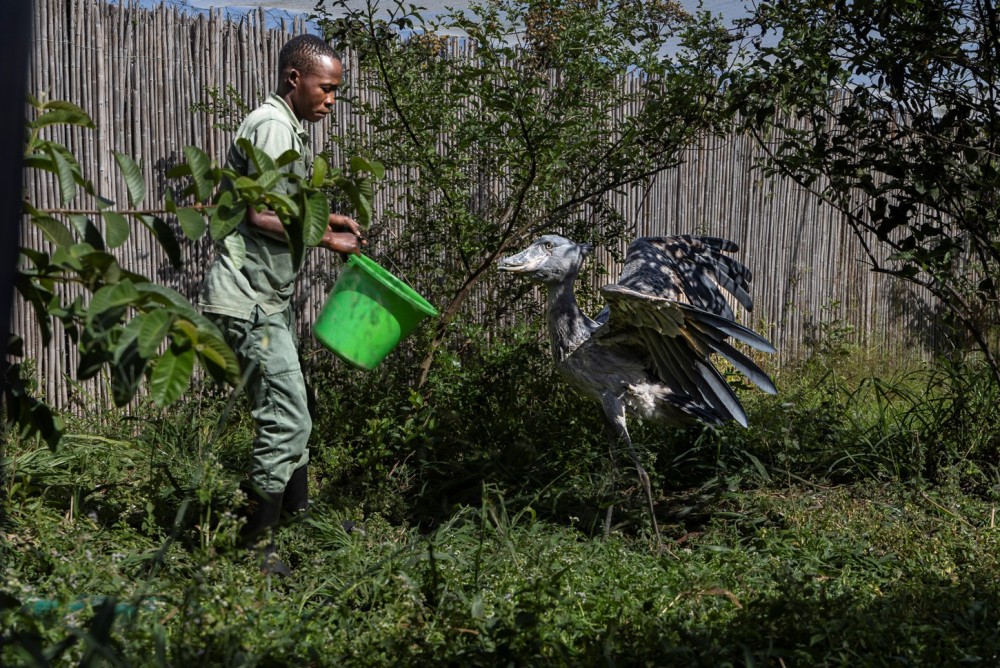
His progression reflects one of the wider aims of the programme. The shoebill facility was established to improve survival for a threatened species, but it is also creating opportunities for people from Bangweulu to gain specialist conservation skills. Egg incubation, chick rearing, post-release monitoring and veterinary support all require experience that can only be built over time.
Building Local Ownership
Since the programme began, eggs and chicks have been monitored, raised and released back into the wetlands, with each stage recorded to improve future work. For a species found in only a limited number of countries, the information gathered in Bangweulu could contribute to conservation efforts across its range.
“This can be the hub for the entire species,” says Maggie.
For Maggie, however, the long-term value of the programme is not only in the techniques being developed, but in who will carry them forward. Her team is Zambian, and much of the work depends on people from Bangweulu itself, from fishermen helping locate nests to technicians caring for birds at the facility.
“I think this programme should be a Zambian project,” she says. “I want Zambians to know that this project exists and to feel really proud.”
For Mupanga, that future is already beginning to take shape. What started as casual work building the facility has become a role in one of the first programmes of its kind for shoebills, and a possible path into wildlife medicine. As the team continues to learn how to incubate, raise and release one of Africa’s most distinctive birds, the knowledge needed to do so is being built in Bangweulu by the people who will be responsible for protecting it in the years ahead.
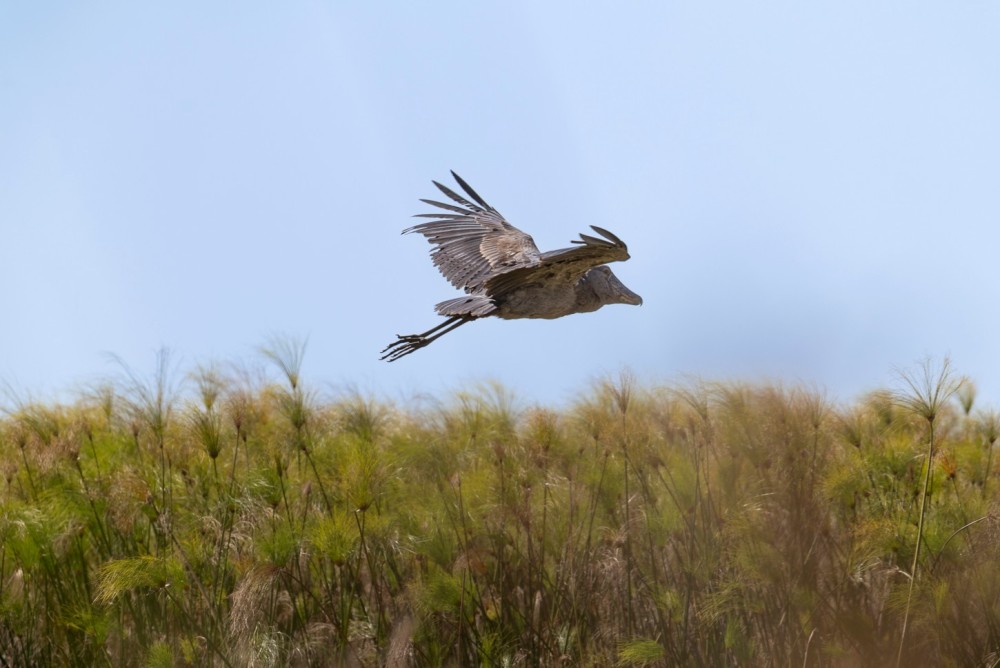
Update: Since this story was written, the shoebill eggs featured in this article have successfully hatched. The three chicks are now being cared for by the team at the Bangweulu Shoebill Programme.