Innovations in giraffe conservation methodologies are having a positive impact on the Kordofan giraffe population in DRC’s Garamba National Park.
Garamba National Park is home to the only population of giraffe in DRC, and no ordinary giraffe at that. The Kordofan giraffe (named for the Kordofan region of central Sudan) is a subspecies of the northern giraffe, one of four recognised giraffe species.
The latest phylogenetic studies have shown that there are in fact a total of seven extant subspecies of giraffe. While many of them are superficially similar, they can be told apart by differences in their skin markings, and their relative sizes (the Kordofan giraffe is slightly smaller, on average, than other giraffe subspecies).
Most importantly, each of the subspecies occupies distinct geographical areas in Africa. In the case of the Kordofan giraffe, this is the savannah regions of the Sahel and Central Africa. Geographical distribution is a clue to the importance of classifying different species of giraffe; without this level of understanding, the real significance of declines in individual populations or local extinctions might not be fully appreciated.
(Interestingly, the Kordofan giraffe was previously known as the Congo giraffe – Giraffa camelopardalis congolensis – but has since been reclassified as Giraffa camelopardalis antiquorum. ‘Congo giraffe’ is a term that is also sometimes used to describe the okapi, a species that is related to giraffe).
Garamba – a stronghold for the Kordofan giraffe
 © Radolphe Lutengya
There are only around 7,000 northern giraffe left in the wild, making it one of the most threatened large mammals on Earth. Of these, approximately 2,400 belong to the Kordofan subspecies, which is listed by the IUCN as Critically Endangered. With around 50% of these in just one national park – Zakouma in Chad – there’s a clear need to establish viable populations in other protected landscapes, including Garamba.
Only in this way can the resilience of the subspecies be enhanced and maintained, especially given the threats that all giraffe species face. Habitat loss and illegal hunting are the main risks, although in the case of Garamba, local cultural taboos against hunting and eating giraffe help to keep the Kordofan population safe.
The fall and rise of giraffe in Garamba
Despite this, giraffe have previously come close to local extinction in Garamba. From an estimated population of 350 giraffe in the 1970s, only 22 remained in 2012, with illegal hunting again being the main factor behind this decline in numbers.
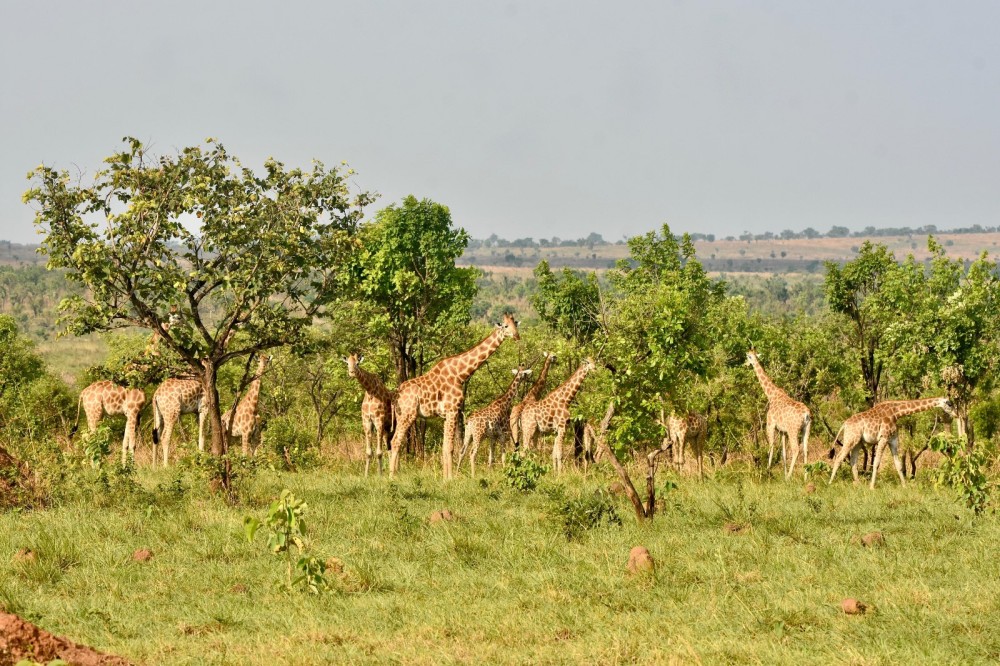
Historically, giraffe occurred throughout the Garamba Complex. Today, the population persists in two geographically distinct breeding groups: one in the southern sector of Garamba National Park and another in Gangala na Bodio Hunting Domain. Overall numbers of Kordofan giraffe in Garamba have risen to an estimated 105 at the last count (in April 2025; more on counting giraffe later in this blog).
Partnering in Conserving the Kordofan Giraffe
Conservation of giraffe – or any species – is best achieved through long-term partnerships. In the case of Garamba and its giraffe population, stakeholders including the ICCN, specialist NGO Giraffe Conservation Foundation (GCF), DRC wildlife authorities and African Parks have been collaborating since 2012.
The partnership between Garamba National Park and the Giraffe Conservation Foundation was formalised in 2022 and renewed in 2025 through a second, three-year agreement designed to provide ongoing financial and technical support.
Science-based, data-driven conservation in partnership with GCF
 © Davy Fonteyn
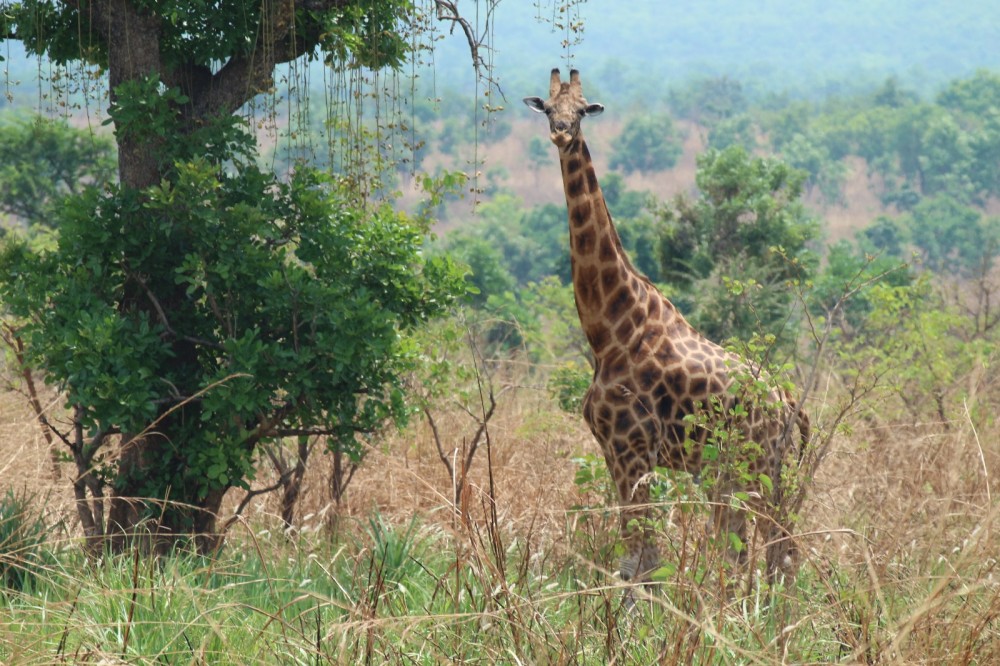
The technical aspects of giraffe conservation in Garamba include innovations in aerial monitoring, based on the implementation of a new giraffe monitoring strategy devised by Giraffe Conservation Foundation. Beginning in 2025, Garamba introduced a dedicated aerial monitoring protocol designed specifically for giraffe – one of the first of its kind in the world. The monitoring programme has a target of observing at least 80% of Garamba’s population of Kordofan giraffe every six months.
Ultralight Savannah aircraft have transformed the work of aerial surveys by providing a more cost-effective platform from which to monitor the animals. Surveys are flown along planned transects in the areas where the giraffe tend to spend their time.
The results have been encouraging, with this approach having achieved an 89% detection rate, with a median of four sightings per individual during the year. AI-driven GiraffeSpotter – Wildbook for Giraffe software and databases, supplied by the GCF, also enables the identification of individual giraffe, and greatly enhances the value that can be extracted from monitoring and survey data.
It’s in their genes
 © Jackson Munbere Kasogho
Genetic and morphology studies have played an important part in the story of modern giraffe conservation. Geneticists helped to solve the riddle of how many giraffe species and subspecies there are, and, at park level, are enabling a better understanding of the genetic health and long-term viability of populations such as Garamba’s Kordofan giraffe.
Currently, 27 giraffe skin biopsy samples are undergoing laboratory analysis, facilitated and supported by Giraffe Conservation Foundation. This process will provide important information on genetic diversity, inbreeding risk, and the long-term viability of the two isolated breeding populations. The results will help inform future management decisions and conservation planning in Garamba and beyond.
Garamba’s giraffe today
From a population reduced to just 22 individuals in 2012, following decades of civil unrest, illegal hunting, and habitat degradation, Garamba’s giraffe population continues to recover. Sustained partnership-based conservation efforts have contributed to this steady recovery, with 70 individuals confirmed in 2021, 92 in 2024, and an estimated 105 in 2025. It is hoped that such collaborative conservation efforts will see this positive trend continue and even accelerate.
Why the Kordofan giraffe matters
 © Davy Fonteyn
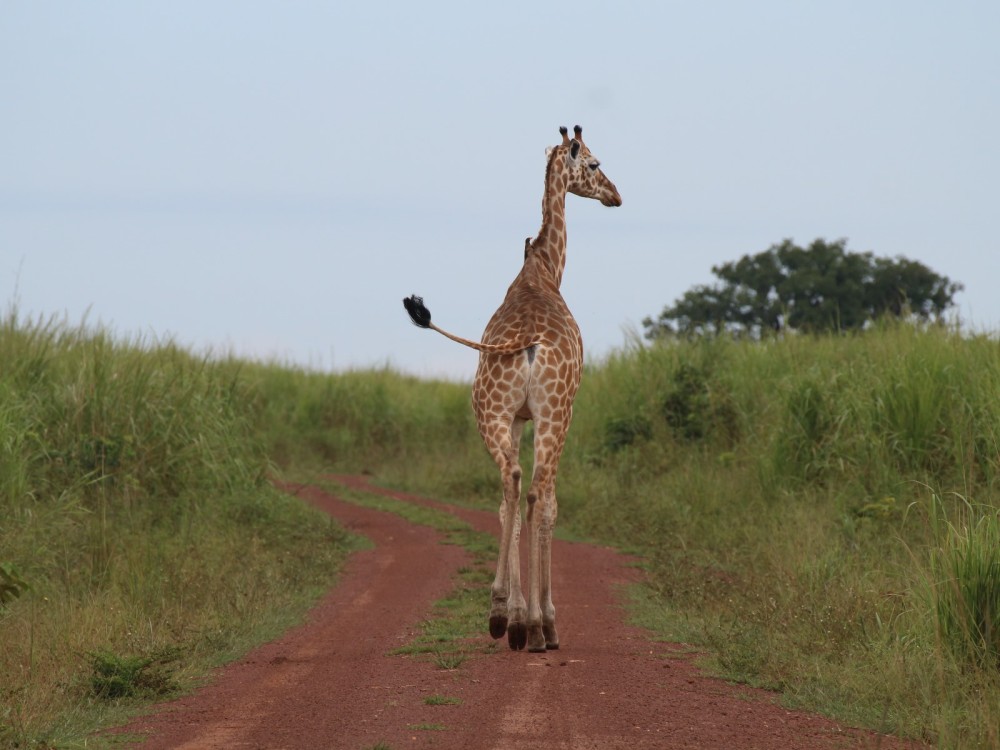
 It’s not only about the giraffe. At a macro level, Kordofan giraffe have, like other giraffe, an added significance as biodiversity indicators, with their presence or absence showing the relative health of a habitat or wider ecosystem.
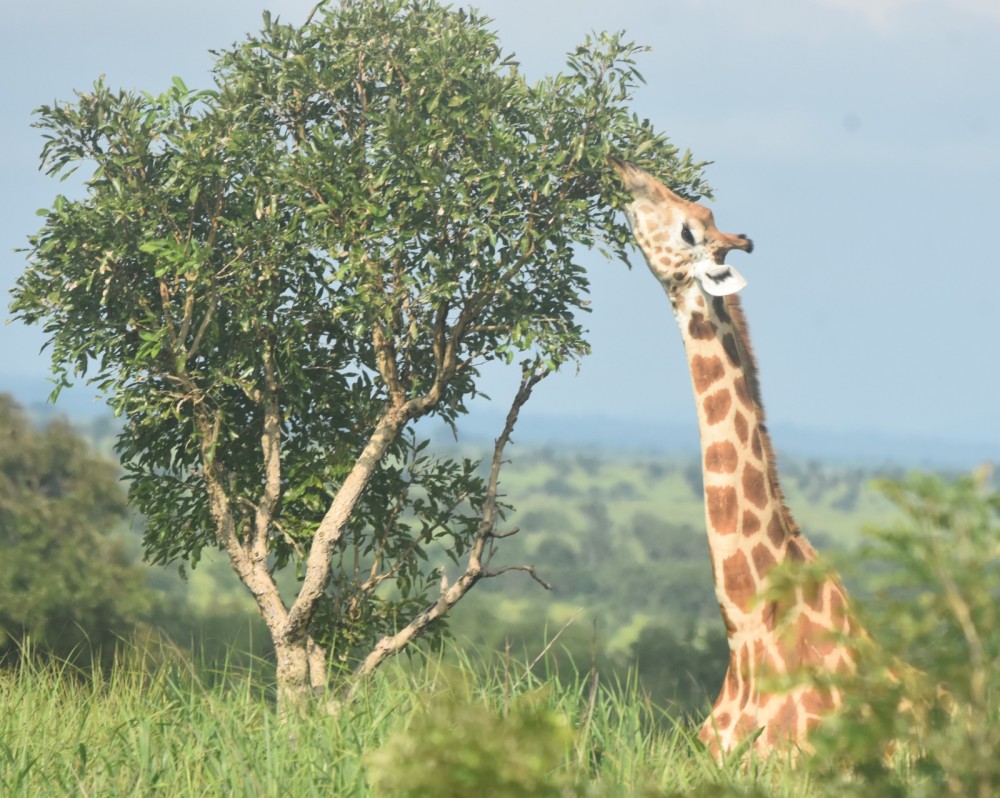
In addition, like other giraffe species, the Kordofan giraffe is an ‘ecosystem engineer’ – that is, it helps to shape the habitat around it, and boosts biodiversity. Giraffe browsing habits prevent vegetation overgrowth, promote diversity of plant and tree species, and allow more sunlight to reach lower-growing vegetation.
Effective conservation measures for the Kordofan giraffe depend on massive, interconnected protected landscapes and conservation at an ecosystem rather than a species level. This in turn will help to conserve other species that depend on the same habitat.