The woodlands are still quiet when my day begins
Before most people have had their first cup of tea, I’m already lacing up my boots and packing my tracking equipment: handheld GPS, CyberTracker, radio receiver and antenna, camera trap, weighing bag, scale, spare SAT tag and VHF transmitter, and notebook. It’s a familiar routine, one I’ve done countless times, but it never feels ordinary. I’m a pangolin monitor, and today, like every day, is about patience, protection, and a lot of listening.
Early Morning: Reading the Signs
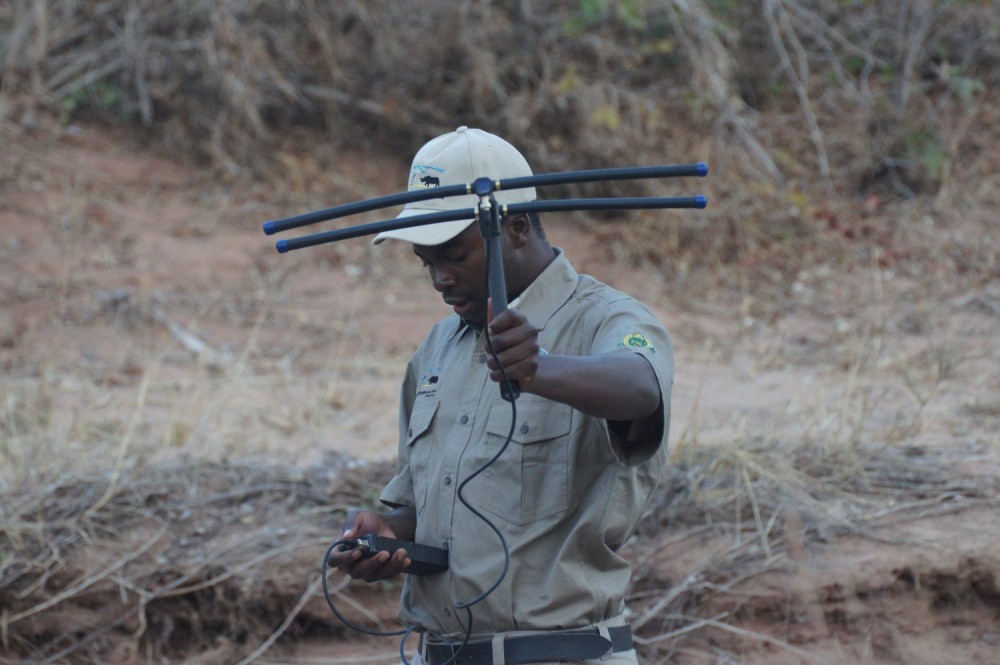
Before sunrise, in the rugged terrain of Matusadona National Park, I’ve already covered two to three kilometers on foot. I move quietly, trying to locate foraging pangolins before they return to their burrows. Some mornings, I’m lucky and find one still active. Other days, all I get is a signal coming from a resting burrow.
When that happens, I deploy a camera trap at the burrow entrance to record the time the pangolin emerges. I mark the burrow location on my handheld GPS and fill in my Survey123 software. Every detail matters.
Once the burrow is located, I begin reading the fresh tracks in soft soil, a disturbed termite mound, and faint scrape marks left by powerful claws. These small signs tell big stories: where the pangolin has been, what it’s feeding on, and whether it’s moving safely through its habitat. I log everything carefully. When you’re protecting a species under constant threat, no detail is too small.
Midday: Community Connections
By midday, the sun is high, and the forest feels louder, warmer, and more awake. I head back to our Tashinga HQ, and this is often when the focus of my work shifts from wildlife to people.
Conservation doesn’t happen in isolation. I spend time talking with colleagues and local community members, sharing information, answering questions, and most importantly, listening. The people here have lived alongside pangolins for generations, and their knowledge is deep, practical, and invaluable.
Protecting pangolins isn’t just about law enforcement. It’s about trust, education, and shared responsibility.
Afternoon: Office work
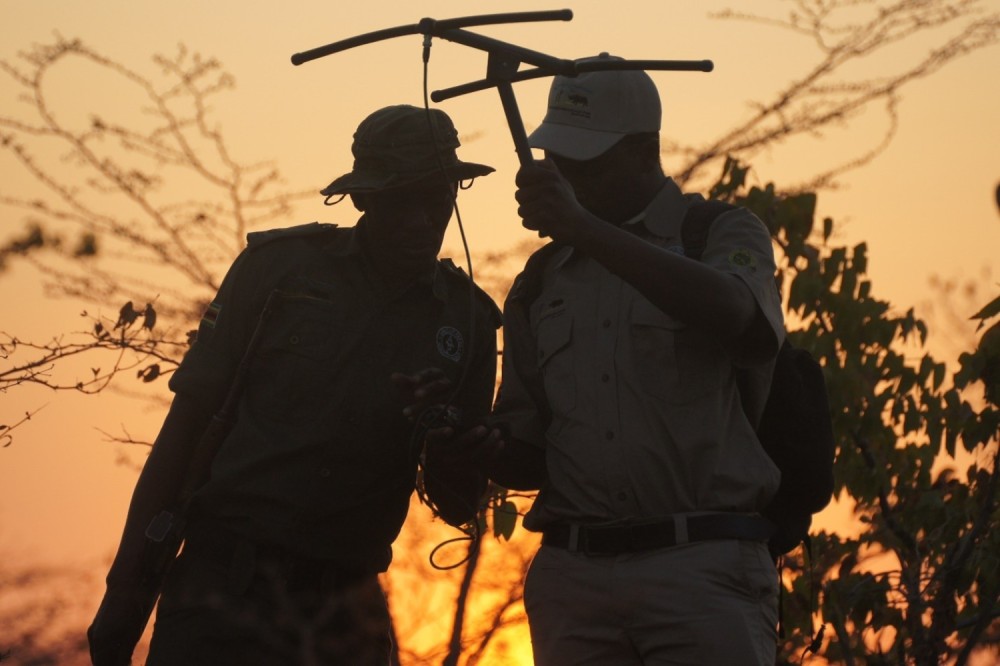
Afternoons are usually spent in the office. I update records, analyze pangolin movement patterns, mark GPS points, and charge my headlamp, GPS, and camera traps (they are my eyes when I am not there). There’s a lot of waiting in this job. Waiting for signs. Waiting for data. Waiting for pangolins to simply live their lives undisturbed. And honestly, that’s the goal.
Evening: Hope in the Quiet
As the light begins to fade, I head back into the field knowing that somewhere out there, a pangolin is waking up, ready to forage under the cover of darkness. I’ll return to the burrow where I detected the pangolin earlier and check the camera trap. If it seems that the pangolin hasn’t yet emerged for the evening, I’ll wait quietly about 50 meters away.
In pangolin conservation, patience isn’t a virtue; it’s a necessity.
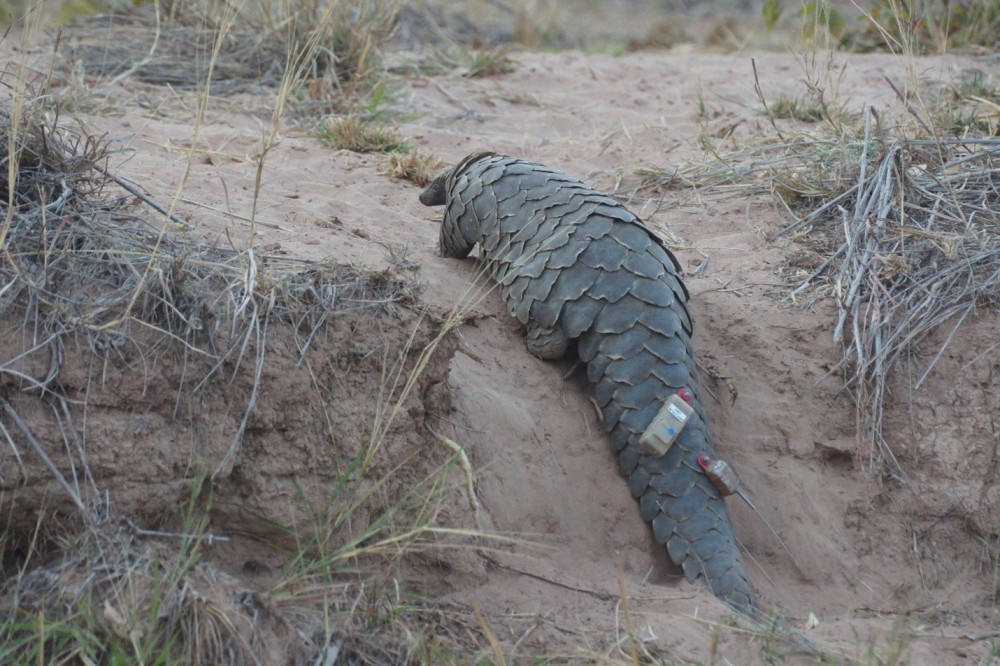
When the pangolin finally emerges, it will spend about a minute and a half at the burrow entrance, carefully investigating its surroundings before moving off to forage for ants and termites. I watch from a distance, following as quietly as I can so I don’t disturb it.
I observe its body condition, the way it moves, how it carries its tail, and how long it spends at each ant nest. On days when I need to record its weight, I slowly approach. As soon as it hears my footsteps, the pangolin freezes. When I touch it, it quickly curls into a tight defensive ball, protected by its hard keratin scales.
I handle the pangolin gently, place it in the weighing bag, and record its weight. I check for parasites, then carefully return it to the ground. I step back. Within moments, it uncurls and continues foraging, as if nothing had happened.
Quite often, the camera trap footage reveals an entire cast of forest life: klipspringer and grysbok antelope, scrub hares, mongooses, and rusty-spotted genets, all passing through the same space at different times.
Watching these clips is always a reminder that a pangolin burrow is more than just a shelter for a single animal. It’s a shared resource within the ecosystem, offering refuge and shelter to many of Matusadona’s more elusive species.
In this way, we’re beginning to understand not only pangolin behaviour, but also the wider distribution and movements of small and medium-sized mammals that quietly share and shape the ecosystem.
These moments remind me why I do this work. Some days are long, quiet, and physically demanding. Some days I never see a pangolin. But knowing that these remarkable animals are out there, moving through the forest.
The work doesn’t end when the pangolin disappears into the night. Tomorrow, before sunrise, I will pack my bag and happily do it all again.
End
Admire Mrewa serves as a Target Species Monitor at Matusadona National Park under the Matusadona Pangolin Project. Supported by the Pangolin Crisis Fund, the project partners with Tikki Hywood Foundation to provide refuge for pangolins rescued from the illegal wildlife trade, conduct research on Temminck's ground pangolin (Smutsia temminckii)—Zimbabwe's only pangolin species and a critically endangered mammal—and engage local communities through conservation education programs aimed at reducing demand for pangolin products and fostering coexistence with wildlife.