The world’s remaining intact ecosystems are our greatest natural climate buffers, yet they are under increasing threat from deforestation, degradation, and unsustainable land use. By assigning an economic value to the services these ecosystems provide, including the additional carbon stored within these landscapes, carbon credit programmes assist in making conservation a viable land-use choice, rewarding nature stewardship while creating sustainable revenue streams for local communities and governments.
Carbon Credits to Drive Positive Impacts
Carbon credits are tradable certificates that represent the equivalent of one tonne of carbon dioxide (CO₂) either removed from or prevented from entering the atmosphere. They provide a mechanism for assigning a financial value to the vital work that ecosystems, such as forests, wetlands, and grasslands, perform in capturing and storing carbon.
Currently, our carbon credit programmes are focused on voluntary markets and avoided deforestation (REDD+), providing an outcomes-based mechanism to measure, report, and verify the positive impacts of conservation efforts in mitigating deforestation and climate change effects.
Funding is raised by making the verified carbon credits available to companies seeking to voluntarily contribute to global climate action as part of their broader sustainability commitments, beyond regulatory compliance.
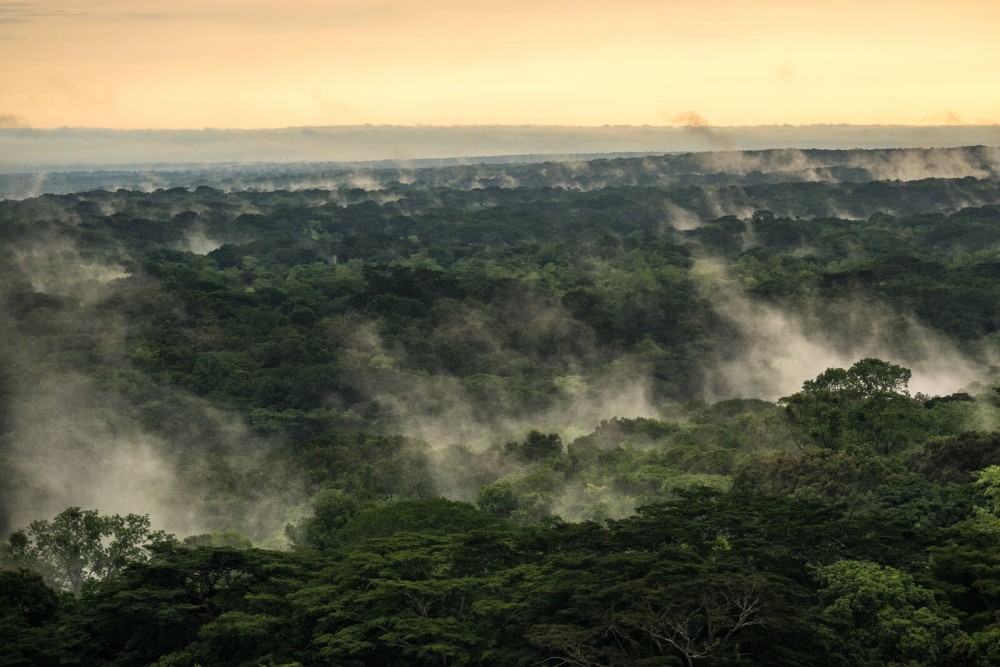
African Parks’ Carbon Project
African Parks manages carbon projects that measure and verify the carbon storage, emission reductions and additional carbon sequestration achieved through the protection and restoration of natural ecosystems. To do this, independent auditors certify these results under internationally recognised standards, such as Verra’s Verified Carbon Standard (VCS) and Climate, Community & Biodiversity (CCB) Standards, before the corresponding carbon credits can be issued and sold. The revenue generated is directly shared among relevant stakeholders, including communities and governments, supporting a conservation-led economy built around intact nature and nurturing a constituency for conservation.
Each project follows a rigorous monitoring, reporting, and verification (MRV) framework to ensure transparency and credibility. This includes scientific assessments of forest cover loss, standing biomass, and carbon sequestration rates, verified through satellite imagery, field measurements, and third-party audits. Only once results are verified are credits issued, ensuring that every tonne of carbon represented has been genuinely avoided or removed.
Benefiting People and Nature
Beyond mitigating climate change, carbon projects deliver benefits for both people and nature. By supporting the protection and restoration of ecosystems, they help ensure thriving species populations, clean air and water, and support vital food security.
At the same time, the revenue generated from carbon credits supports community development, both directly through reinvestment into local livelihoods and social needs, and indirectly through African Parks’ community development initiatives. Investments in education, healthcare, infrastructure, and sustainable enterprises support community livelihoods while building a strong constituency for conservation.
Current Carbon Projects
Chinko, Central African Republic — Chinko is a vast tract of intact savannah and tropical forest spanning over 64,000 km2 in the Central African Republic (CAR). The long-term vision for Chinko is to ensure continued biodiversity conservation through participatory land-use planning and to create employment and sustainable development for local communities.
By the end of 2023, the first carbon credits generated through the effective management of the Chinko Conservation Area were sold, with additional credits sold in 2024. Revenue from these sales is reinvested across key priorities, including direct community support for villages surrounding Chinko, strengthened park operations and staff capacity, and contributions to national government. The remaining funds are allocated to covering the project’s development and operating costs, ensuring long-term sustainability of the initiative.
A dedicated Chinko Community Fund has been established to benefit the approximately 170,000 people living around the protected area. Revenue from carbon credit sales that is allocated to communities is channelled directly into this fund. Decisions on how the funds are used are made by committee members drawn from civil society, traditional and religious leaders, and representatives of diverse interest groups, ensuring broad and inclusive governance. Through open discussions held across eight districts and more than 40 villages, community members identify priority needs such as road maintenance, borehole construction, teacher salaries, school renovations, and support for local enterprises.
Pendjari and W National Parks, Benin — Pendjari and W national parks form part of the transnational W-Arly-Pendjari (WAP) Complex, a vitally important 26,361km² transboundary protected area which straddles the borders of Benin, Burkina Faso, and Niger. The long-term vision for these parks is safeguarding the largest remaining intact ecosystem in West Africa in collaboration with and for the benefit of local communities.
The formalisation of Benin’s carbon credit project, spanning W and Pendjari national parks, was completed in 2024. Proceeds from the project are channelled into core priorities, including sustained support for park management, community reinvestment to strengthen livelihoods and meet social needs in villages surrounding the parks, and contributions to the Government of Benin. This approach ensures that the benefits of the project are shared across conservation, communities, and national development.
Further initiatives, focused on quantifying the conservation and restoration efforts, and the increased carbon sequestration associated with it, are in development across the portfolio of protected areas and are hoped to materialise in the near future.
How You Can Contribute
There are several ways to contribute to African Parks’ carbon initiatives to help make nature a viable economic driver for people and the planet:
- Purchase verified carbon credits – Corporates and institutions can purchase credits to contribute voluntarily to climate action, as compensation for non-avoidable emissions or as part of their broader sustainability commitments that go beyond regulatory compliance.
- Support project development – Philanthropic partners and development agencies can fund the start-up and scaling of new carbon and restoration projects in and around the protected areas that we operate in.
For more information on how you can contribute, email: [email protected]