As part of the Rhino Rewild initiative, the translocation of rhino to Garamba National Park has always been about more than moving animals across borders. It is about restoring ecosystems at scale, while recognising communities as essential partners in conservation.
That principle was put to the test early this year during preparations for the latest phase of the translocation. A critical road bridge between the original landing site and Garamba National Park collapsed, making the planned route to Nagero Station, the park headquarters on the southern boundary, unusable.
An alternative existed: the Garamba Ranger Landing Strip, located close to Nagero. Using it would significantly reduce the final road leg of the journey, cutting travel time by nearly six hours. But there was a problem. The airstrip was too short to accommodate the heavily laden C-130 aircraft required to transport rhino safely, and at the end of the strip stood a partially built church.
Building on solid foundations
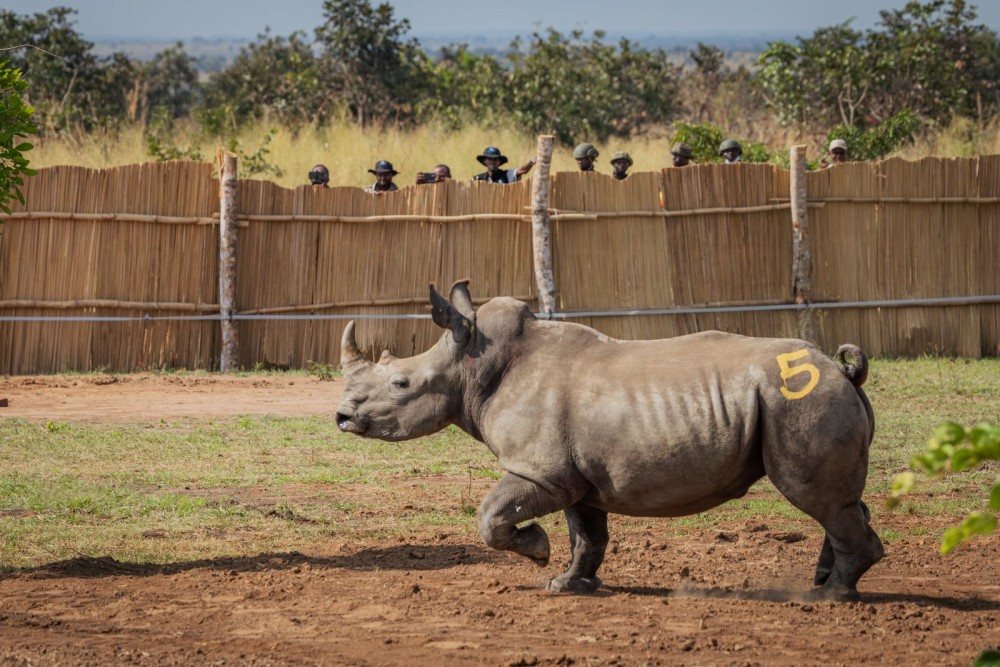
This was not the first time rhino had been returned to Garamba. In June 2023, 16 white rhino were successfully translocated as part of Rhino Rewild, marking a major milestone in the park’s species recovery. Building on that, plans were developed to move a further 24 rhino from South Africa to the Democratic Republic of Congo in late 2025 in a significantly more complex undertaking.
The collapse of the bridge meant those plans had to be rethought entirely. Extending the ranger landing strip was the safest and most efficient option, provided the church structure could be relocated.
Because of financial constraints, the building was never completed and had taken on an informal role as a school. Its presence held both spiritual and practical importance for the community. Rather than allowing conservation priorities to override local needs, park leadership held detailed discussions with church leaders and the wider community to find a solution that worked for everyone.
A plan comes together

The community’s first request was clear: the new church should be completed before the existing structure was dismantled. While understandable, this could not be accommodated given the tight timeline required to safely relocate the rhino.
What followed was an open engagement process. The community weighed the broader benefits of the translocation, including long-term conservation stability, increased ecotourism potential, local employment opportunities, and the commitment to build not only a new church but also a new school.
An agreement was reached. The existing structure would be dismantled to allow the airstrip extension to proceed. Its materials would be repurposed for the construction of a new church, ensuring the project was as sustainable and cost-effective as possible. In parallel, plans for a long-awaited school could finally move forward.
A landmark moment
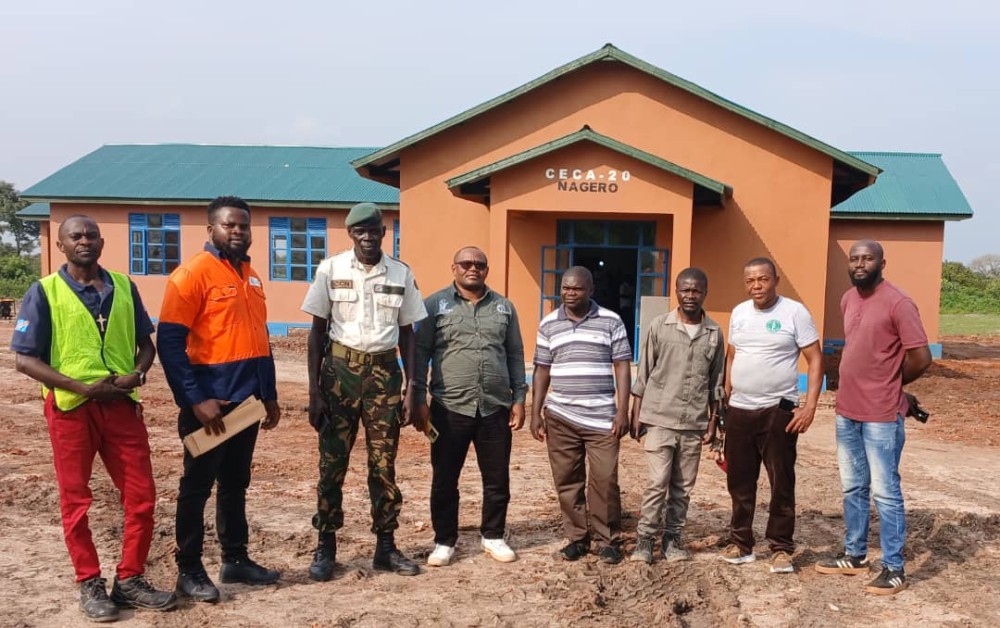
In late August 2025, the new church, officially named the CECA 20 Church, was inaugurated in the village of Nagero. Construction of the school was also already underway.
The inauguration marked a significant moment for the community. Among the celebrations was the first public performance of a hymn written in gratitude to the rhino, an acknowledgement that, without the Rhino Rewild initiative, neither the church nor the school would have become a reality.
Equally, without the community’s trust and willingness to collaborate, the translocation of the 24 rhino would not have been as smooth as it was, and may not have happened at all at the scheduled time.
A shared responsibility for the future
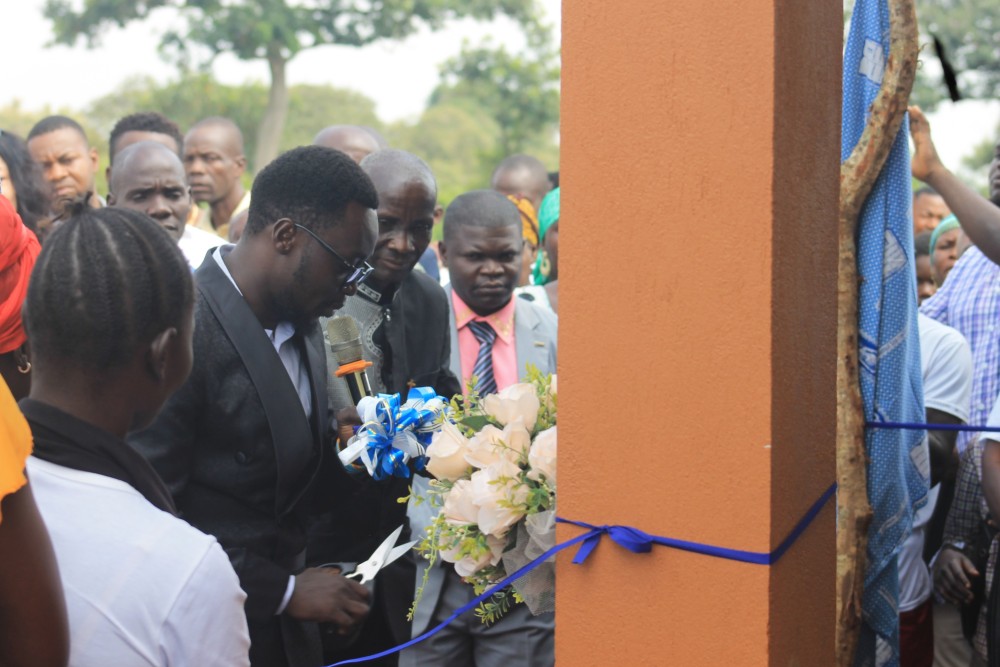
During the dedication ceremony, Pastor Amini, President of the District, spoke about the occasion's deeper meaning and its connection to conservation:
“Every entity has its rules. Garamba has rules no one should offend. You are witness of what support the Park has given to the community. Never betray Garamba. Never offend the conservation rules because they are given for biodiversity and for generations to come.”
The official handover of the church was led by Garamba National Park Director Philippe Decoop, who personally presented the keys to church representatives. In his remarks, he emphasised that the long-term sustainability of conservation in Garamba depends on collaboration with communities, shared responsibility, and continued awareness of the importance of protecting biodiversity.
Moving forward together
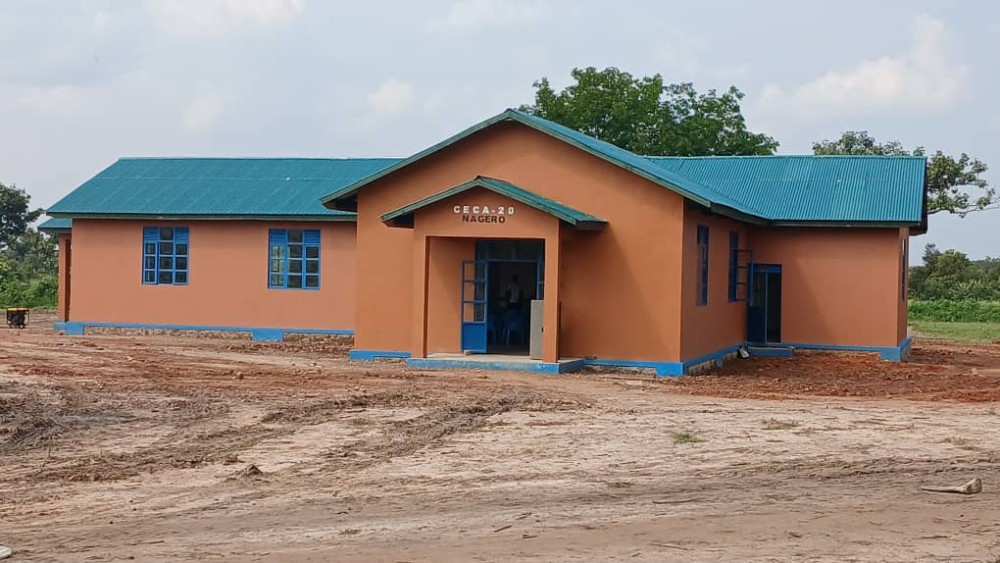
The inauguration brought together a broad cross-section of stakeholders: community members, village chiefs, religious leaders, representatives of partner churches, local authorities, contractors, and Garamba National Park staff. Their presence underscored the depth of partnership behind both the church's construction and the success of the rhino translocation.
As Pastor Amini noted in closing:
“We express our sincere appreciation to Garamba National Park for its valuable promise and its fulfilment, as well as to the CECA 20 Church for its faith and commitment. This collaboration has been a living testimony of what we can accomplish when we walk together in the same spirit.”
In Garamba, Rhino Rewild is restoring far more than a species. It is reinforcing the idea that conservation, when built on trust and shared purpose, can create lasting benefits for both people and nature.
24 December 2025