In Liuwa Plain National Park, education support extends beyond the classroom. From helping children stay in school to conservation clubs, field visits and debate programmes, young people are engaging more deeply with the landscapes around them and the role they can play within them.
For some learners, something as simple as access to food during the school week can determine whether they stay in school. This support is especially important for learners attending school in remote parts of the Liuwa landscape, where consistent access to food plays an important role in keeping children engaged in their education. At schools including Maoma, Mishulundu, Luola, and Libonda, weekly food support is helping improve attendance, concentration, and overall academic engagement for hundreds of learners.
Support for community teachers is also helping sustain education delivery across the Liuwa landscape. While government efforts over recent years have helped improve teacher-to-pupil ratios in many schools, some remote areas still require additional support to meet current educational needs. Across 14 schools in the Liuwa landscape, community teachers continue to receive monthly stipends, while ongoing engagement with Parent–Teacher Committees and school administrations, including at Nalungwana Primary School, focuses on long-term retention and teacher welfare.
Experiential Conservation Learning
 © Mana Meadows
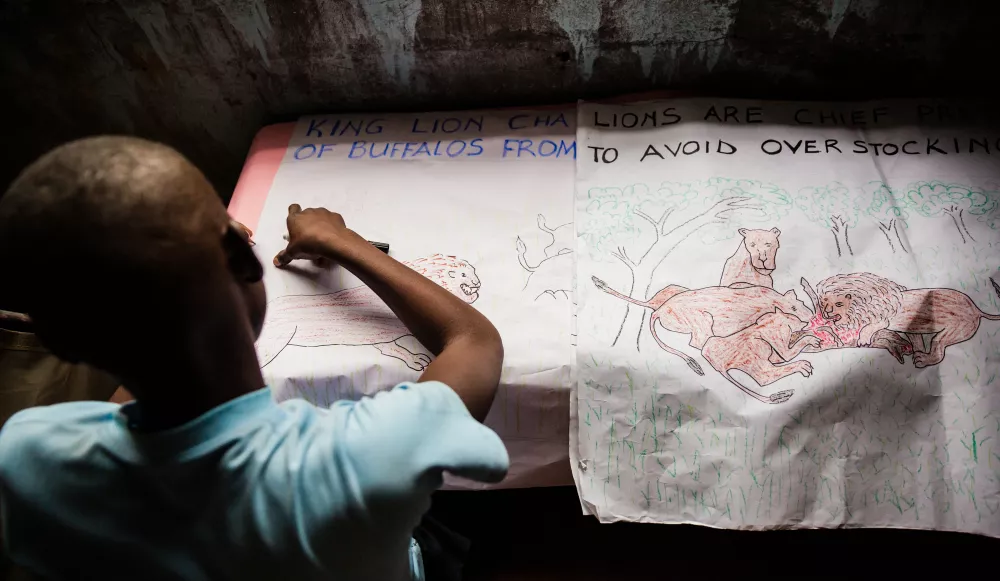
Through 37 active conservation clubs, learners are exploring topics ranging from biodiversity and climate change to pollution and wildlife conservation. Rather than focusing only on theory, the programme encourages learners to think critically about the environmental challenges affecting their communities and the role they can play within them.
For many pupils, some of the most memorable moments come during park study tours into Liuwa Plain National Park itself. During the reporting period, nearly 280 conservation club members from 14 schools visited the park, gaining first-hand exposure to wildlife and the broader ecosystem. Learners from schools including Munde and Sibemi participated in these tours, which included wildlife identification activities, environmental education sessions, and introductory lessons on animal behaviour. These experiences help learners connect classroom discussions with the realities of the landscape around them.
Engaged Learning through Creativity
 © Mana Meadows
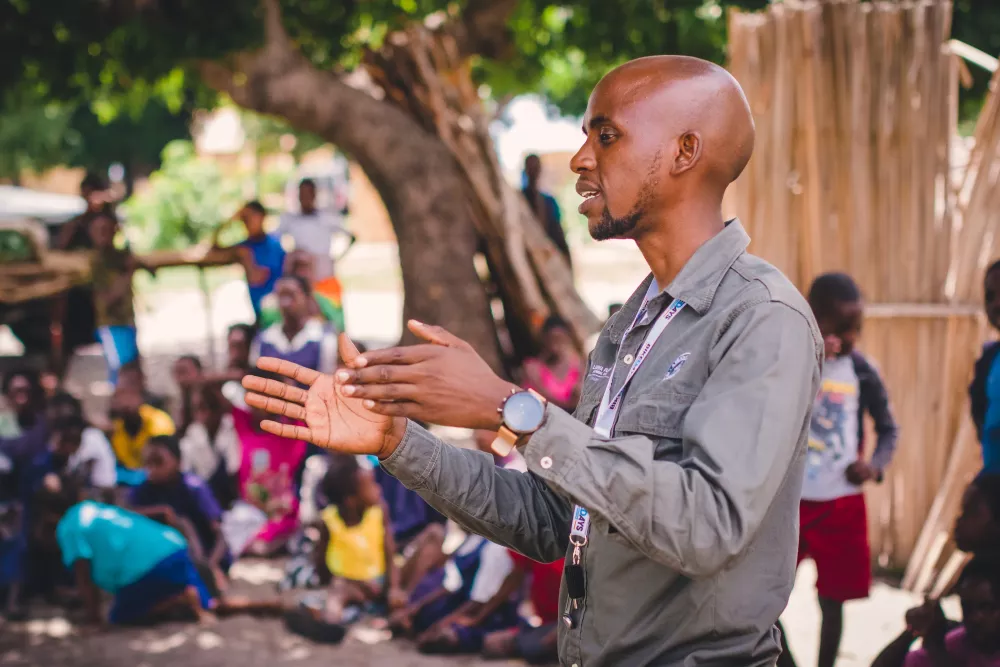
Creative platforms are also becoming important tools for engagement. Each year, conservation clubs participate in the Annual Drama Festival, using poetry, music, and performance to explore environmental and social themes. In 2025, the festival centred on the theme “Promoting Human Rights Through Wildlife Conservation,” encouraging learners to examine how conservation intersects with people’s lives, rights, and access to natural resources. Through performances and storytelling, learners explored both the opportunities and complexities linked to conservation in their communities. Maoma Primary School emerged as the overall winner of this year’s festival.
Debate has become another avenue for critical thinking, with schools like Nationwa and Kalabo Day Secondary Schools coming together to compete in debates exploring topics related to conservation and community wellbeing. These collaborations encourage learners to research different perspectives, articulate their ideas confidently, and strengthen their analytical and communication skills.
Taken together, these initiatives reflect a broader approach to conservation education in Liuwa. It is not limited to teaching environmental concepts, but instead seeks to create opportunities for young people to engage with their landscape, think critically about its future, and build a stronger sense of ownership and connection to the ecosystems around them.