In July 2025, Matusadona National Park, in partnership with the Zimbabwe Parks and Wildlife Management Authority (ZimParks), completed a series of wildlife translocations that introduced 74 animals – African buffalo, common eland and sable antelope – to the park. The operation forms part of a broader strategy to restore biodiversity and ecological function across the Sebungwe region.
Fifty buffalo and 10 eland were relocated from Tsetse Island on Lake Kariba, while 14 sable – Zimbabwe’s national mammal – were sourced from the Sibilobilo Safari Area. After 28 days in a release boma, the sable were successfully released into Matusadona, gradually moving into open areas and settling into their new habitat.
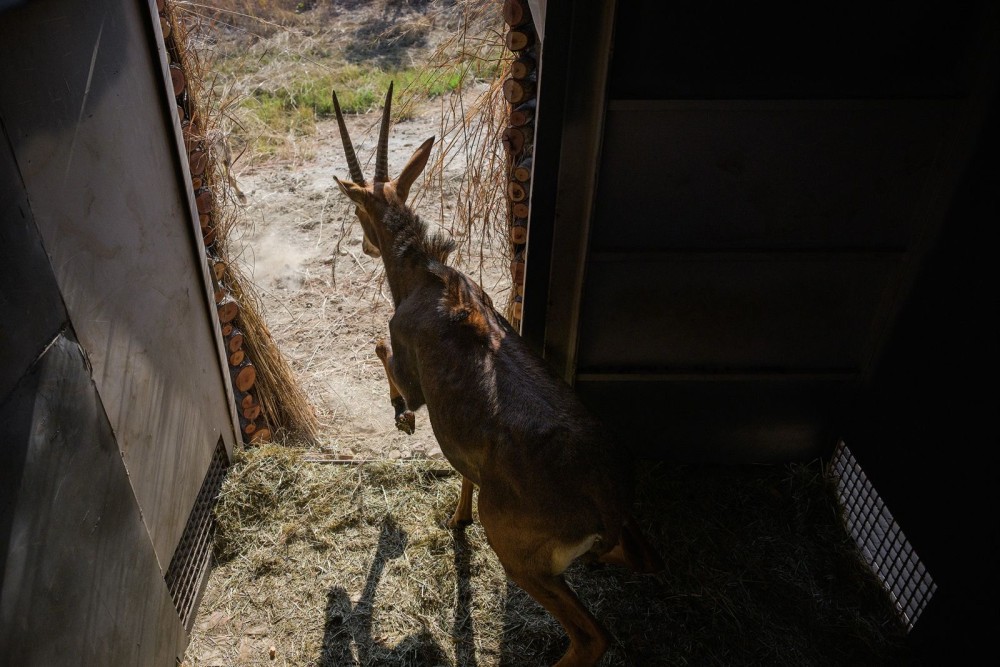
The translocations significantly boosted local populations. Matusadona’s eland count increased from two to twelve, while the sable population rose from 22 to 36. GPS collars fitted to select individuals – two eland, one buffalo and one sable – are enabling ongoing monitoring of their movements and adaptation. The operation was carried out by African Wildlife Management and Conservation (AWMC) and Wildlife Management Services International (WMSI), with technical support from Matusadona’s Conservation and Veterinary Unit. Funding was provided by local and international donors, including the Global Wildlife Fund.
The conservation leadership shown by the Nyaminyami community through a newly ratified Land Use Plan has further strengthened the long-term vision for wildlife conservation in the Sebungwe region.
Daniel Sithole, African Parks’ Country Manager for Zimbabwe, acknowledged the Sibilobilo and Gache Gache communities’ wildlife stewardship of the source animals. “Without them, there would be no indigenous wildlife populations left to draw from. We thank the communities, the Rural District Councils, the professional hunters aligned to the area, the My Trees Trust, and the Charara and Sibilobilo Safari Area ZimParks staff for their stewardship of these herds and their role in the repopulation of Matusadona National Park.”
Park Manager Michael Pelham added, “All these species will be boosted with further reintroductions to increase genetic diversity and boost their population growth trajectory to historical numbers. Every buffalo, eland, and sable contributes to building a thriving natural heritage for future generations. These translocations will help restore the ecological balance of the park, while supporting the broader restoration of the Sebungwe Region in the years to come.”