
Biodiversity Conservation
With its rolling highlands, vast plains, and swamp-fringed lakes, Akagera National Park is Central Africa’s largest protected wetland and the last remaining refuge for savannah-adapted species in Rwanda. Following the implementation of conservation and management measures as well as reintroductions, Akagera has healthy populations of lion, leopard, elephant, rhino, and buffalo, as well as zebra, giraffe, antelope and hundreds of bird species.
Species Restorations
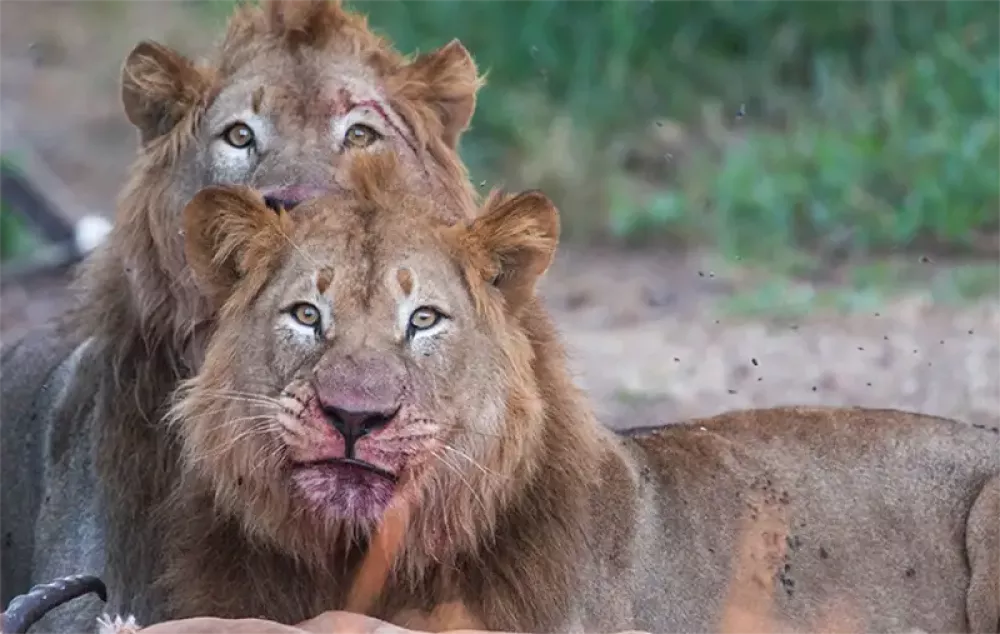
After lion were hunted out in the 1990s, a founder population was reintroduced in 2015 and 2017. Lion numbers have since expanded exponentially with the birth of several litters. Elephants had been completely lost to illegal hunting until, in 1975, in one of the park’s first conservation achievements, an initial reintroduction returned a group of 26 individuals, laying the foundation for a thriving population and further wildlife reintroductions.
2017 saw the historic return of 18 eastern black rhinoceros to Akagera – and Rwanda – after a 10-year absence. Five more were translocated from European zoos in June 2019 to boost genetic diversity, while some calves have been born, creating the beginnings of a healthy population.
Building on the successful introduction of 30 southern white rhino in 2021, an additional 70 white rhino were introduced into Akagera in June 2025. While playing an important role in establishing meta-populations across the continent, this now bolstered rhino population will enhance the species’ natural ecological function and contribute to the park’s overall biodiversity health.
Monitoring and Surveys
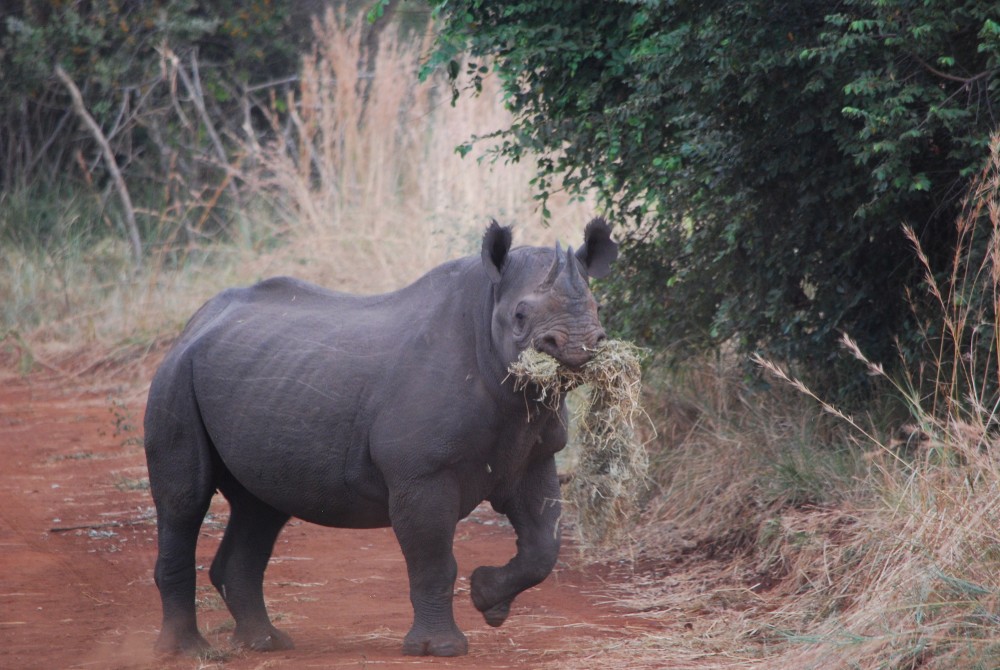
Monitoring key species continues, with a range of tracking devices deployed or replaced on various species. Four lion and six elephant have been collared, with transmitters also fitted onto seven white and three black rhino, for improved monitoring to enhance conservation efforts. New reporting systems implemented include EarthRanger’s lion kill monitoring, which will contribute towards knowledge of lion dietary preferences and track impacts on specific herbivore species.
Ongoing amphibian and reptile surveys help add new species to the park’s records, while regular butterfly and bird counts contribute to a better understanding of the park’s biodiversity. Monthly surveys in 2024 recorded 31 species of dung beetle and 179 species of butterfly, including four newly verified for the park. Nearly 500 bird species have been documented, making Akagera an important ornithological site.
Akagera also collaborates with several global universities and conservation organisations to deepen understanding of the park’s complex ecosystems through surveys and workshops, to which Rwandan and African students are invited for conservation capacity building.
A ground-breaking Molecular Ecological Network Assessment (MENA) pilot project was launched in Akagera (along with four other parks). This initiative uses environmental DNA (eDNA) – genetic traces left behind in water, soil, and faeces – to identify species and map their interactions, unveiling hidden ecological networks and unlocking new insights into ecosystem health. Staff and volunteers were trained in collection techniques, and samples were collected to be shipped to partnering laboratories for processing. Collaborative partnerships have been established with notable institutions, including Princeton and Stanford universities, to ensure the advancement of this research.
Conservation Law Enforcement
 © Scott Ramsay
One of the reasons for the incredible renewal of Akagera National Park’s wildlife is an effective conservation law enforcement strategy. Akagera’s team of nearly 100 rangers consists mainly of local community members, who patrol, track and deter illegal activities. Along with the support of community members, we have had significant success in reducing poaching to an all-time low. As a result, there has been no recorded loss of high-value species (elephant, rhino and lion) to poaching since 2010, or when they were reintroduced.
Akagera’s Canine Anti-Poaching Unit plays a significant role in its protection strategy, providing increased monitoring and overall coverage of the park. Training and upskilling of conservation law enforcement teams on wildlife monitoring and tracking technology is a continuous focus, and the rangers are committed to maintaining their excellent track record.
Be the first to see impact in action
Join our community and stay connected on the latest news and stories.