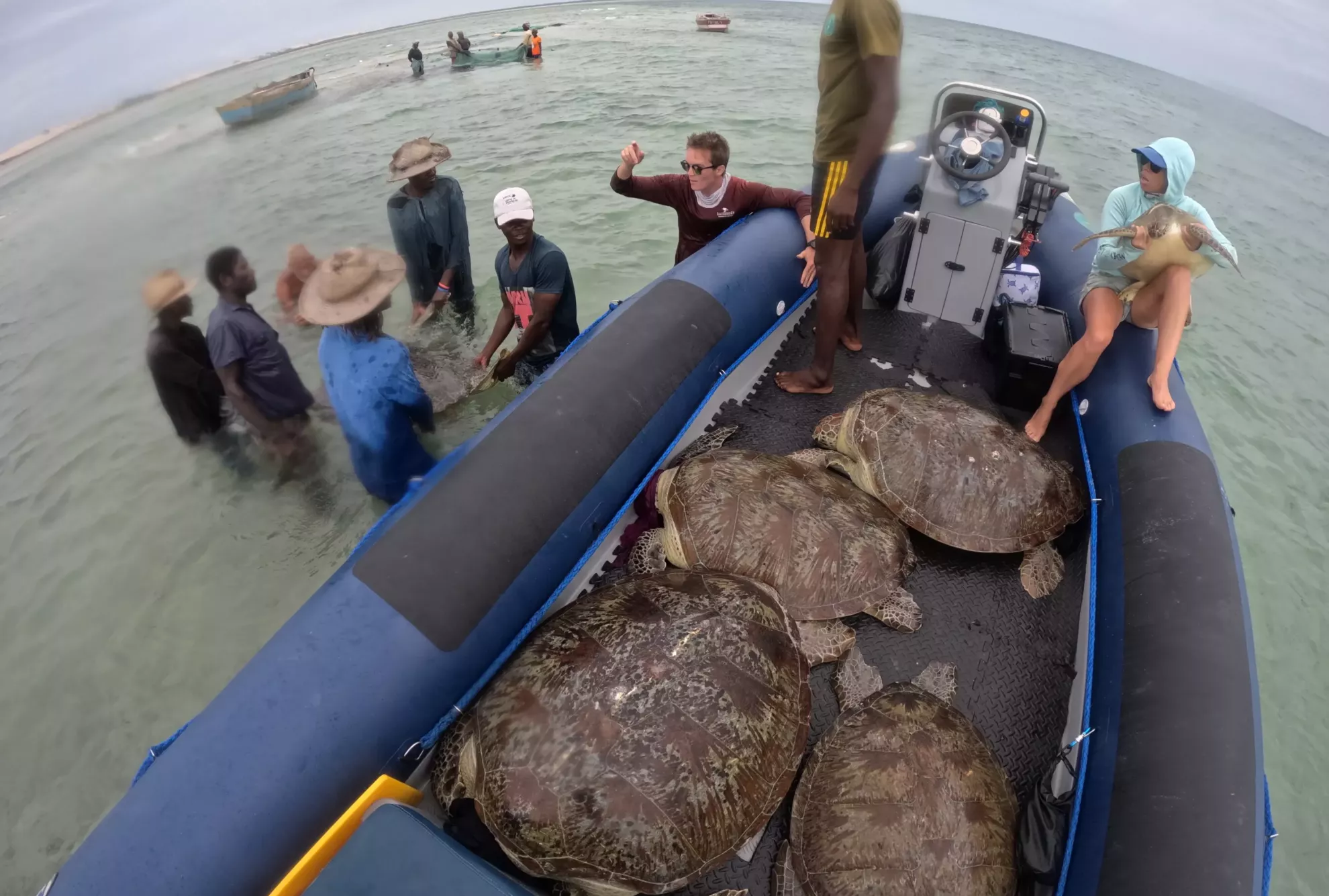
During the week of April 8, 2024, the conservation team in Bazaruto Archipelago National Park, Mozambique, undertook a large-scale turtle tagging exercise to understand how turtles navigate the ocean amidst fishing grounds. Turtles getting caught in fishing nets is one of the main types of human-wildlife conflict in the protected area. This is damaging in several ways: Fishers have to haul up to 20 turtles out of a single net – an exhausting task considering a single green turtle can weigh up to 150 kg – nets are destroyed in the process, and the animals drown if they are not released quickly enough.
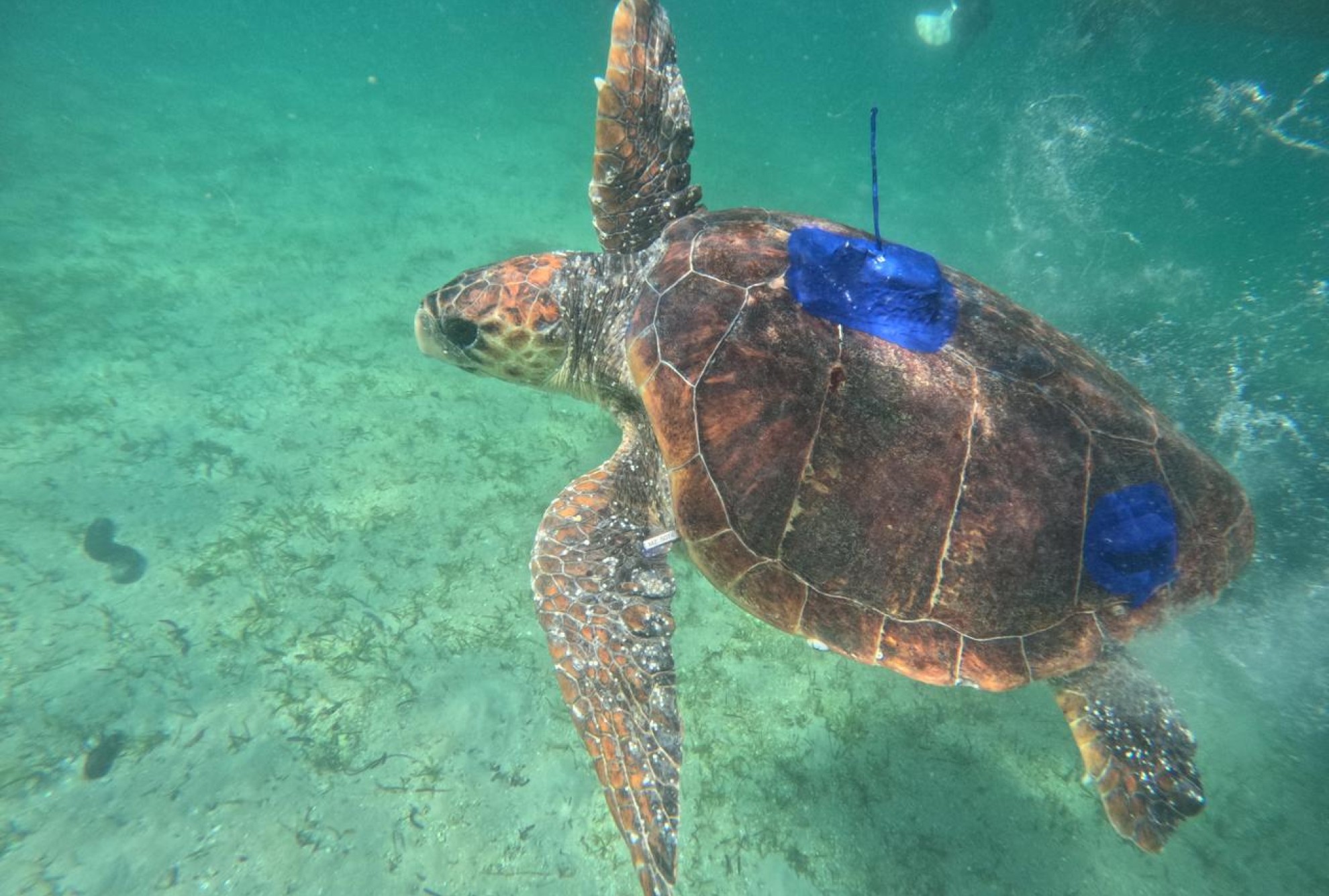
In collaboration with local fishers, the Bazaruto team opportunistically tagged the three most commonly encountered turtle species – mainly green turtles, a few loggerheads and one hawksbill turtle. More than 40 turtles were tagged in total, using a mix of satellite, acoustic, and flipper tags.
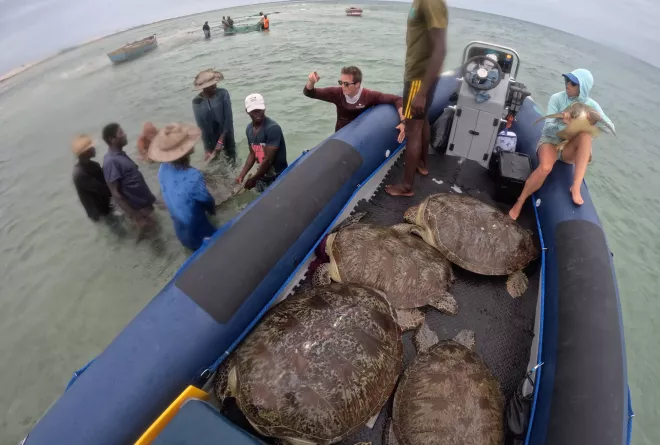 © Natalie dos Santos & Andy Coetzee | Green turtle being released after tagging
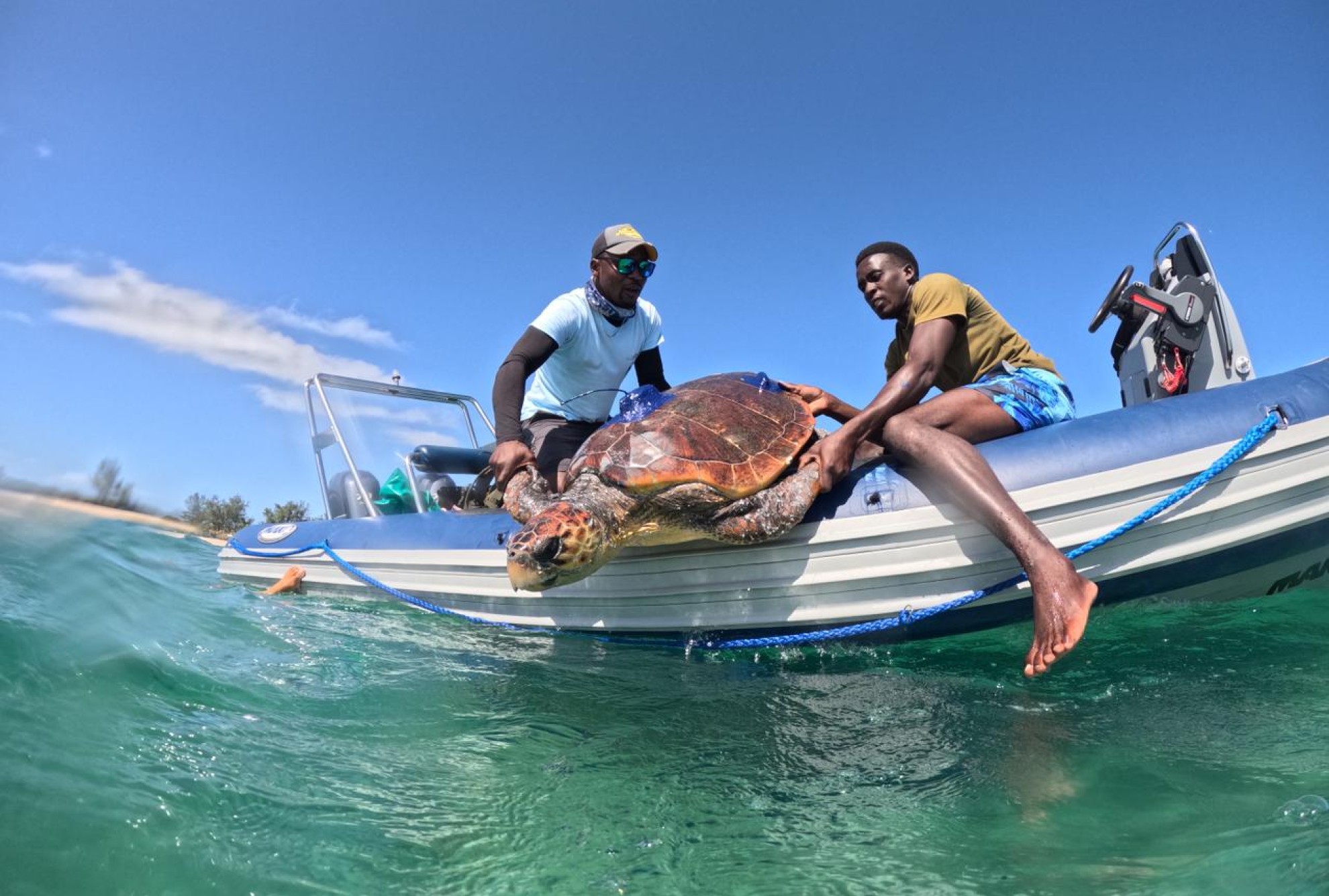
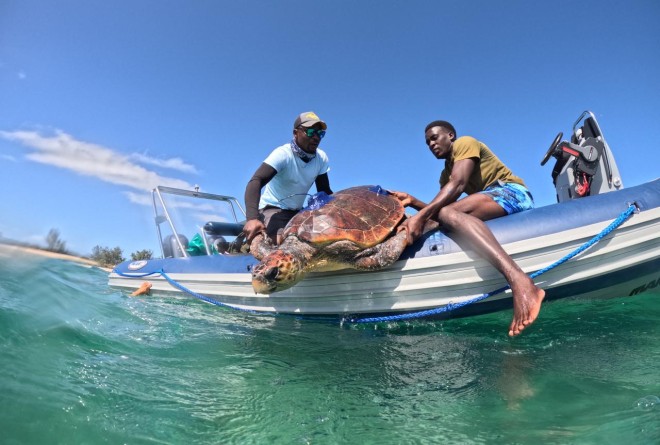 © Natalie dos Santos & Andy Coetzee | Loggerhead turtle ready for release
 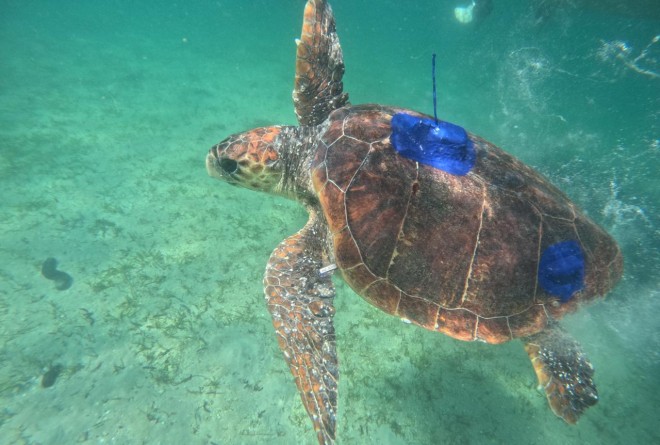 © Natalie dos Santos & Andy Coetzee | Loggerhead turtle with flipper, satellite and acoustic tag
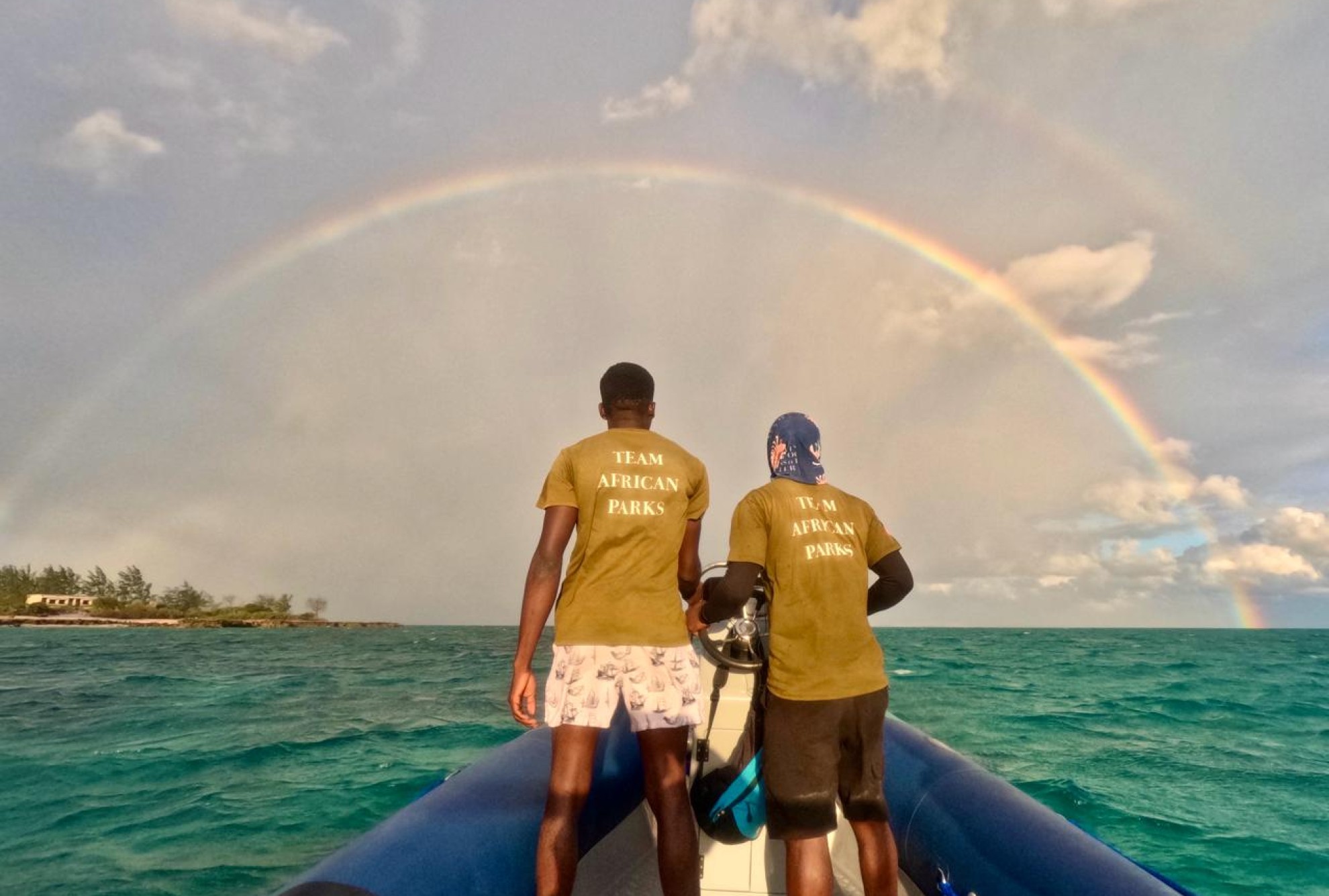
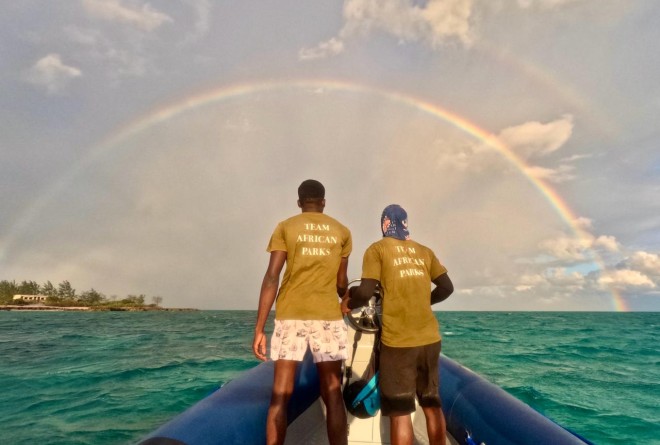 © Natalie dos Santos & Andy Coetzee | John and Eduardo, part of Bazaruto’s conservation team, who helped with tagging Bazaruto